Haunted Historic Houses

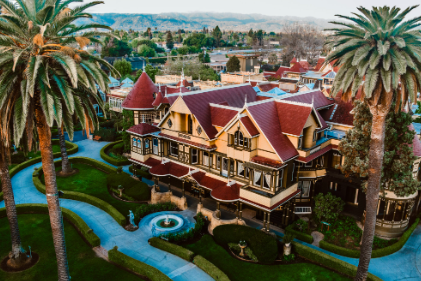
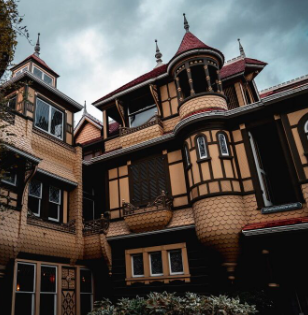
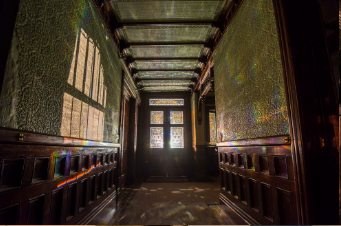
Winchester Mansion, courtesy of winchestermysteryhouse.com

 
Haunted Historic Houses
by Sweiskloss
Oct 29, 2026
From the “lady in white” to rattling doorknobs and eerie moaning, explore the haunting histories and architectural details of these historic houses, where distinctive design, creaking floorboards and shadowy corners add to their ghostly allure. Stay overnight, if you dare!

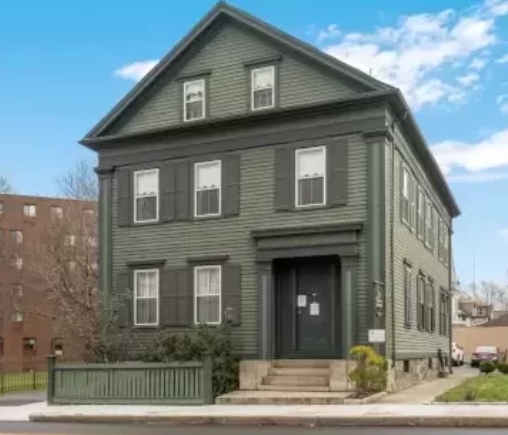
Lizzie Borden House, Fall River, MA
Built in 1845 in the Greek Revival style, the house features classic and simple lines, a low-pitched gable roof and decorative columns at the front entry. Also notable is the original “Chamber-style” floor plan where hallways were removed, meaning that residents had to walk directly through one room to get to the next. Modifications made in the late 19th Century include the addition of radiators, and wallpaper and furnishings that reflected the modern Victorian taste. One of the most notorious crimes in American history occurred in this house on August 4, 1892, when Andrew Borden and his wife were brutally murdered with a hatchet. The prime suspect: their daughter, Lizzie Borden, was acquitted due to a lack of physical evidence. Now a museum and bed-and-breakfast where guests have claimed seeing apparitions and shadowy figures, feeling cold spots, hearing voices and even Lizzie Borden’s laughing ghost.

Winchester Mansion, San Jose, CA
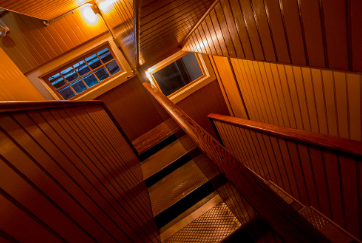
Winchester Mansion was the home of Sarah Winchester, the heiress to the Winchester Repeating Arms fortune. Folklore claims that a medium warned Sarah that the spirits of people killed by Winchester rifles would haunt the house, but that she could keep the ghosts at bay so long as she continued construction. Sarah headed these warnings and didn’t stop building for over four decades, resulting in an architecturally confusing labyrinth, with stairways that lead to nowhere, dead-end doors and disorienting paths. The 24,000-square foot home includes 10,000 windows, 2,000 doors, 160 rooms, 52 skylights, 47 staircases and fireplaces, 17 chimneys, 13 bathrooms and 6 kitchens. Interestingly, the number “13” is repeated throughout the house -- 13 bathrooms, the 13th floor has 13 windows, 13 ceiling panels in the hallway entrance, among other oddities. Visitors to the mansion have reported paranormal activity including seeing a shadowy figure roaming the halls they claim is Sarah as well as Clyde, a mustached ghost wearing 19th Century clothing pushing a wheelbarrow which they believe to be the spirit of a former employee. Others describe hearing footsteps, doors and windows opening inexplicably, and unexplained cold spots.

The Marshall House, Savannah, GA
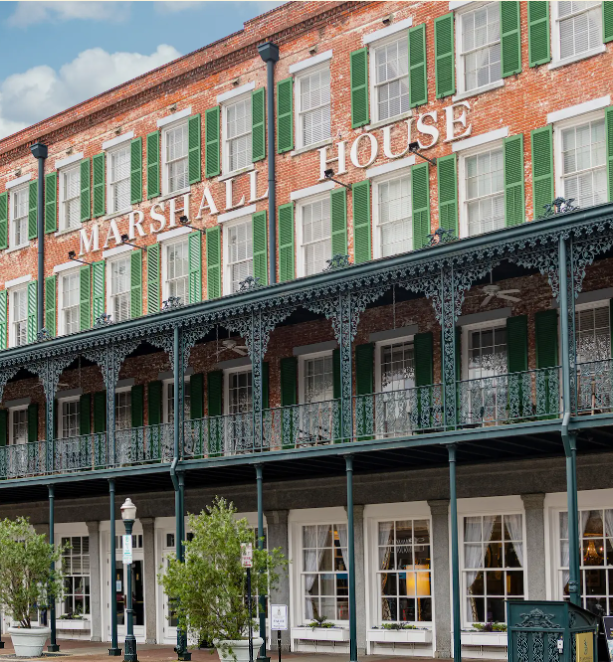
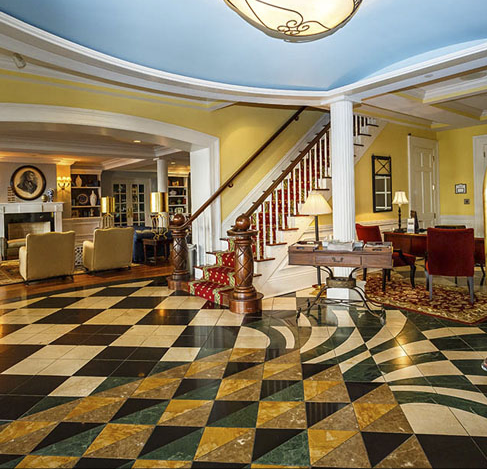
Savannah’s oldest operating hotel, The Marshall House, was built in 1851 by entrepreneur Mary Marshall and served as a Union Army field hospital during the Civil War. Fast forward 150 years or so and guests claim to see the ghost of a one-armed soldier roaming the lobby. If you’re checking in to the hotel, avoid the 4th floor where guests have mentioned being lightly touched by a presence, hearing loud crashes, faucets turning on and off, and rattling doors knobs. Aside from its ghostly lure, the hotel is a landmark and rich in architectural history. Renovated in 1999, hallmarks of the historic hotel were preserved including the Philadelphia Pressed brick on the façade and the Savannah Grey brick throughout, original pine wood floors, and period doors, staircases, fireplaces as well as several claw-footed bathtubs. The two-story 120-foot-long wrought-iron veranda and gas lights were reproduced to their original grandeur. A blend of Greek Revival and Italianate styles, a central design feature of the property is the towering indoor courtyard atrium domed with a massive glass ceiling.

The Franklin Castle, Cleveland, OH

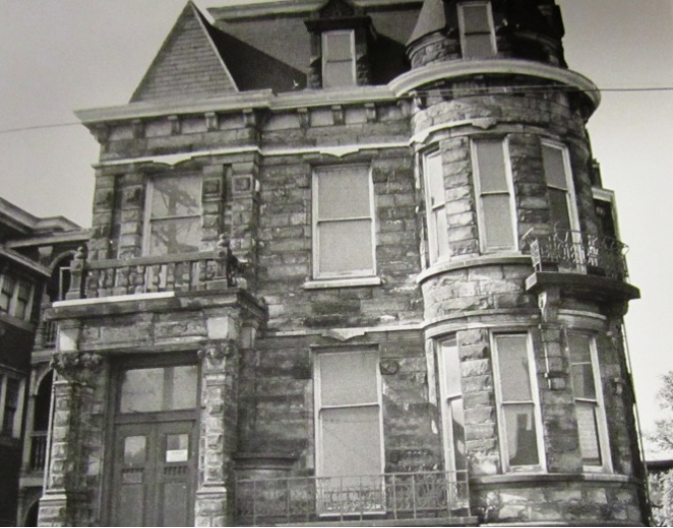
Image courtesy of clevelandhistorical.org
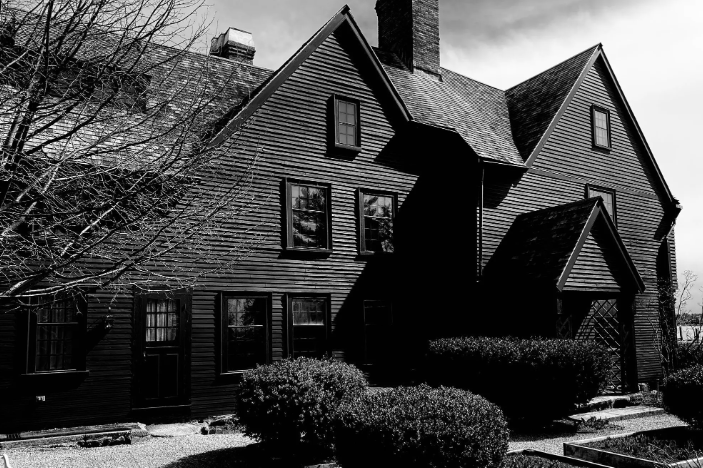
 
Also known as the Hannes Tiedemann House, The Franklin Castle was built in 1881-1883 by the German immigrant and banker Hannes Tiedemann. The four-story 20-room Victorian style house features Berea sandstone, grand turrets, intricate gargoyles and over 80 windows. The home is regarded as “Ohio’s most haunted house,” fueled by the family’s tragedies, namely the death of Tiedemann’s wife, daughter, mother and several infants. Former residents and visitors have reported sightings of a girl or young woman in black, while others noted cold spots, doors slamming and voices. The 1975 discovery of hidden human bones further fueled murderous stories and ghostly tales (travelandleisure.com). The house changed hands several times and is currently being restored by the new owners after a fire caused substantial damage.

The House of Seven Gables, Salem, MA
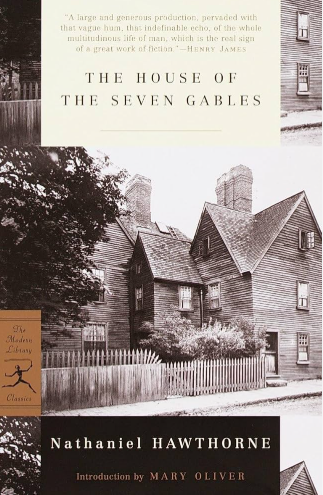
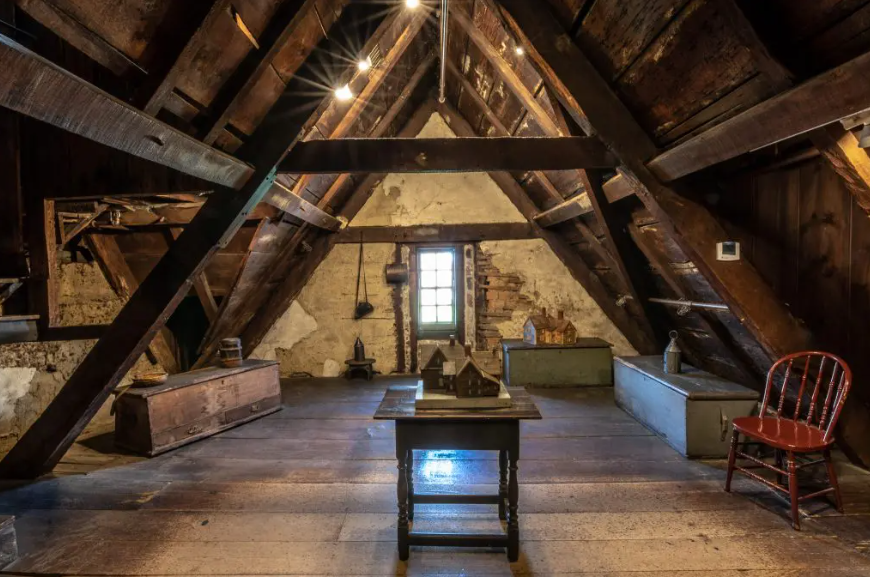
The inspiration behind Hawthorne’s novel of the same name, the House of Seven Gables is one of the city’s oldest, built in 1688 by Captain John Turner. One of the largest timber-framed mansions in North America still on its original foundation, the home showcases more than four centuries of American architectural history. Originally designed as a post-medieval English dwelling organized around a large central chimney, it was later renovated in the Georgian style with the addition of wood paneling and later updated with elements of the more restrained and boxy Federal style. The setting for the book was inspired by the gabled mansion owned by Hawthorne’s second cousin, Sarah Ingersoll, as well as his ancestors’ involvement in the Salem Witch Trials. Today the property operates as a museum, preserving many of its original period features and architectural details. While museum tours focus on the literary and history, Salem ghost tours tell a darker tale of the family curse. Visitors have reported seeing a spirit climbing the famous secret staircase, a phantom boy playing in the attic, and the spirit of Sarah Ingersoll walking the halls and peering out windows. Other claim to have heard footsteps and laughter. For those seeking a spooky immersive experience, the House of Seven Gables hosts an annual Halloween Bash celebrating “the heart of Salem’s literary and haunted legacy” (7gables.org).

Hotel Alex Johnson, Rapid City, SD
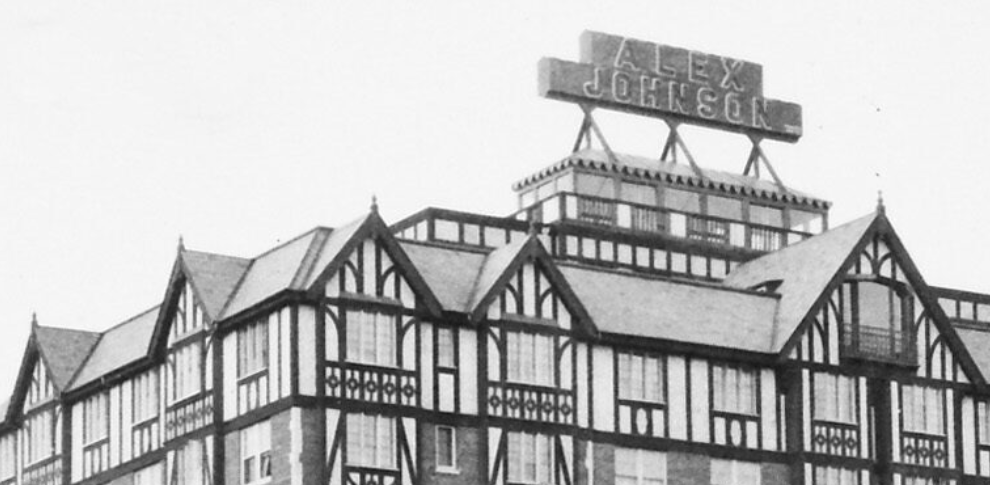
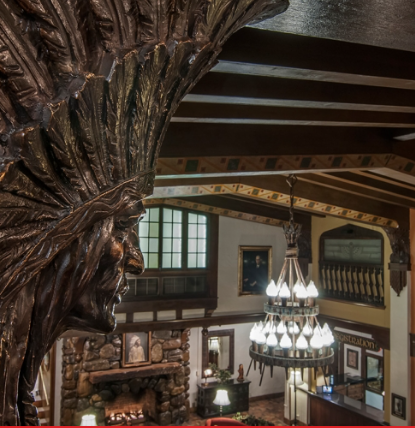
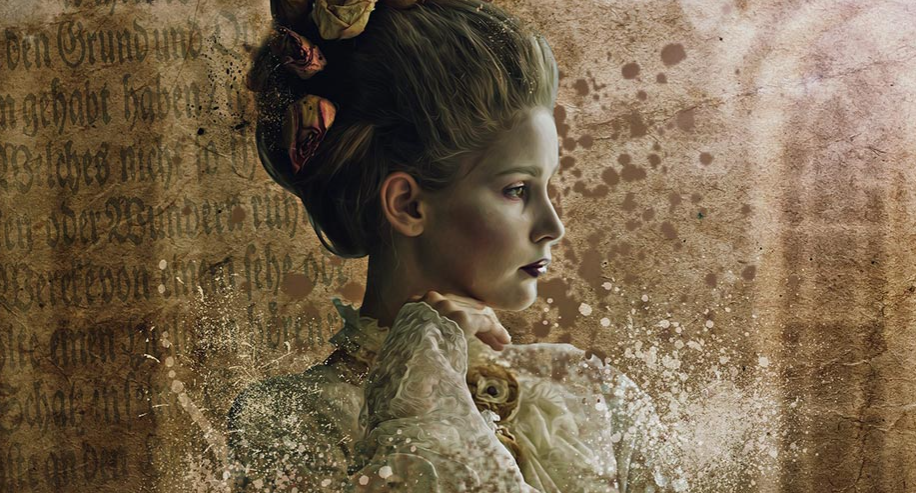
Vice President of the Chicago and Northwestern Railroad Alex Johnson built the hotel in 1927 as a “showplace of the West.” An admirer of the Black Hills of South Dakota and the Lakota Sioux Tribes, the Tudor architecture design blended the heritage of the Native Americans with his Germanic background. Native American symbols are imbedded in the original bricks, while the one-of-a-kind chandelier is made from war spears. While the hotel is listed on the National Register of Historic Places, it has also gained attention for its haunted activity. Guests claim the “lady in white,” a “murdered” bride, wanders the halls of the eighth floor in a white gown searching for those responsible for her death. Others have reported the ghost of a young girl knocking on their doors at night, hearing giggling down the hallway and even seeing the ghost of Alex Johnson on the premises.

The Lady in White, courtesy of alexjohnson.com

 
Laura McMahon