“It’s Not the Destination, It’s the Journey”

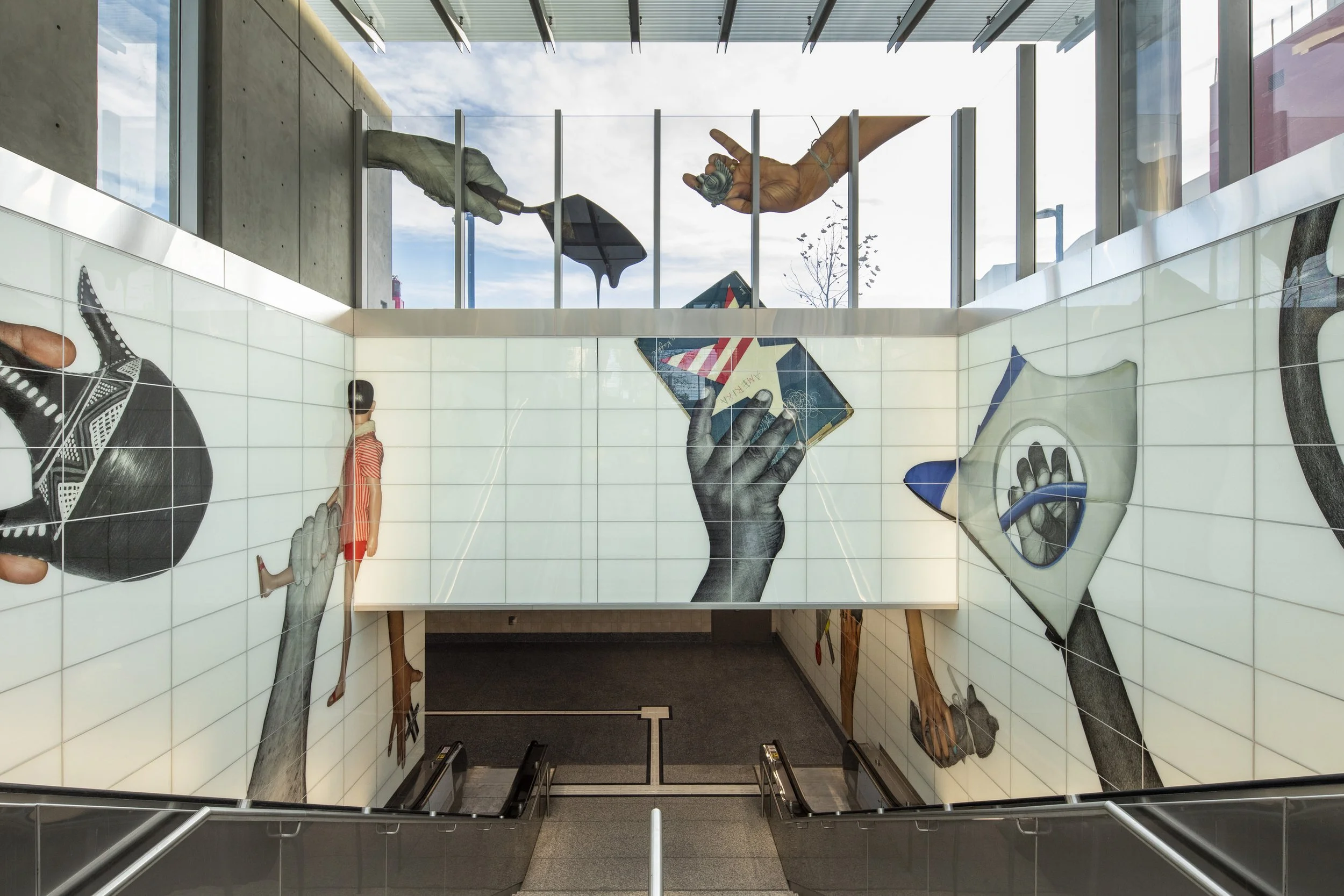
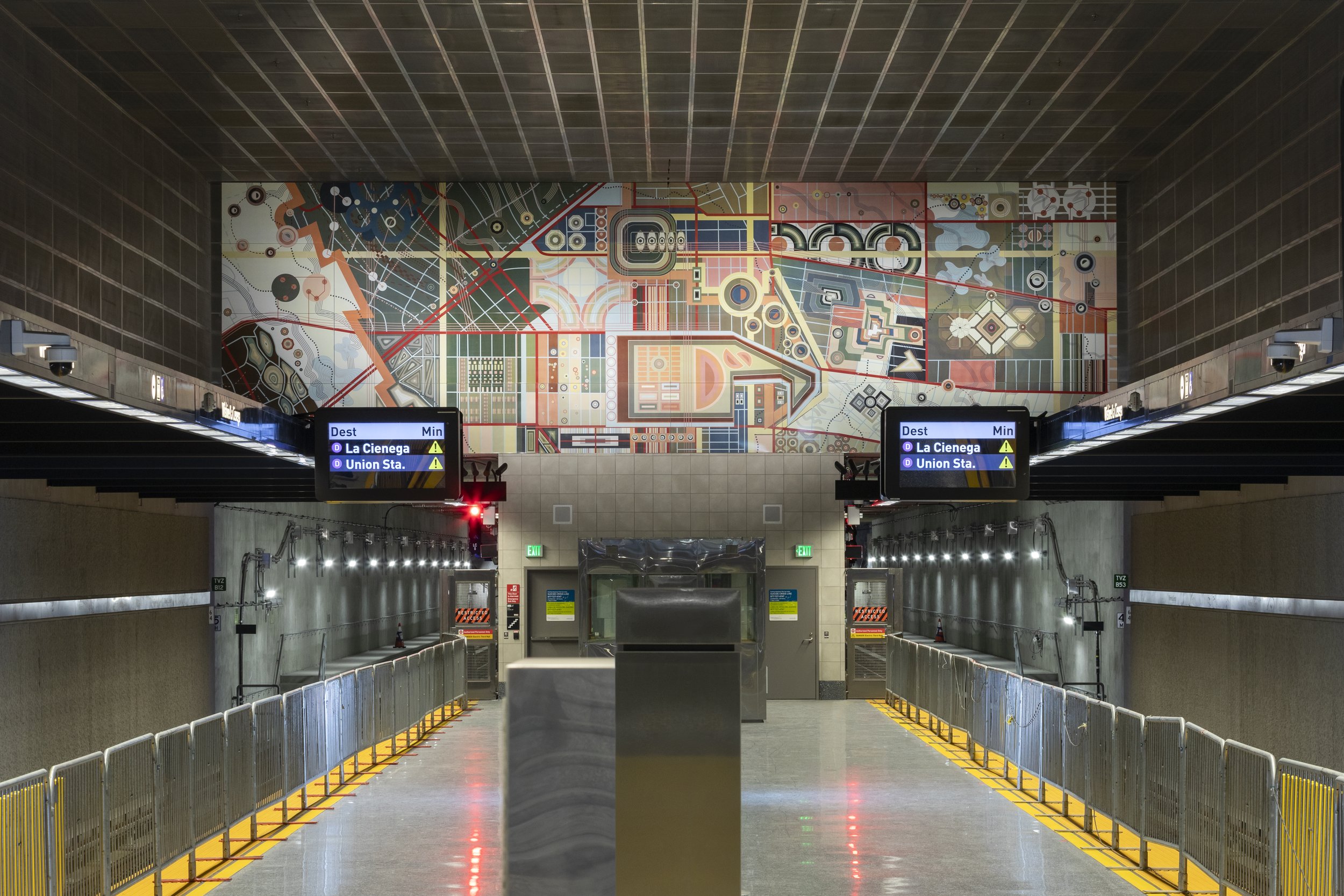
Image by Soo Kim. Detail ofNight / Quartz,2026: Installation view at Wilshire/La Cienega Station, LA Metro. Courtesy of Metro Art (Los Angeles County Metropolitan Transportation

 
“It’s Not the Destination, It’s the Journey”
by Sweiskloss
May 14, 2026
Ralph Waldo Emerson said it best. The journey to get you to your destination can be just as rewarding as the destination itself.
 
 
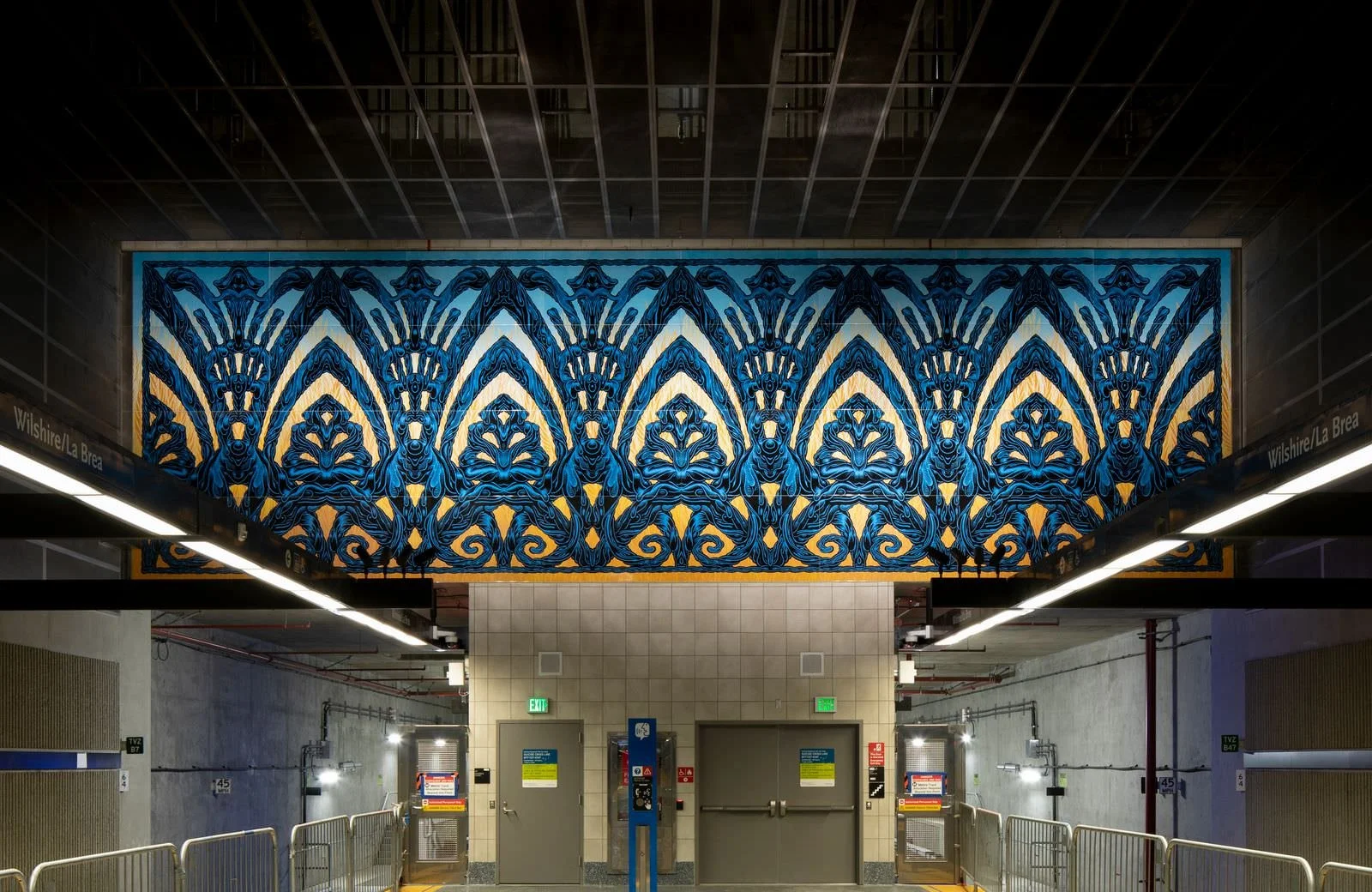
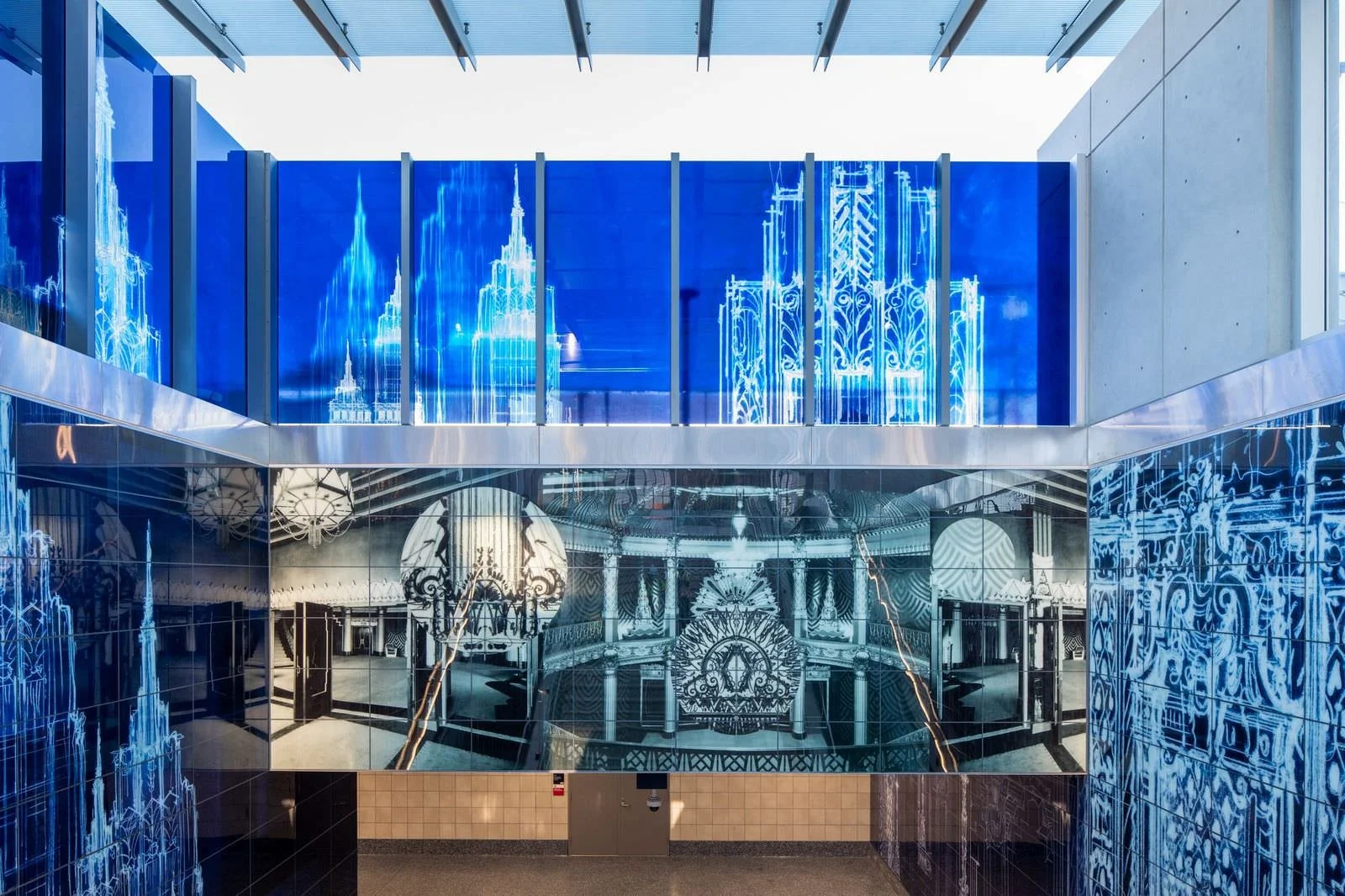
This past week, Los Angeles unveiled the first part of a long anticipated nine-mile Metro D Line extension, expanding the line’s service under Mid-Wilshire, and eventually connecting Koreatown to Westwood. The 3.92-miles of new subway have modern, fully accessible underground stations at La Brea, Fairfax and La Cienega, allowing riders to access attractions from Museum Row to Beverly Hills shopping. Soaring installations, large scale murals and colorful glass adorn the walls, escalators and entryways of these stations, paying tribute to the spirit of each specific location (nbclosangeles.com).
Los Angeles joins metro stations around the globe in attracting riders with their architectural marvels, aesthetics and functionality.

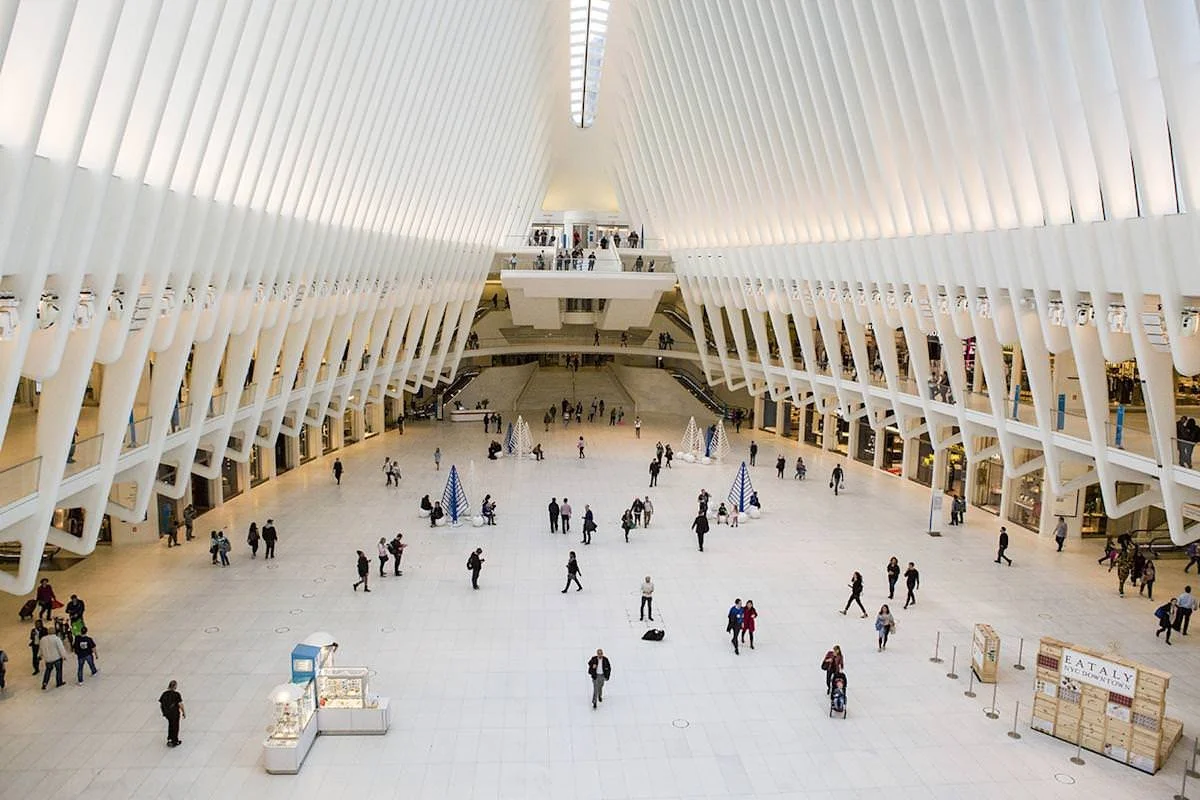
The Oculus, New York City, New York
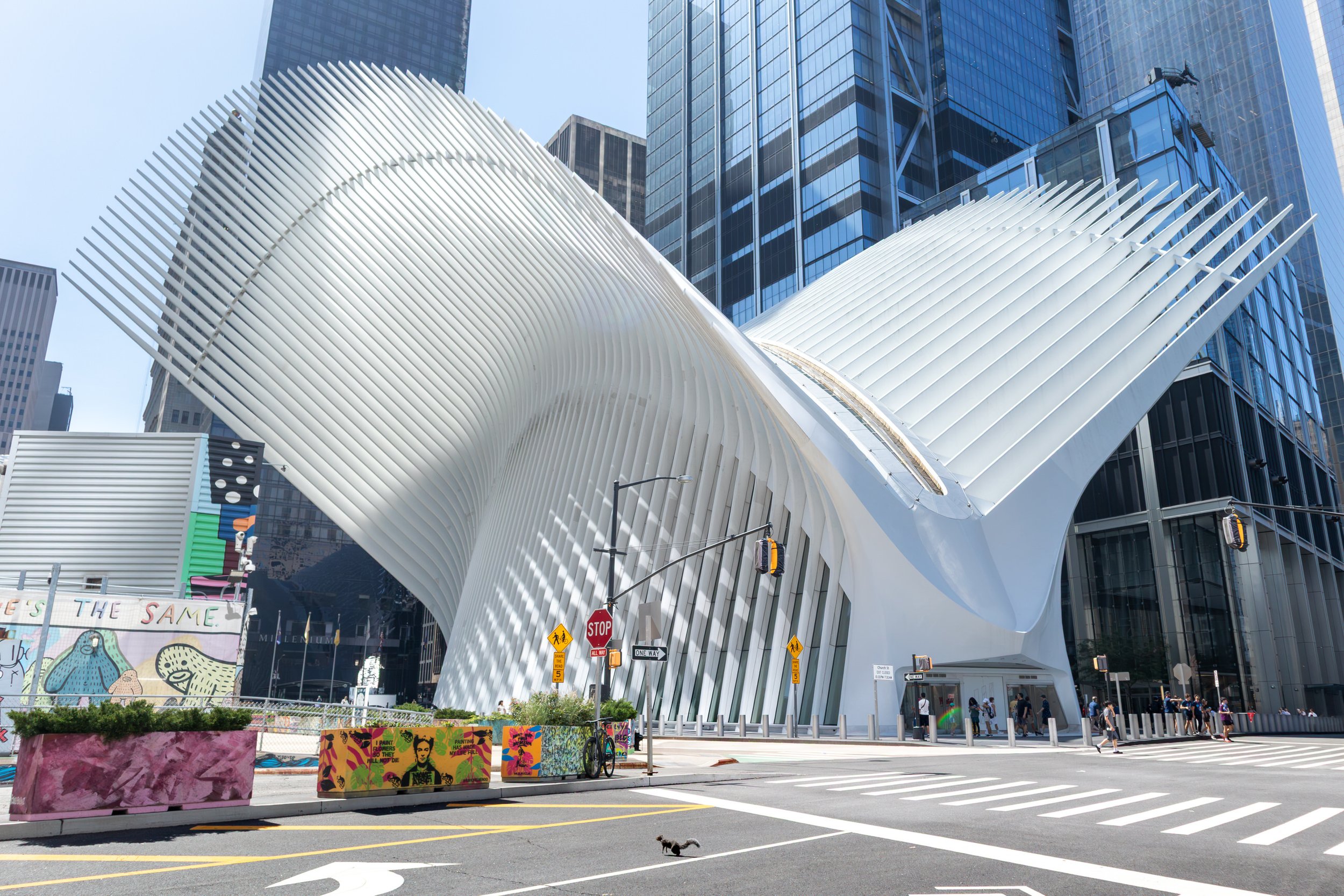
Built on the site of the World Trade Center, Santiago Calatrava’s soaring design rises high above Ground Zero. The structure portrays a bird about to take flight out of a young child’s hands, symbolizing hope and freedom. True to Calatrava’s style, the structure features striking white metal-clad steel ribs which serve both form and functional elements. As the name suggests (Oculus is derived from the Latin word for opening or eye), light plays an important role in the design. A central skylight floods the interior with light, and casts two parallel columns of light onto the floor at the exact time of the attacks on the original Twin Towers (explorewtc.com). The 265,000 square foot structure is home to 12 subway lines, the PATH station, and dozens of retail and dining options. It also hosts art exhibits and musical performances.

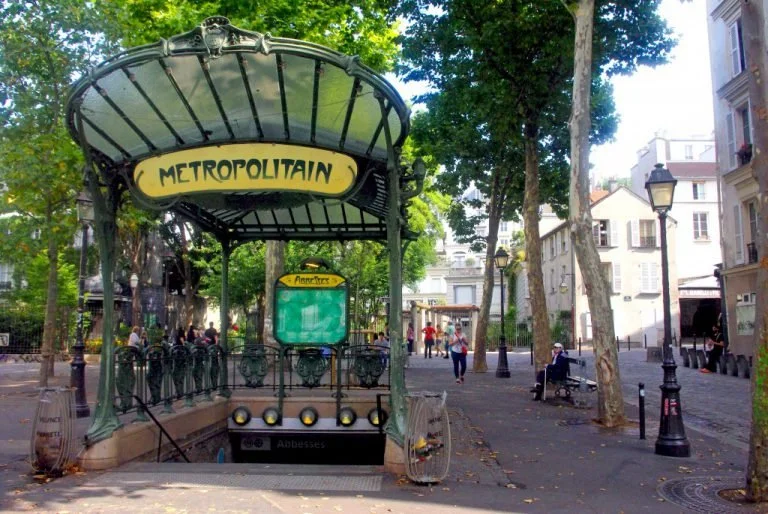
Abbesses Metro Station, Paris, France
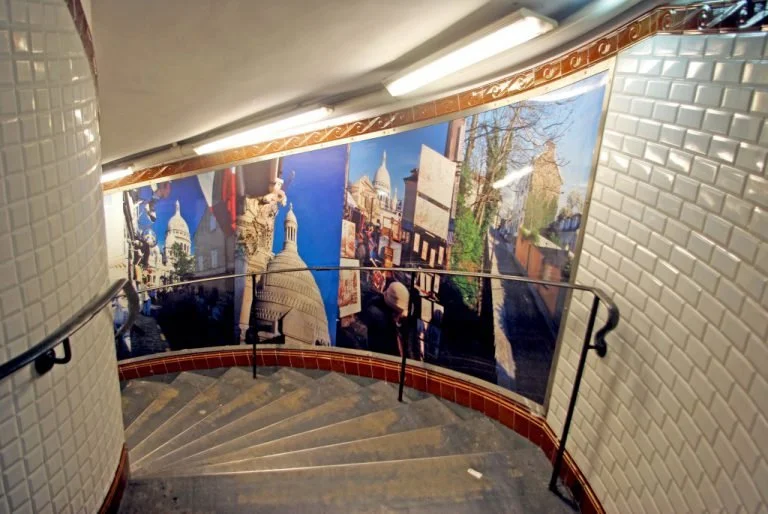
At 118 feet below ground, Abbesses is one of Paris’ deepest metro stations. The entrance is a masterpiece of Art Nouveau architecture designed by Hector Guimard in 1913. The famous entrance was originally located at the Hotel de Ville station but was moved to its current site in 1974. It features a glass roof with green wrought-iron arches and amber lights. The organic lines of the structure recall tree branches or an insect’s wings. Two spiral staircases and two elevators link the ticket hall to the platform. The interior is adorned with wall murals that reflect the surrounding neighborhood of Montmartre, known for the stunning Sacré-Cœur Basilica, the Moulin Rouge and as a favorite haunt for artists such as Picasso and Renoir.

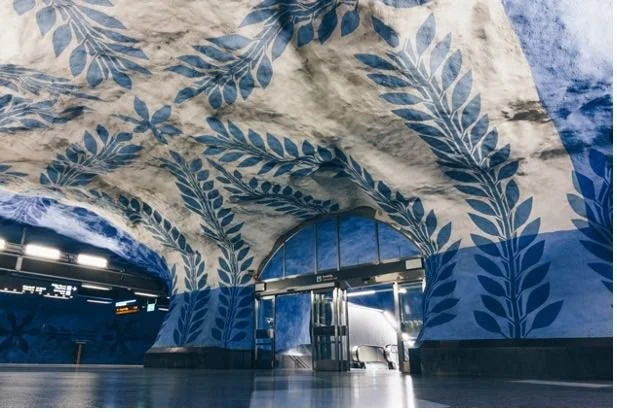
T-Centralen, Stockholm, Sweden
Is it an art gallery or a metro station? Paintings, sculptures, mosaics and art installations by more than 150 artists are displayed along the walls and escalator tunnels in Tunnelbana, Stockholm’s metro system. With 100 stations spanning over 68 miles, the Tunnelbana has been nicknamed “the world’s longest art gallery” (dongascience.com). T-Centralen station is known for its signature white and blue murals that invoke nature to inspire a sense of calm during the chaotic underground commute. Painted on the exposed bedrock, the artwork creates a surreal atmosphere while the colors were chosen for their soothing properties.

Toledo Station, Naples, Italy
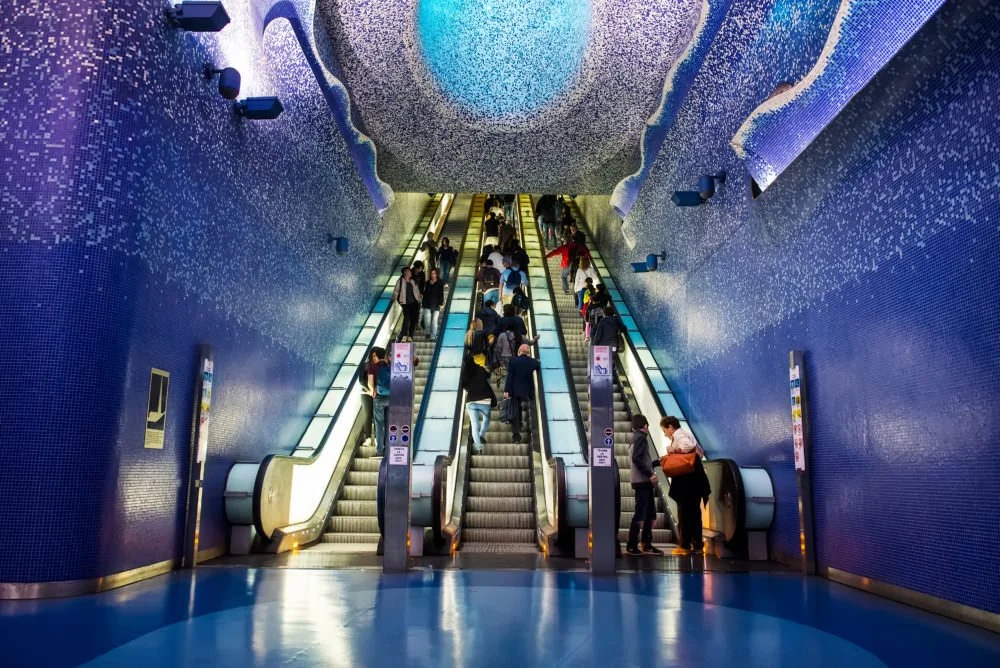
While most know Naples for its pizza, tourists and residents alike also enjoy the immersive experience at the city’s Toledo metro station. Descending 130 feet underground, each level of the station is designed around a different color representing a theme related to the city. The walls and floor of the atrium floor are black, representing asphalt, while ochre and yellow walls on a lower level allude to Naples’ rock and sun (atlasobscura.com). The highlight is the deepest level that features shimmering shades of blue and violet. “A masterwork of public art, blue mosaics and cascading light installations create the sensation of diving into the ocean, making the station feel like a deep-sea dreamscape” (visiteurope.com). Two LED light boxes reproduce the image of the sea, rippled with continuous movement of the waves.

Formosa Boulevard Station, Kaohsiung, Taiwan
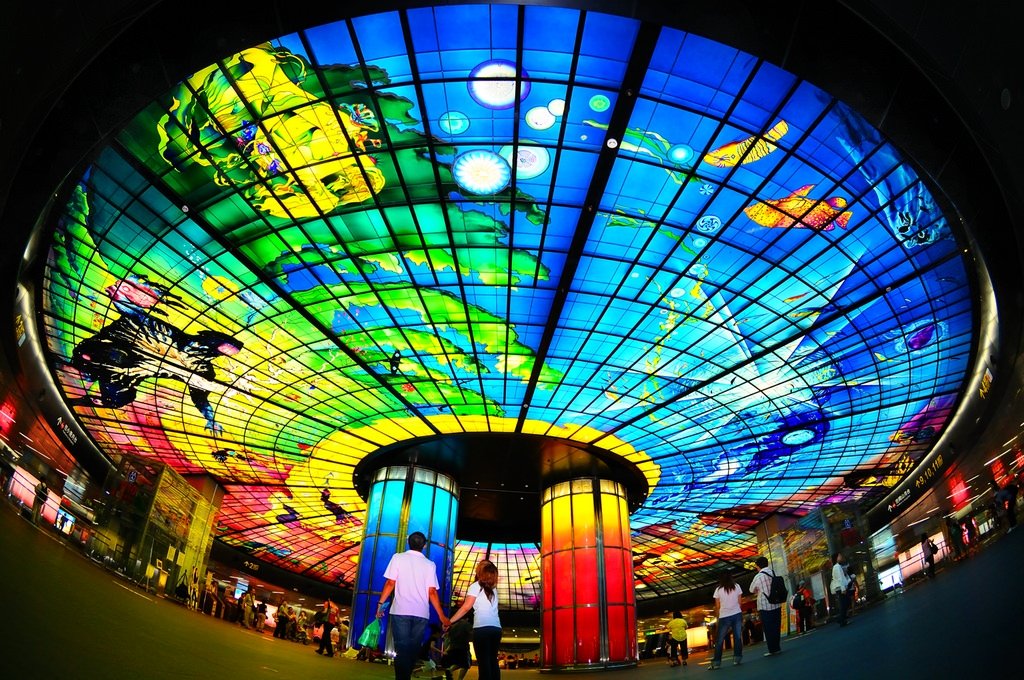
The “Dome of Light” at Formosa Boulevard Station, created by Italian artist Narcissus Quagliata, is the world’s largest public art installation made from individual pieces of colored glass (eng.taiwan.net.tw). The colorful dome uses colored glass to tell the story of human life through images of water, earth, light and fire. The symmetrical structure of the station building itself was designed to look like two hands pressing together in prayer.

Moscow Metro Stations, Russia
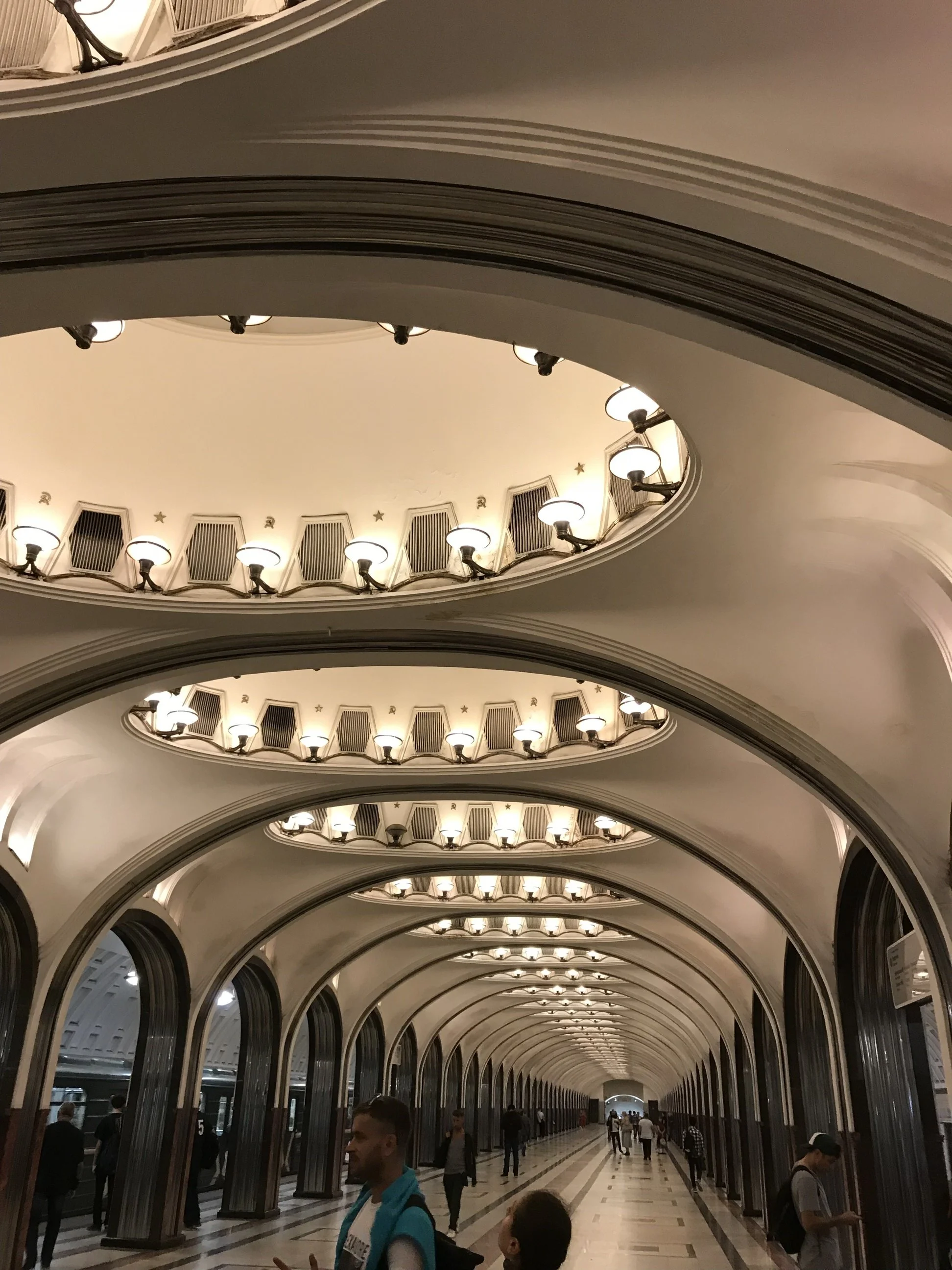
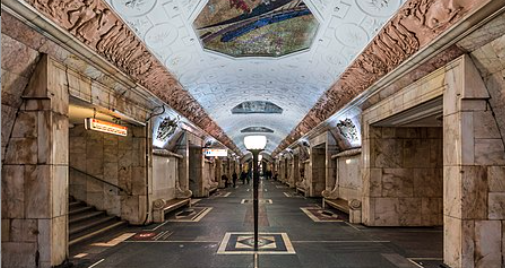
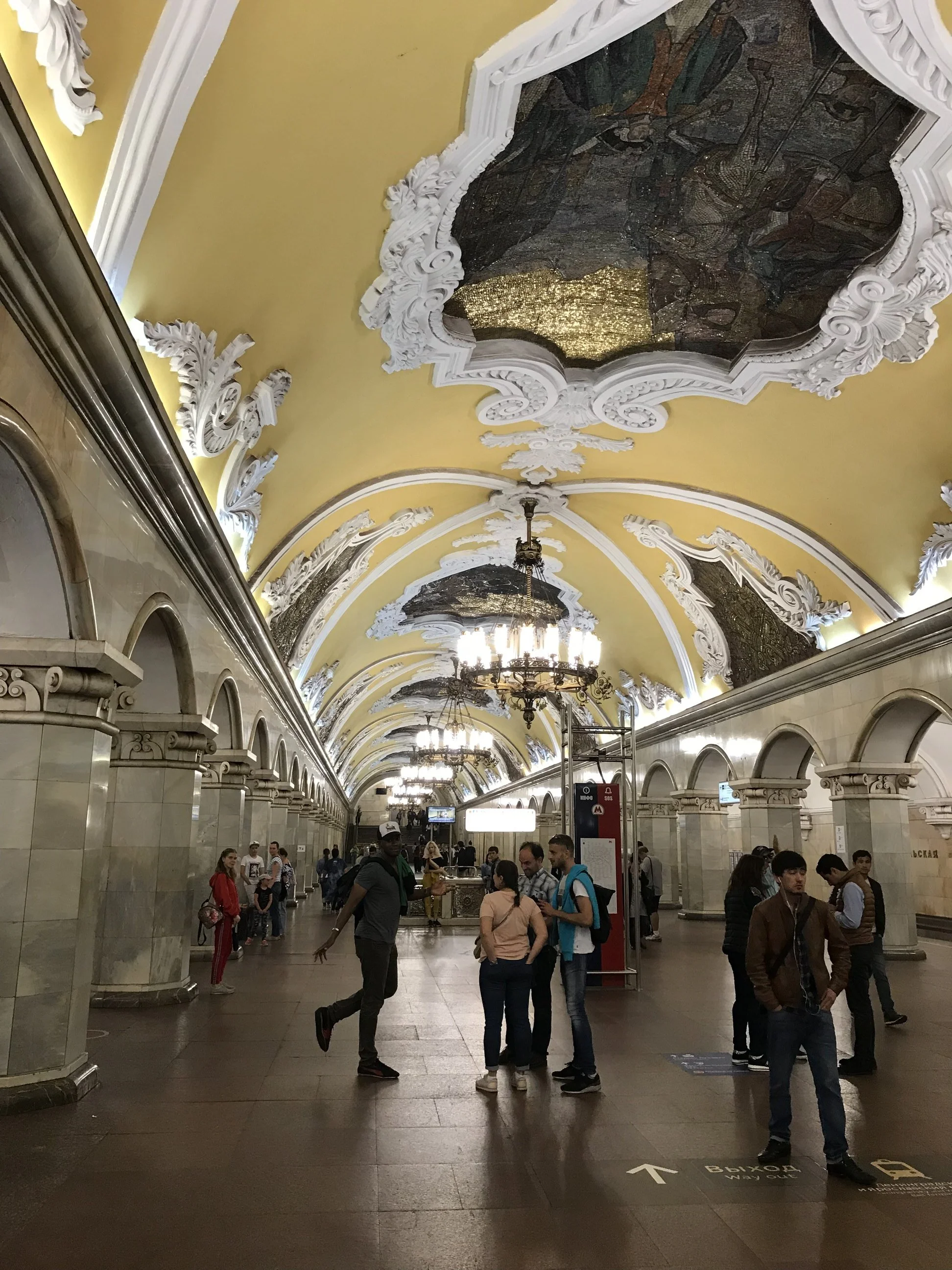
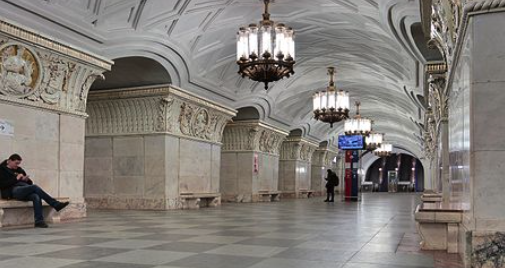
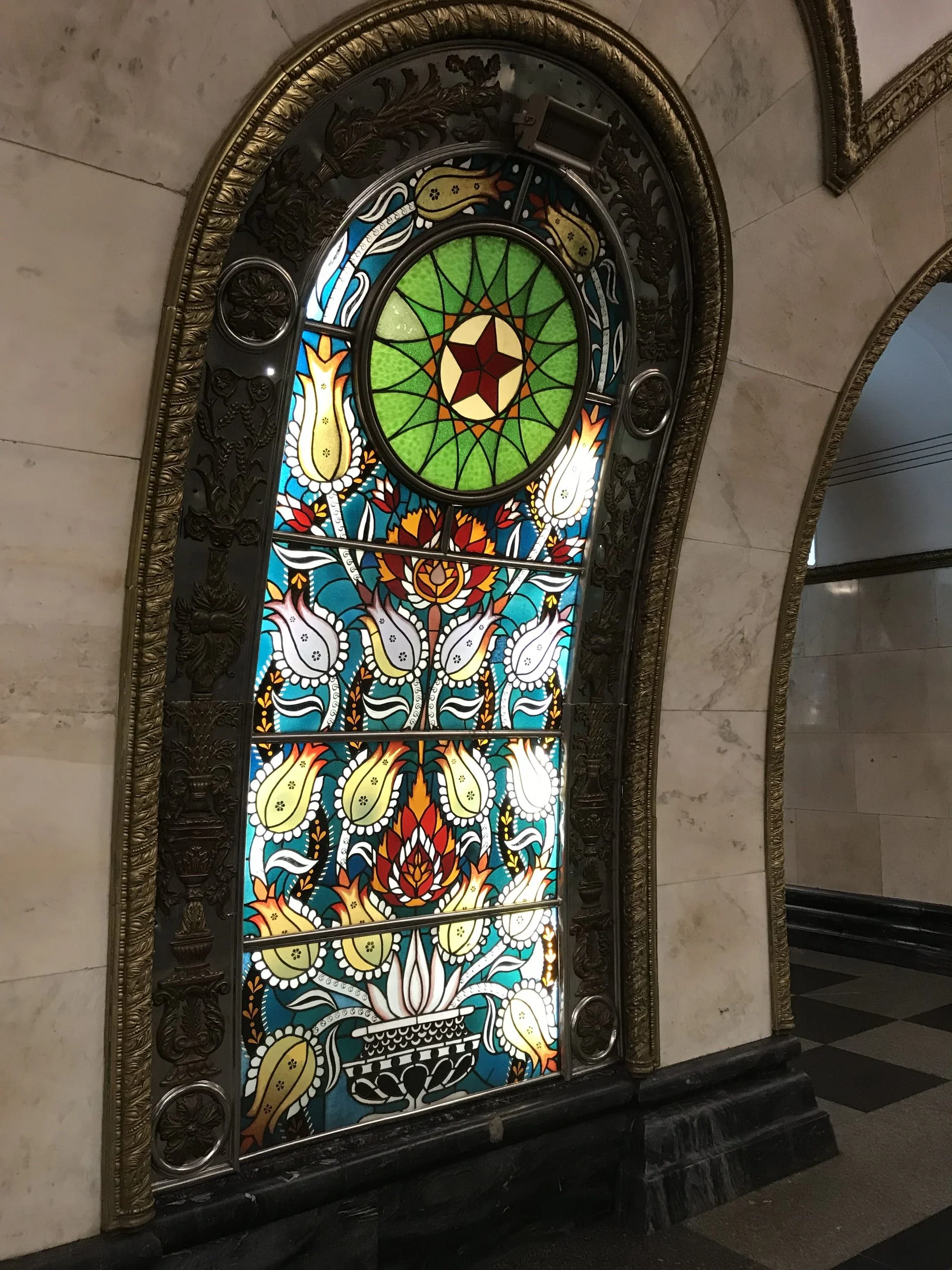
Operating more than 304 stations, Moscow’s metro stations are some of the busiest and most lavish with stunning designs, chandeliers, and stained glass. One of the most famous stations, Mayakovskaya combines futuristic elements with elegant Art Deco designs. (Interesting fact: During the war it served as an air raid shelter.) Novokuznetskaya boasts a heavily ornamented design with octagonal ceiling mosaics, pink and white marble pylons, giant chandeliers and bronze ornaments. Thirty-two stunning stained-glass panels with brass borders decorate Novoslobodskaya, each depicting different professions of the Soviet times. Baroque-style Komsomolskaya looks more like an opulent ballroom than a metro station with yellow and golden mosaics and bronze chandeliers. Prospect Mira’s ambiance and design were inspired by the nearby Botanical Garden of Moscow State University and showcase delicate ceramic floral elements.
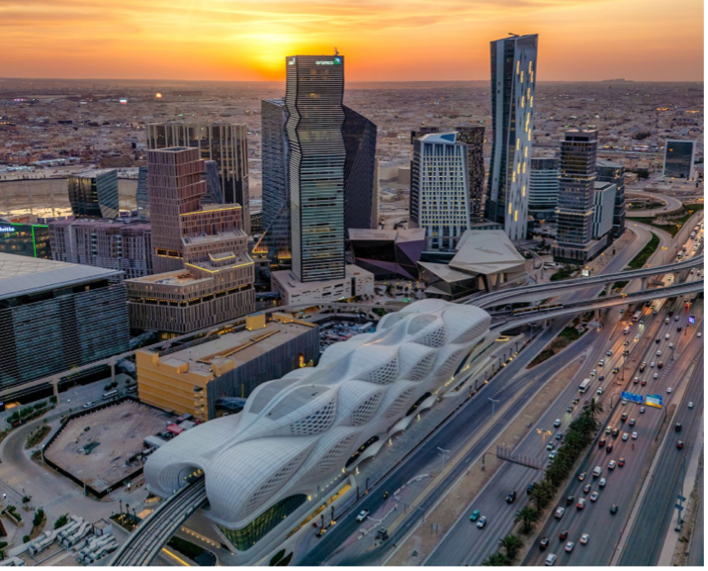
Designed by Zaha Hadid Architects, KAFD metro station is the centerpiece of Riyadh’s modern metro network which is the world’s longest driverless system in the world stretching almost 110 miles. The station design “prioritizes connectivity and optimizes internal circulation and comfort” (theplan.it). It houses six rail platforms over four levels, connects to the airport, and provides access to the local monorail via skybridge as well as park-and-ride and bus terminals. It features an undulating lattice façade inspired by wind-shaped desert patterns. These exterior geometric perforations help minimize solar gain. KAFD “combines effective passive design features with a high-efficiency cooling system that is powered by renewables and automatically adjusts to differing passenger levels throughout the day, while sliding door panels on each platform retain cool air within the station” (archdaily.com). The station also displays several pieces of artwork, including a sculpture by American Alexander Calder.
 
Laura McMahon