Outdoor Showers Heat Up Summer
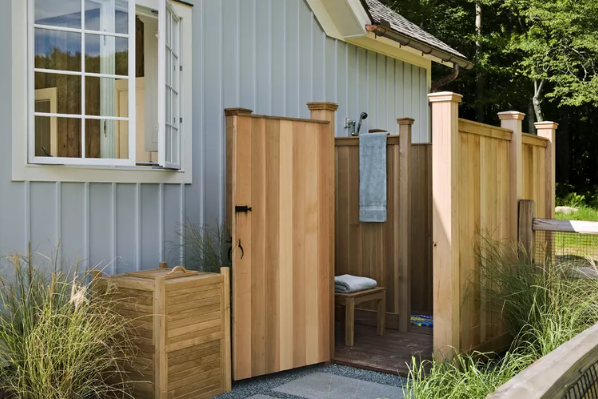
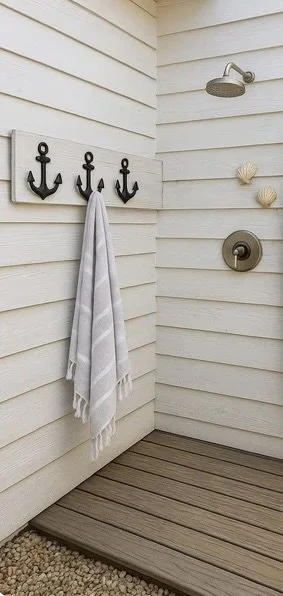
Design by Crisp Architects / Photo by Rob Karosis, via the spruce.com
Outdoor Showers Heat Up Summer
by Sweiskloss
July 16, 2026
by Sweiskloss
July 16, 2026
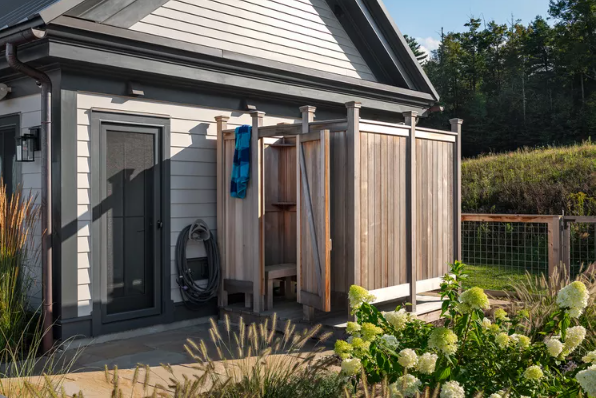
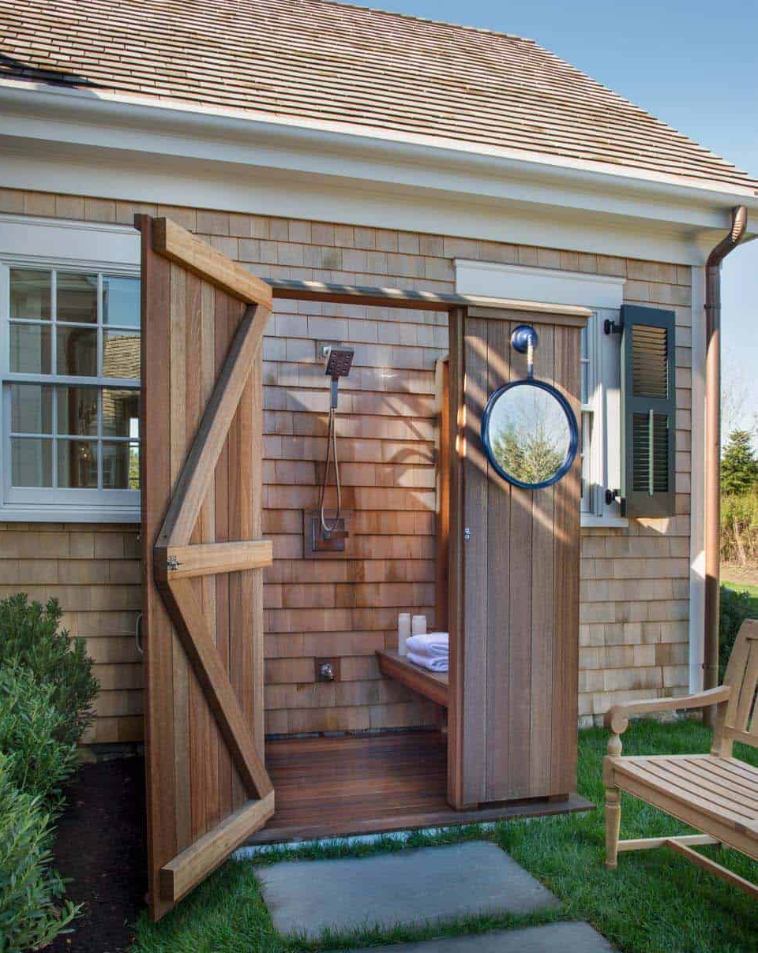
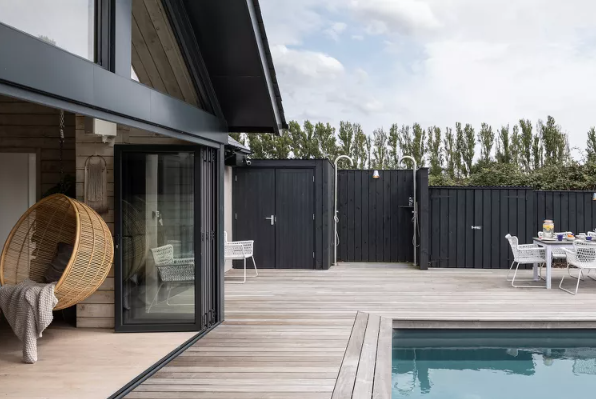
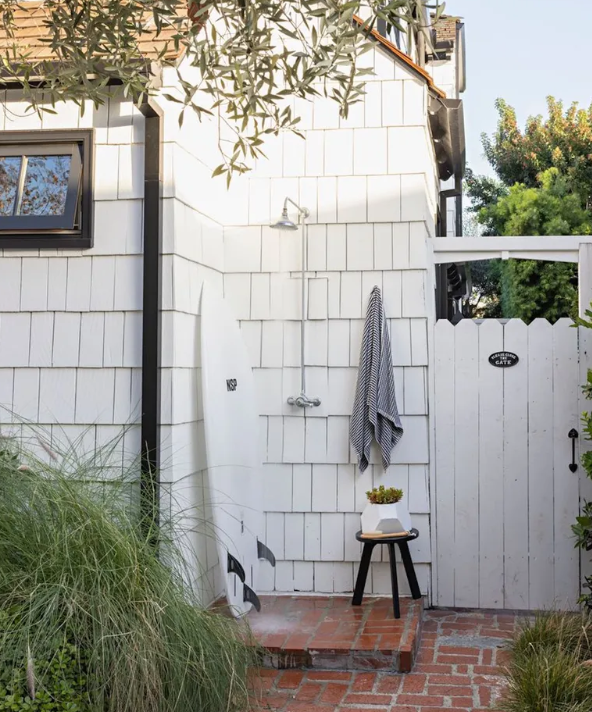
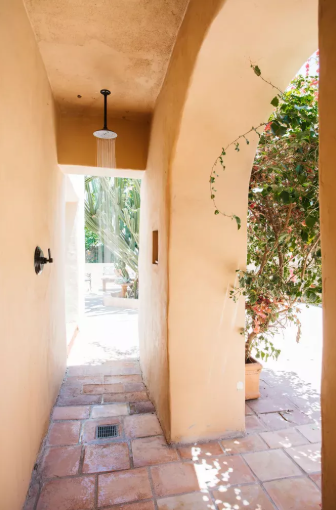
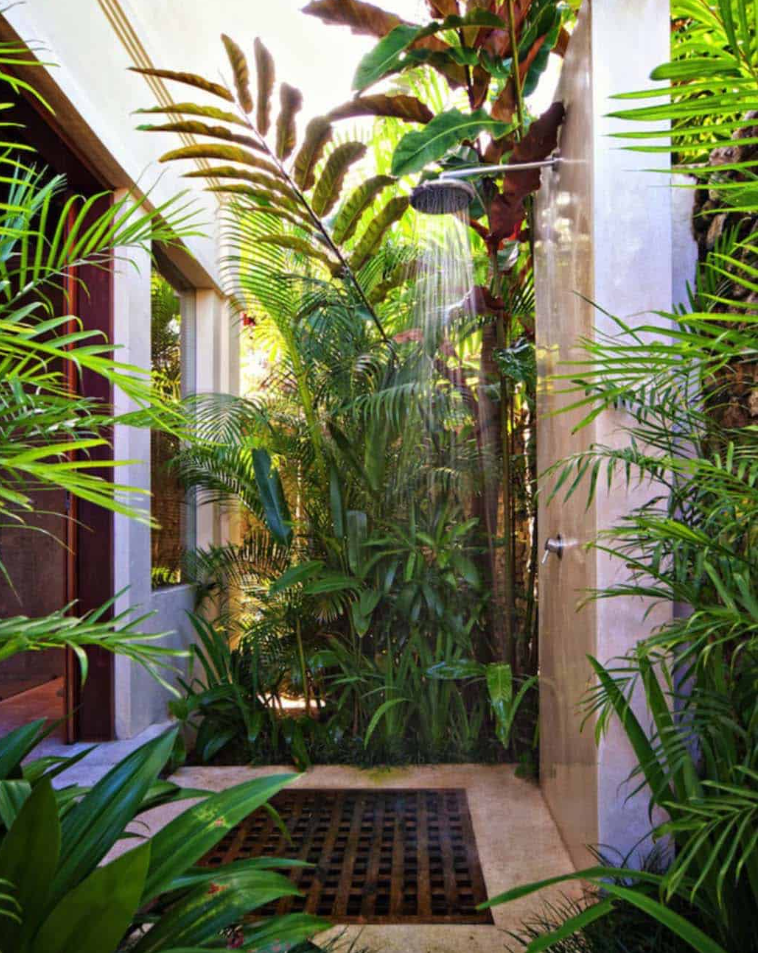
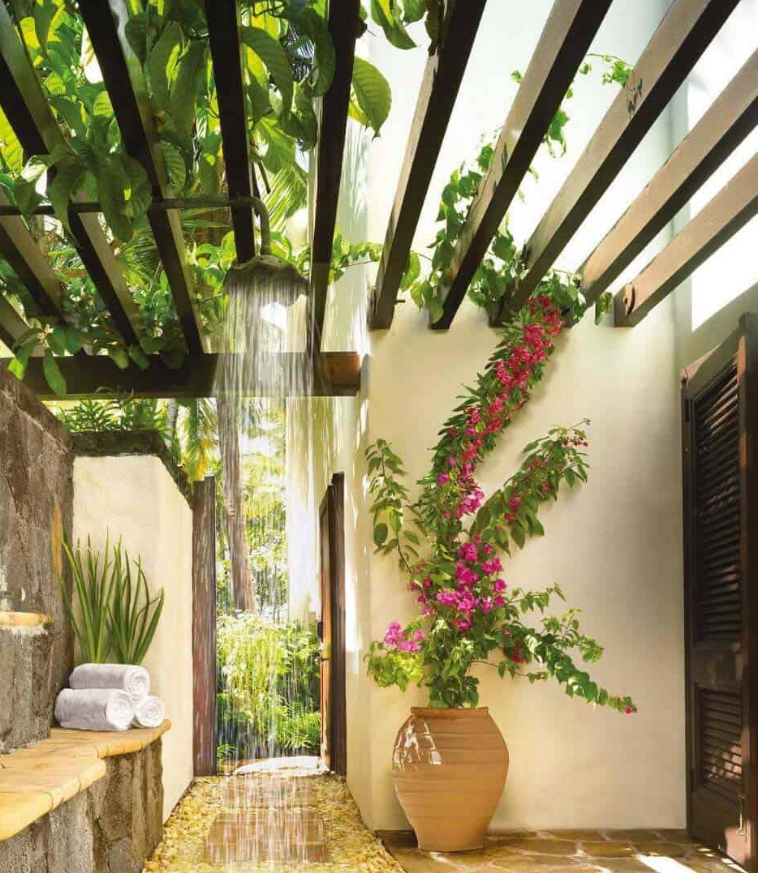
Water supply and drainage issues will play a large part in determining the location of an outdoor shower. Connecting to the home’s existing plumbing is typically the most efficient solution. In colder climates, shut off and drain valves must be installed to prevent pipes from freezing and bursting. Natural slopes, gravel beds, permeable surfaces and French drains help direct water away from the home’s foundation and minimize runoff. Local codes will dictate how to handle graywater reuse for landscape irrigation.
While easy access is essential, privacy is paramount. Existing landscape features such as rock walls, mature trees, or dense planting can naturally screen the shower while helping it blend into its surroundings.
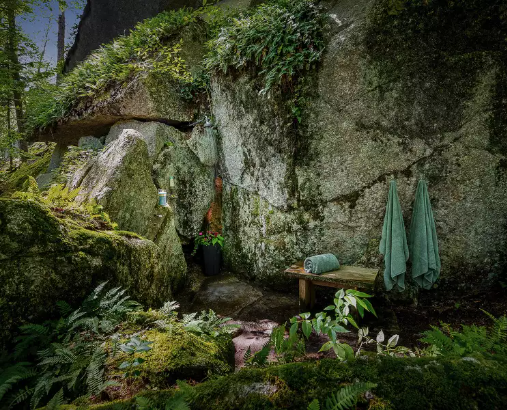
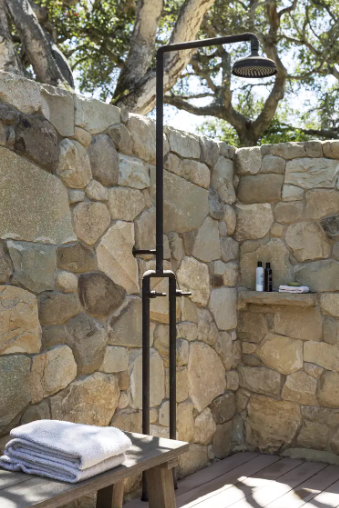
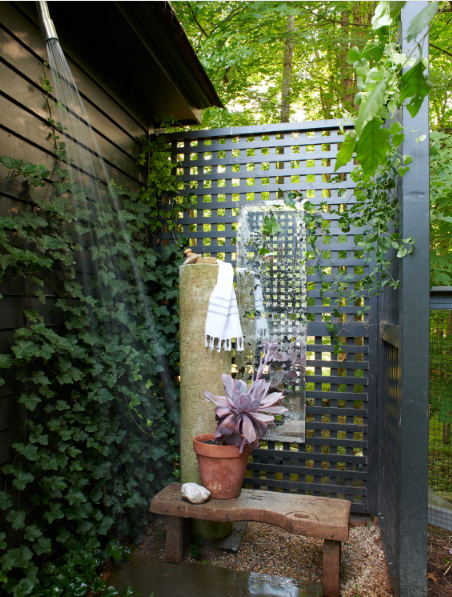
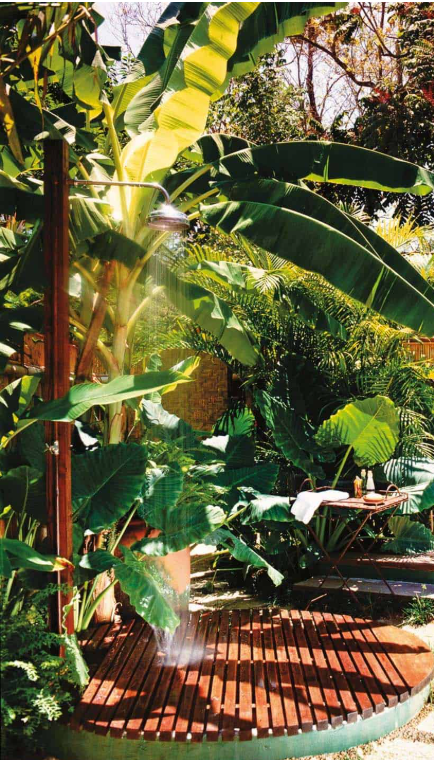
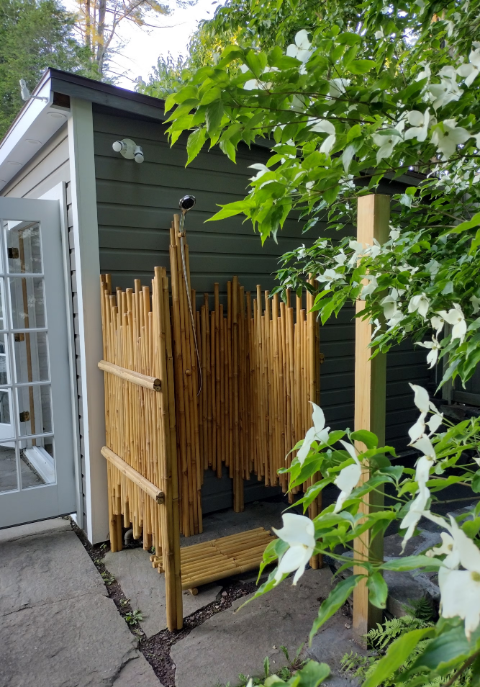
A dry area with hooks for towels and robes, a bench for changing and place for storing products, and a niche or bench for products that will remain such as soap and shampoo makes an outdoor shower feel more intentional and less like rouging it. Green products that are safe for the environment should be used. Illumination for evening or early bird rinses adds a touch of elegance.
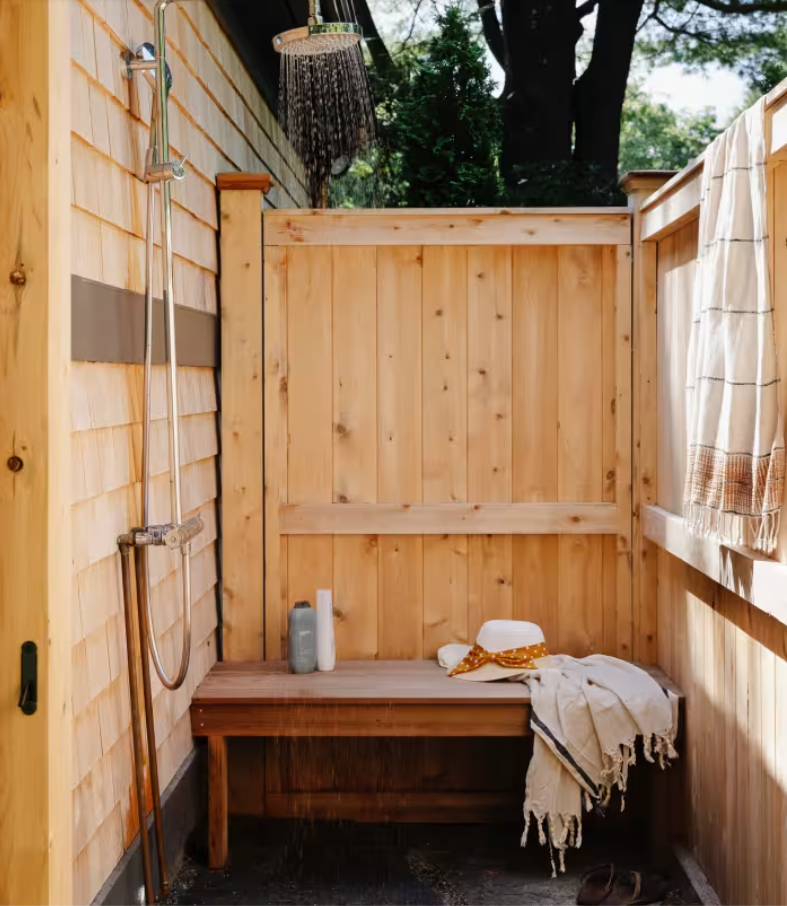
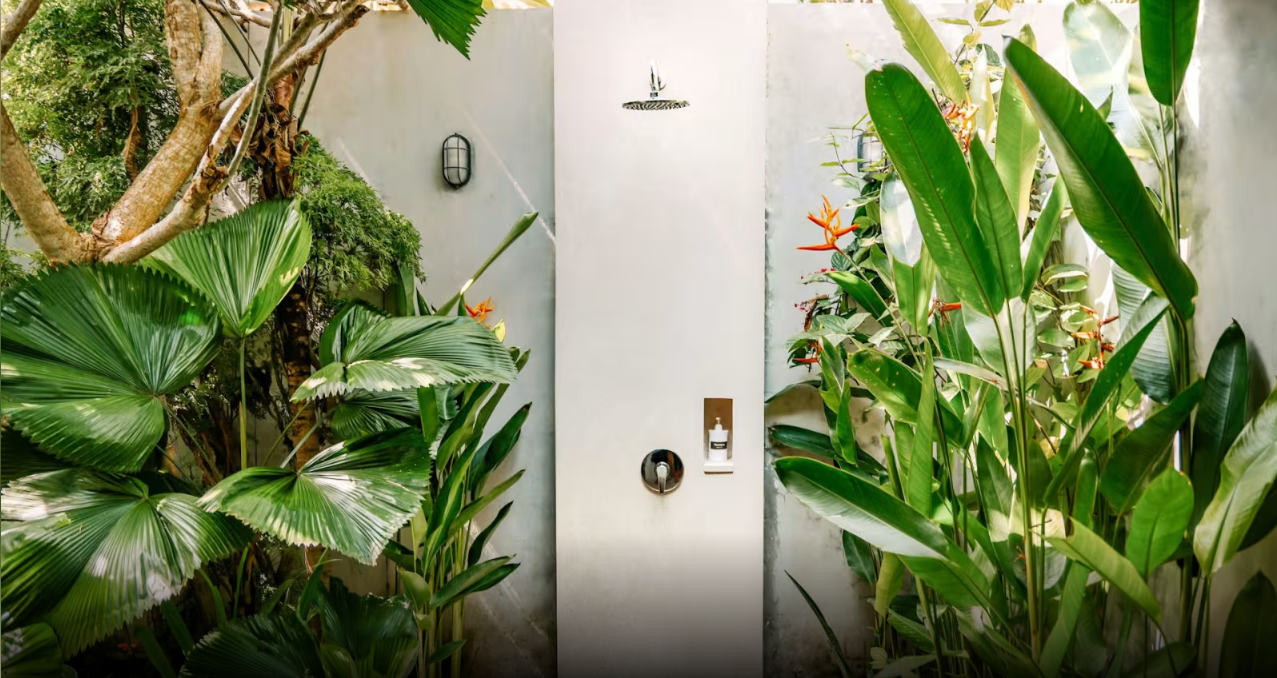
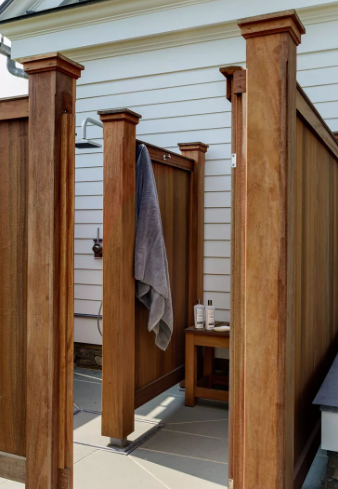
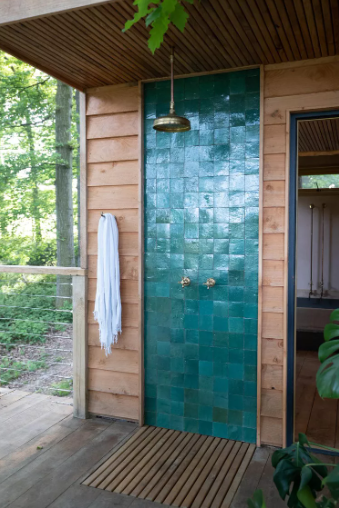
Because outdoor showers are exposed year-round to sun, moisture, and changing temperatures, material selection is critical.
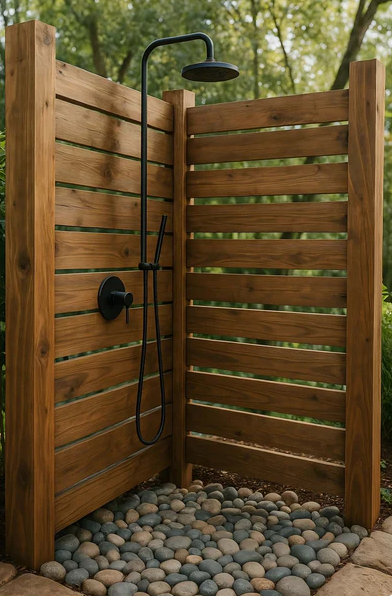
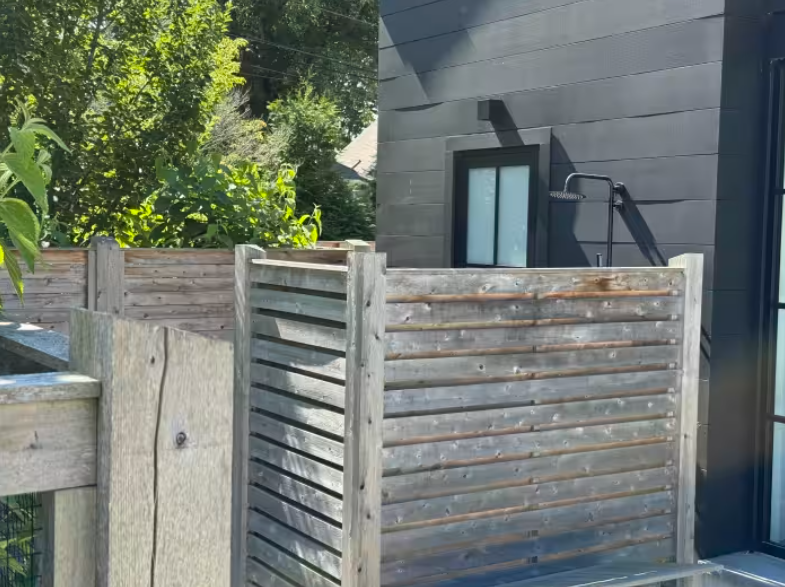
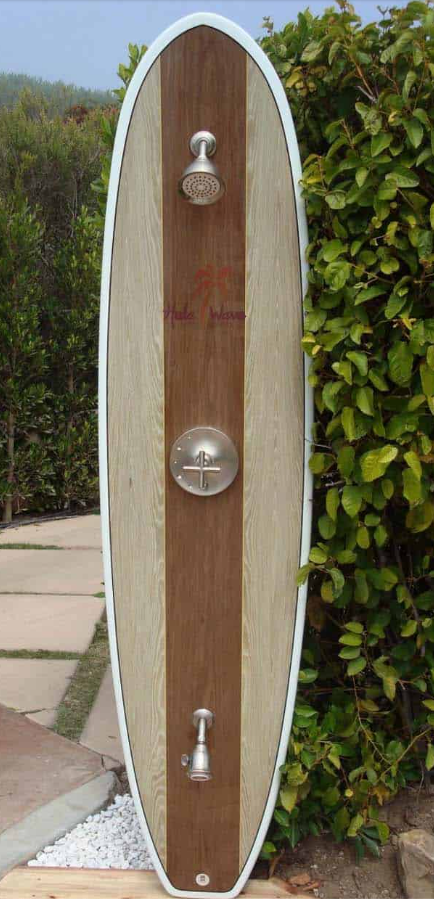
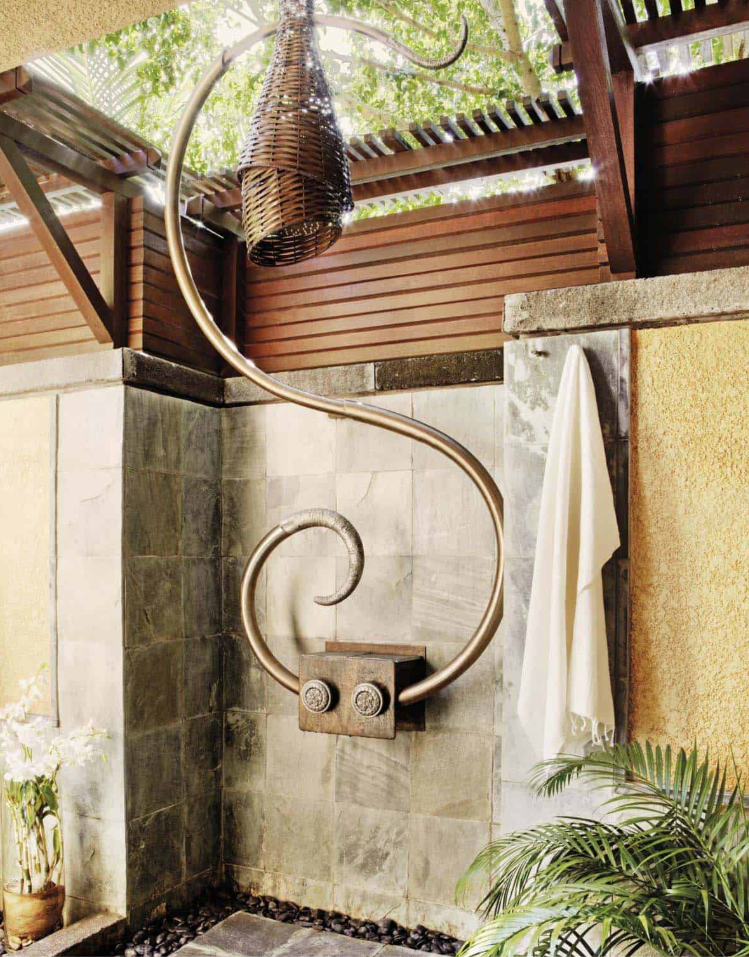
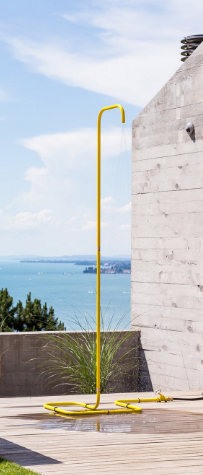
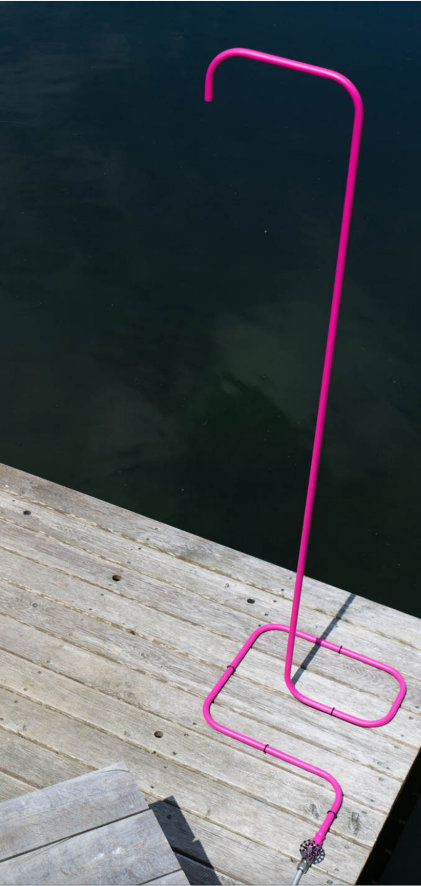
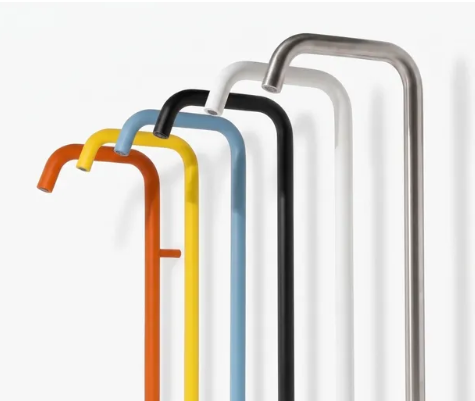
Fixtures and finishes bring personality to the space. Stainless steel offers a clean contemporary look, while weathered copper creates warmth for a more rustic aesthetic. For a true spa-like experience multiple shower heads are ideal.