
The Great Shakeout

Image courtesy of csusm.edu

 
The Great Shakeout

by Sweiskloss
Oct 15, 2026
Today is the Great Shakeout, where students across the state will practice how to “Drop, Cover and Hold On” during an earthquake. In a state as seismically active as California, building codes play a critical role in ensuring structures are designed and constructed to resist seismic forces and prevent catastrophic collapse.

Fundamental principles of earthquake-resistant design focus on allowing buildings to bend, absorb, and dissipate energy rather than try to resist the ground’s movement. Reinforced concrete and steel are key materials, while other strategies include incorporating sheer walls for lateral stability, providing multiple load paths to redistribute forces, and evaluating foundation soils.

Advances in technology have led to innovative approaches for creating earthquake-resistant buildings. From base isolation systems to sophisticated software programs, modern solutions incorporate cutting edge design, smart technology and advanced materials to minimize damage and protect occupants.

Base Isolation

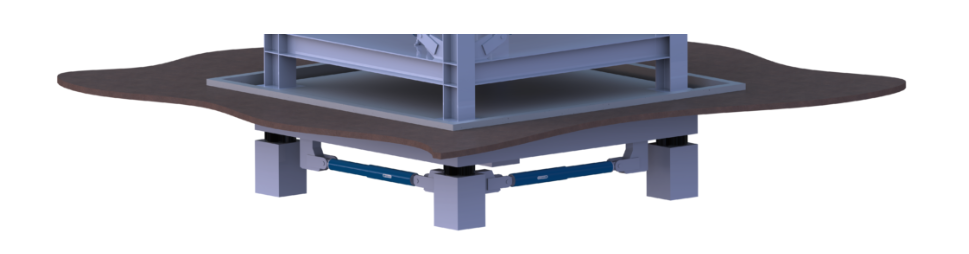
Image courtesy of taylordevices.com

As the name suggests, base isolation systems separate the building from the ground, allowing it to move independently during an earthquake and reducing the seismic energy transferred to the structure (taylordevices.com). One common approach uses lead-rubber bearings between the building and its foundation, absorbing energy and allowing controlled movement.

A Japanese company has taken this concept to another level (literally) by developing an air cushion system that lifts a house off its foundation during an earthquake. When sensors detect seismic activity, compressed air is released into the chamber beneath the house, temporarily raising it 3 centimeters above its foundation (parametric-architecture.com).

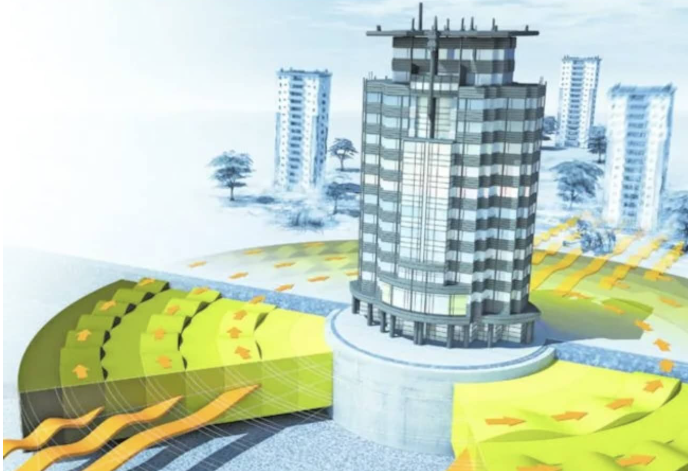
Image courtesy of parametric-architecture.com
Dampers

“Shock absorbing dampers are one of the most popular seismic design principles today” (buildings.com). Similar to shock absorbers in a car, these devices dissipate energy from a building’s movement.

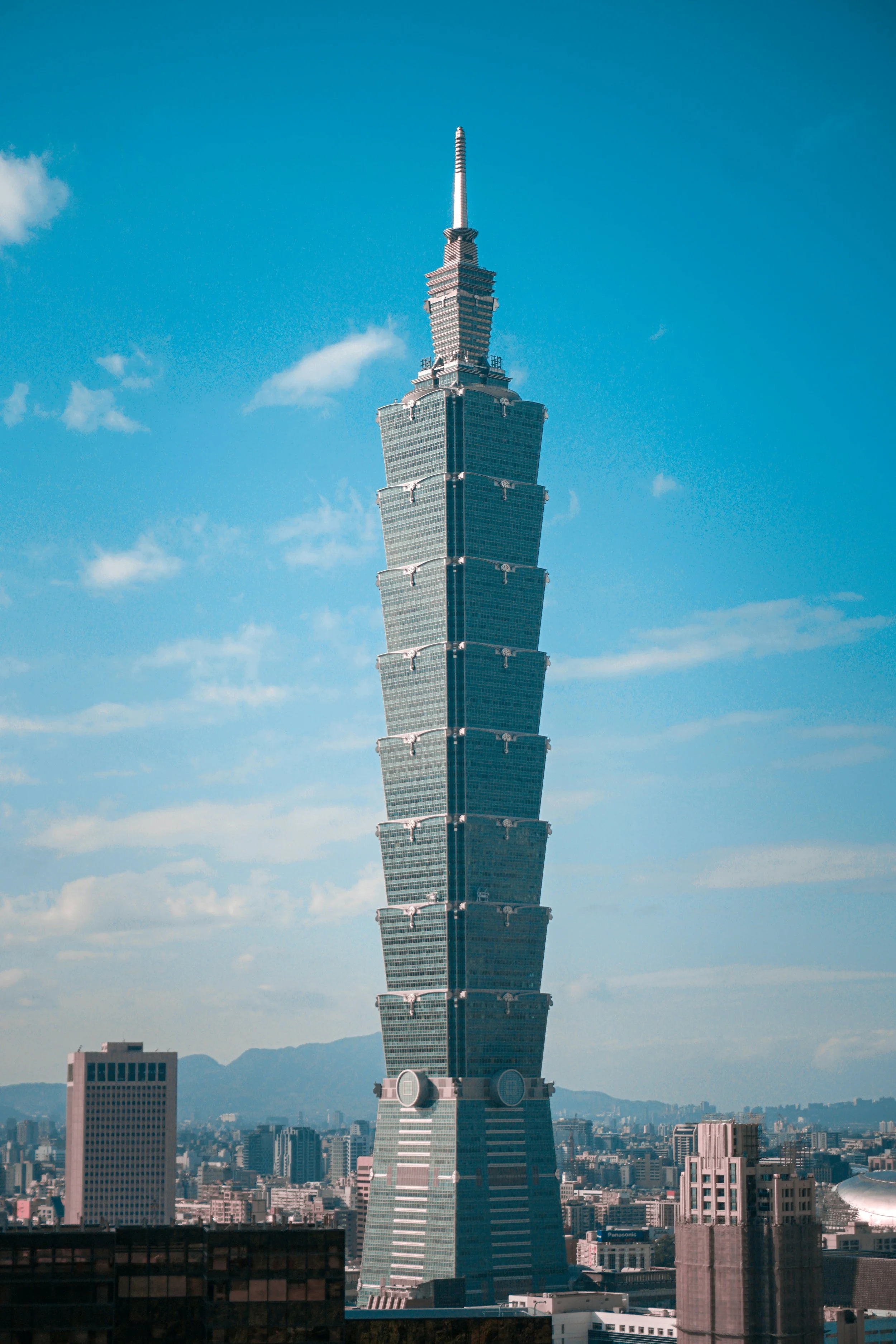
One notable example is Taipei 101, the 1,667-foot-tall skyscraper in Taiwan, that weathered a magnitude 7.4 earthquake in April 2024. The building’s massive, suspended steel pendulum counteracts building sway, reducing oscillations and improving stability (constructsteel.com).
Advanced Materials

Advanced materials, from engineered composites to shape-memory alloys (SMAs), combine strength and flexibility to withstand seismic forces. Some smart materials can change their properties in response to external stimuli, stiffening or softening on demand. SMAs are especially interesting, as they “remember” their original shape and can transform back into it after deforming under pressure.

Smart Systems and Sensors

Smart building systems use sensors and automated responses to monitor and react to ground movement in real time. Earthquake early-warning systems can detect initial seismic waves and send out alerts, while automated systems can shut off gas and water lines, and post-earthquake monitoring can help engineers asses structural damage.

Computer Programming

Advancements in computerized AI modeling and sophisticated software programs allow engineers to create detailed virtual models of buildings and subject them to a wide range of simulated scenarios. These simulations provide valuable insight into a building’s likely performance during a seismic event, identifying potential weaknesses and optimizing design.

Seismic Invisibility Cloak
No, this isn’t science fiction. Scientists are exploring a seismic “invisibility cloak” that uses buried concentric rings to redirect earthquake waves around a building’s foundation, reducing energy transferred to the structure. Though promising, the technology remains experimental and challenging to implement at scale (science.howstuffworks.com).

Land and Sea Creatures

Researchers are also turning to nature for other creative solutions. Inspired by the strength and flexibility of spiderwebs, Japanese architect Kengo Kuma has explored using lightweight, high-strength carbon fiber rods to reinforce buildings, allowing them to flex during earthquakes and resist collapse (bertolinacresi.com). MIT researchers are also studying spiderwebs’ resilience to inspire more earthquake-resistant materials (science.howstuffworks.com).

Other scientists are looking at mussels, whose sticky, flexible fibers allow them to remain attached to rocks despite powerful waves. Mimicking these natural adhesives could lead to materials that maintain their grip and flexibility under extreme forces (science.howstuffworks.com).
“Timber…!”

Believe it or not, timber is emerging as a sustainable alternative for earthquake resistant construction, offering a lower carbon footprint than steel and concrete, while engineered wood provides enhanced strength.

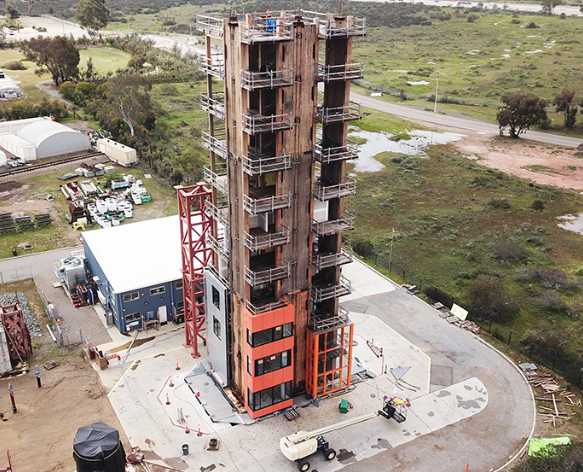
Lehigh University is developing a timber-based wall system that absorbs seismic energy through flexible, self-centering connections (icpie.lehigh.edu). Meanwhile, the University of San Diego is using its shake table to test a 10-story mass-timber building, designed by a collaborative team of universities lead by the University of Washington, to evaluate the timber building’s resilience to earthquakes (ce.washington.edu).
While earthquakes are unpredictable, technology driven solutions, combined with advancements in construction materials and techniques, are pushing the boundaries of earthquake-resistant architecture, and mitigating the damage earthquakes cause.
 
Laura McMahon