Architectural Album Covers that Rock

Image courtesy of domusweb.it

 
Architectural Album Covers that Rock
by Sweiskloss
January 29, 2026
This Sunday, Lady Gaga, Bad Bunny, and Kendrick Lamar, among other musicians will contend for Album of the Year at the 2026 Grammy Awards. That got me thinking, or rather nostalgic, for album covers of my youth – Springsteen’s American flag (and backside) on Born in the USA, Prince on his motorcycle on Purple Rain, and the baby on Nirvana’s Nevermind.

Among the variety of images and graphic designs that have graced album covers over the years, many have drawn inspiration from the urban environment (domusweb.it). From housing developments to skyscrapers, architectural landmarks have played a role in reinforcing the music’s identity, message, and “vibe.”

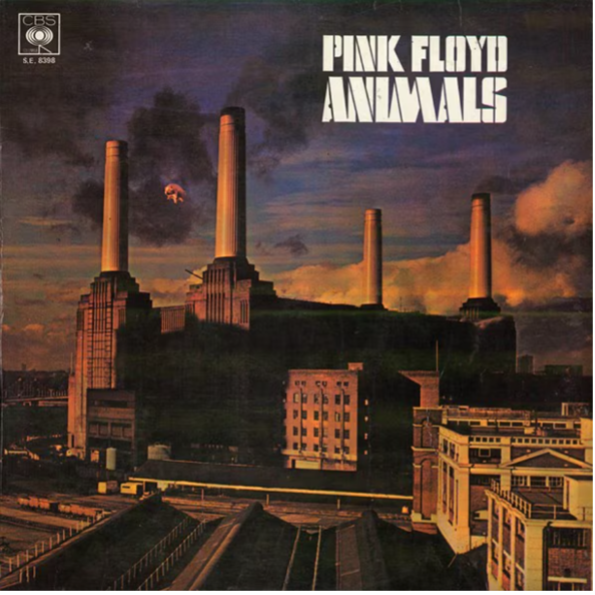
Pink Floyd, Animals (1977)

London’s Battersea Power Station looms over an industrial landscape on the cover of Pink Floyd’s Animals, “undoubtedly one of the most iconic [covers] in rock history” (domusweb.it). Built between 1929 and 1935, having deep ties to Britian’s industrial past, the brick building features Art Deco detailing in the vertical fluting on the four chimney shafts. A reaction to the strikes, inflation and unemployment in the UK in the mid-70’s, the album’s themes of social alienation, control, and a “scathing critique of capitalism” are echoed in the bleak towering structure that dominates the skyline. Designed by Roger Waters and Hipgnosis studio, the cover image is dark and oppressive. The giant pig floating between the towers “disrupts the rigidity of the building’s form … and [emphasizes] how power and economic systems distort reality” (domuseb.it). The album concept was influenced by George Orwell’s Animal Farm, to comment on society’s divisions between the ruling and ruled classes. In an ironic twist of fate, the station has been turned into a mixed-use building with luxury apartments.

Wilco, Yankee Hotel Foxtrot (2002)
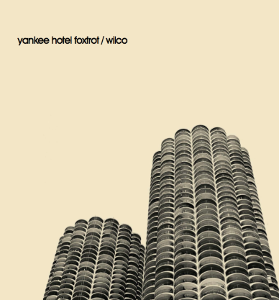
Nicknamed the “Corn Cob Towers” (and since 2002 “The Wilco Towers”), the Marina City towers are an icon of Chicago’s skyline and were the tallest residential building in the world when they were completed in 1964. Built to attract residents back to the city following the move to suburbia, architect Betrand Goldberg included a host of amenities such as a gym, bowling alley, and restaurants, among other attractions. A circular layout, the twin towers are an example of the organic modernism approach being explored during this time. The building was about innovation and architecture of the future, themes that resonated with Wilco who were between record labels and forging their own unconventional path ahead. A Chicago band and a Chicago landmark ‘make beautiful music together’ as the saying goes. Photographed by Sam Jones, the album cover “helped seal [Wilco’s] pact with fans in Chicago and incidentally reclaimed one of the city’s most iconic structures in the process” (vice.com). In a strange coincidence, the album was intended to be released on September 11, 2001. Instead, it began streaming a week later, with many fans drawing parallels between the tragic event, the cover image, and songs in the album. Nevertheless, the “the focus remain[s] on the love affair between Chicago and its most beloved band” (vice.com).

The Beastie Boys, To the 5 Boroughs (2004)
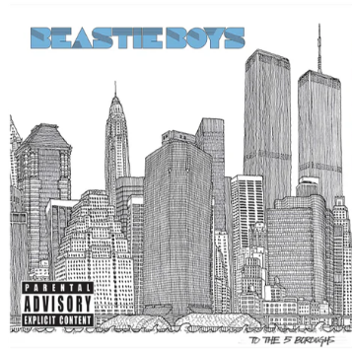
A heartfelt tribute to their hometown, New York City, Beastie Boys’ To the 5 Boroughs features a detailed drawing of the city skyline, including the Twin Towers. “From its artwork down, To the 5 Boroughs” is grounded in its roots.. “recall[ing] not only a lost skyline, but a lost time and place when the hip-hop aesthetic was stripped-back” (udiscovermusic.com). With a deep connection to (and love for) New York City, the Beastie Boys ‘kept it old school’ in terms of both the cover artwork and music. The illustration, created by Matteo Pericoli, captures the density of the city, and it’s “layered cultural and architectural identity” (domusweb.it). The record, similar to the city’s depicted architecture, is a reflection of different styles, eras and influences.

Led Zepplin, Physical Graffiti (1975)
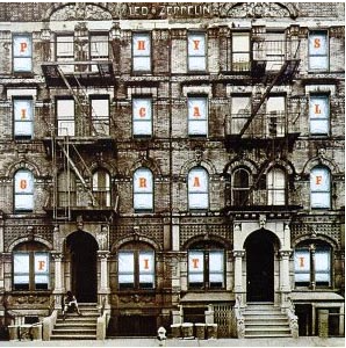
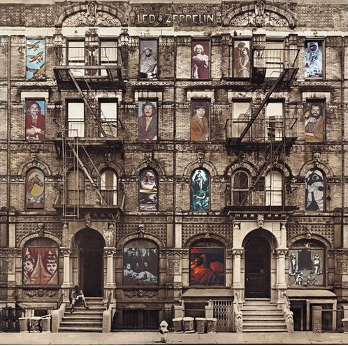
The two tenements at 96-98 St. Mark’s Place in Lower Manhattan have been immortalized on the cover of Led Zepplin’s Physical Graffiti. A typical brownstone building in the East Village, designer Peter Corriston searched for a symmetrical building with interesting details, although he had to crop out the fifth floor to fit the album’s square frame. Many of Manhattan’s tenements began as single-family homes. As they became unaffordable, they were divided into apartments, and eventually tenement housing for low wage employees (archdaily.com). The concept of the imagery, as Corriston explained, was “based on the tenement, people living there and moving in and out” (grunge.com). The cover’s building windows were cut out, and the album was packaged with different sleeves “that could be slid into place” so that different famous (or infamous) faces would appear in the windows” (grunge.com). Culturally significant faces from Hollywood (such as Judy Garland, Elizabeth Taylor, W.C. Fields), history (i.e. Neil Armstrong, Lee Harvey Oswald, Queen Elizabeth II) and religion (Virgin Mary, Pope Leo XIII) peaked through the windows. One sleeve scene spelled out “Physical Graffiti” in the windows. To this day, the buildings still house residential apartments and remains a destination for music fans.

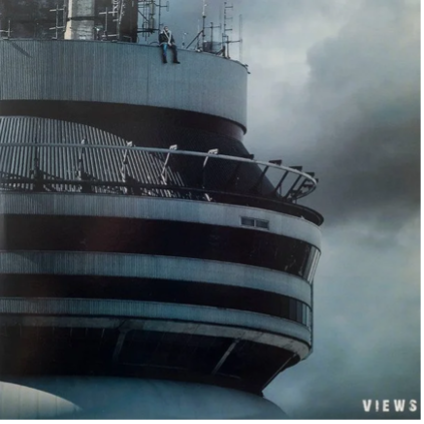
Drake, Views (2016)
Drakes sits atop the CN Tower in Toronto, Canada, on the cover of Views, as he pays homage to his hometown. While he did admit that he was photoshopped in, the album nevertheless makes our list thanks to the 1,815-foot-high tower. Built in 1976, it was the tallest tower in the world when it was completed and is the highest observation platform in the Western Hemisphere. Today it is the center of Toronto’s communications and a prime tourist attraction offering breathtaking views of the cityscape. Fun Facts: it is home to the world’s highest wine cellar; the Lower Observation Level features a glass floor (don’t look down!) (cntower.ca).

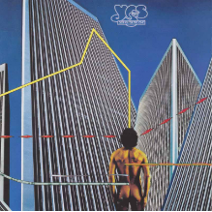
Yes, Going for the One (1977)
A nude man gazes at Los Angeles’ Century Plaza Towers on the cover of Yes’ Going for the One. Designed by Hipgnosis studio, the image has a clean, sleek, geometric and futuristic look, which reflected the band’s more modern and upbeat tone on their eighth album. “Yes wanted to take a different approach with ‘Going for the One’, a fresher sound” (poppodiumboerderji.nl) and this image of Plaza Towers aligned perfectly. Completed in 1975, the tallest and most recognizable buildings in Century City are often compared to the Twin Towers, both designed by renowned architect Minoru Yamasaki. A fresh take on Modern design, Century City Plaza towers are unusual in their triangular footprints. They are minimalist in materials and decoration, featuring an abundant of aluminum cladding and using vertical black-and-gray elements to emphasize their impressive height (laconservancy.com).

Here’s a playlist of other album covers that hit a high note in terms of architecture… and the songs are pretty good too.

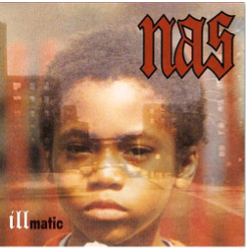
Nas, Illmatic (1984) – The cover shows a young Nas with the backdrop of the Queensbridge affordable housing complex where he grew up, “which is the life experience basis on which much of Illmatic is based” (njurbanthinker.org).
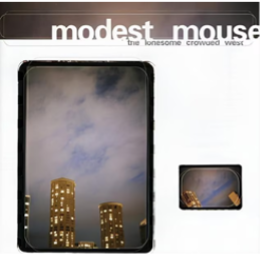
 

Modest Mouse, The Lonesome Crowded West (1997) – The conflict between progress, personified by the Westin Seattle towers, and the feeling of emptiness that can be a by-product of urban sprawl, are echoed in the oxymoron in the album’s title.
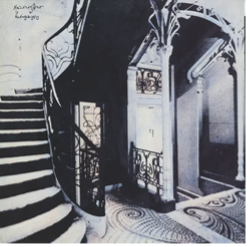


Mazzy Star, She Hangs Brightly (1990) –The elegant Art Nouveau elements (curved lines, botanical decorations) of Brussel’s Hotel Tassel align with the dreamlike and ethereal quality of the album.

 

Roxy Music, For Your Pleasure (1973) – Decadence, luxury and urban surrealism are conveyed in this nonspecific cityscape, motifs found in Bryan Ferry’s glam rock.

 
Laura McMahon