Sydney Architecture Aces It!
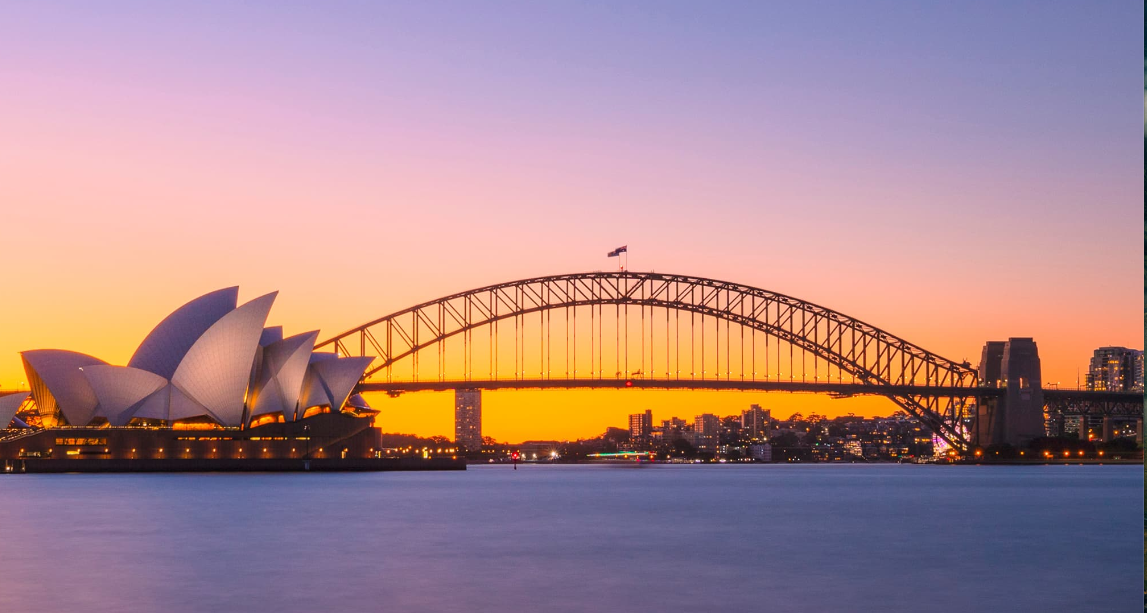
Photo from Sydney.com

 
Sydney Architecture Aces It!

by Sweiskloss
January 22, 2026
An avid tennis fan, I was excited by the start of the Australian Open this week. And while I love watching Alcaraz and Sinner battle it out on the hard courts, I equally enjoy watching the segments around town. With the flight from Los Angeles to Sydney taking around 15 hours, please enjoy some of Sydney’s remarkable architectural landmarks without the jetlag.

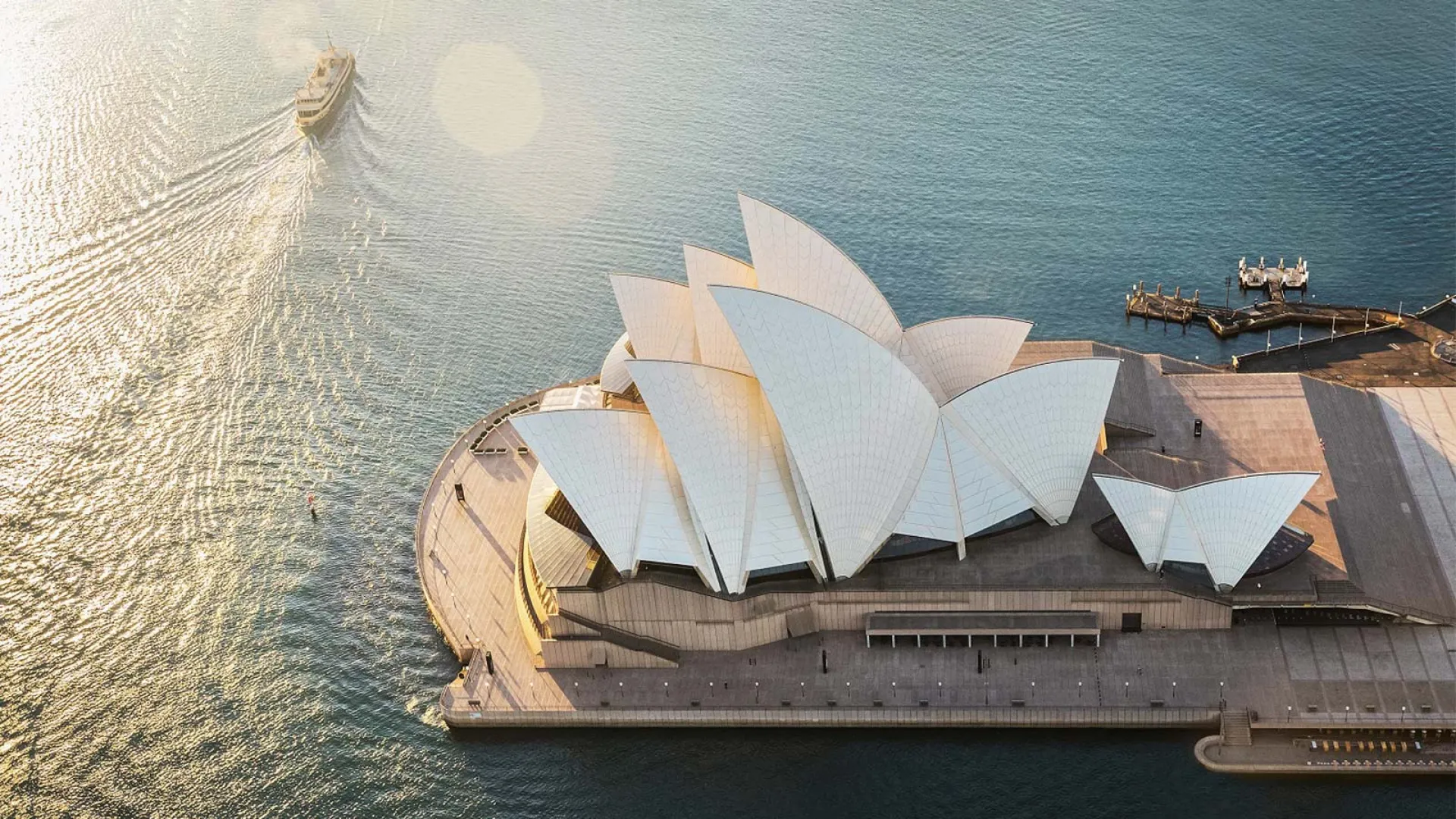
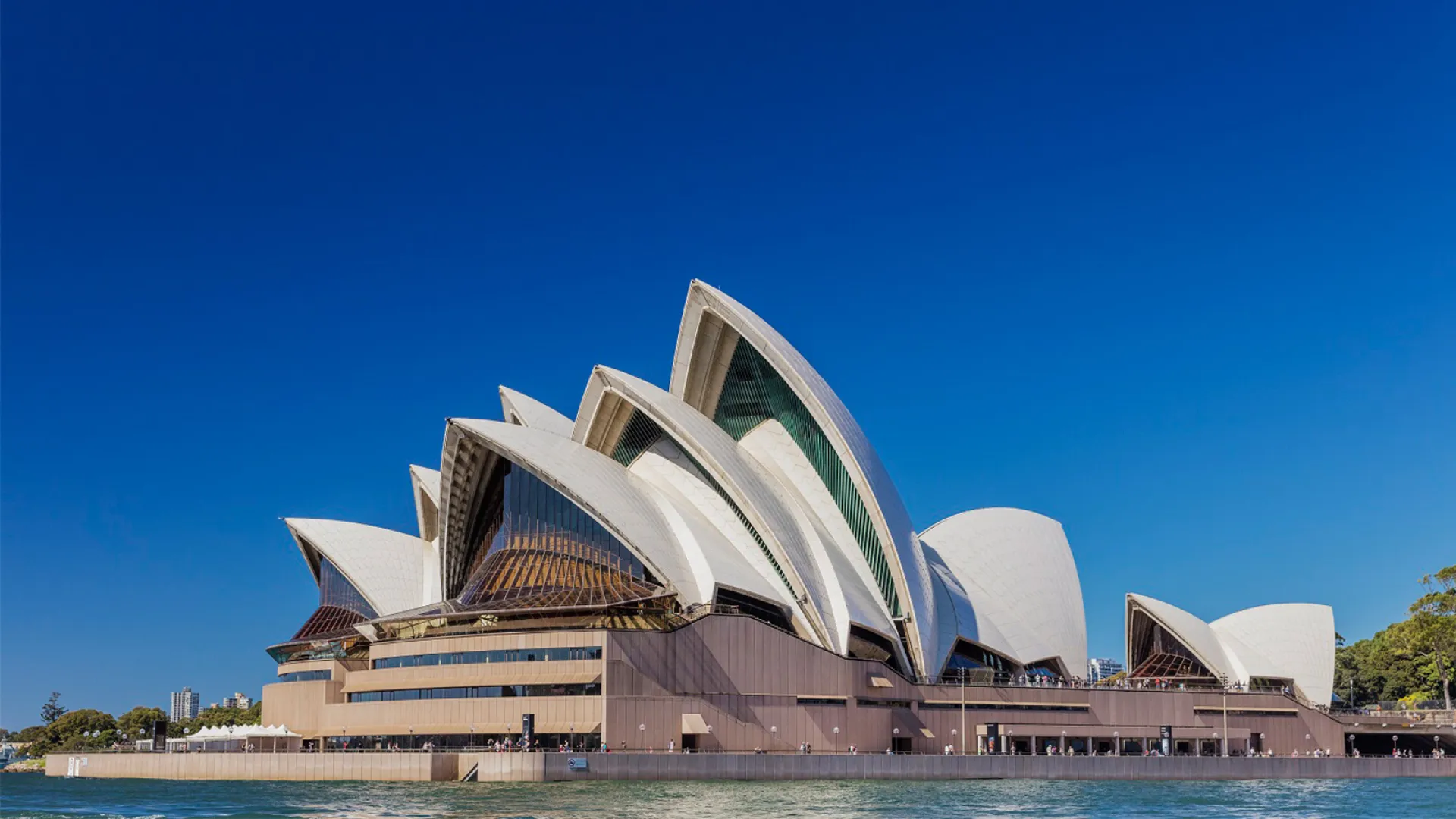
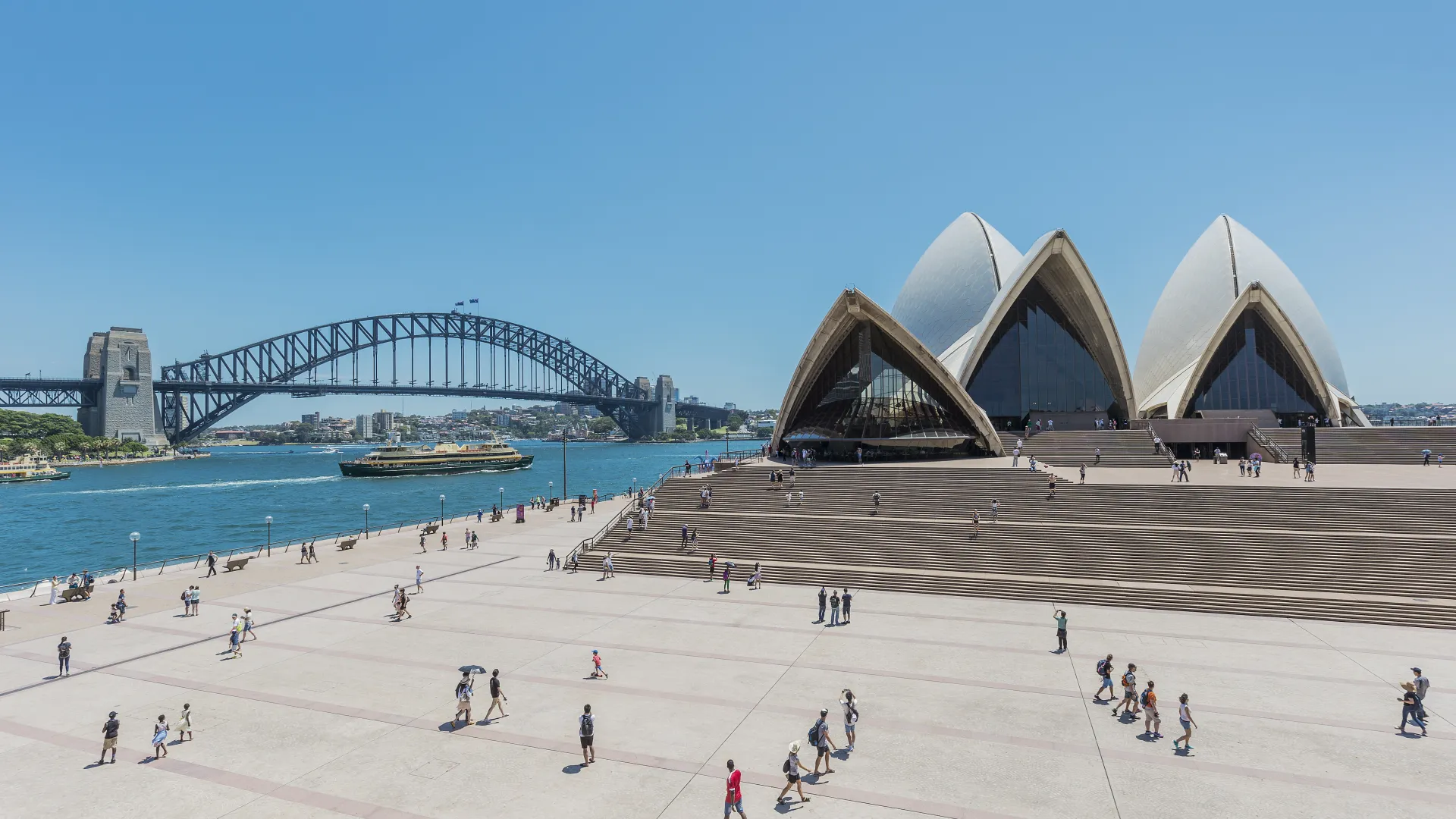
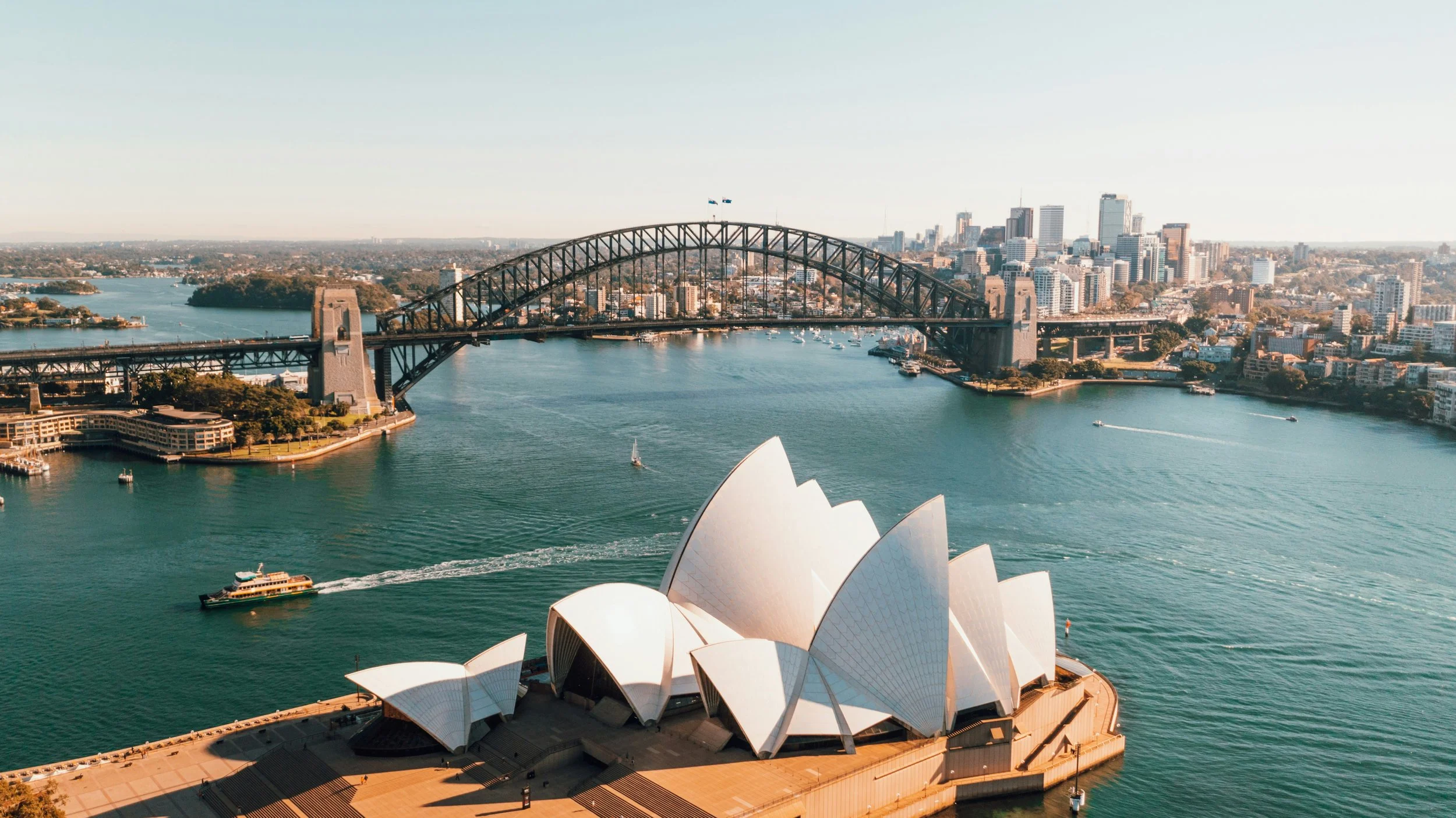
Sydney Opera House
Instantly recognizable, its famous silhouette, “inspired by the sails of ships, the shells of sea creatures, and the geometry of spheres,” the Opera House has become a symbol of Sydney (architecturelab.net). Designed by Danish architect Jorn Utzon in 1959 and inaugurated in 1973, the design was informed by the setting in Sydney Harbour. The revolutionary “spherical solution” for the iconic overlapping sails resolved complex engineering challenges. Freeform shells were prefabricated, enabling mass production and modular construction. The shells are clad with over a million ceramic tiles in a distinctive chevron pattern, “designed to sparkle against the sky” (xpressrendering.com). A UNESCO World Heritage site, the Sydney Opera House is Australia’s leading tourism destination and one of the world’s busiest performing arts centers, according to their website.

Harbour Bridge
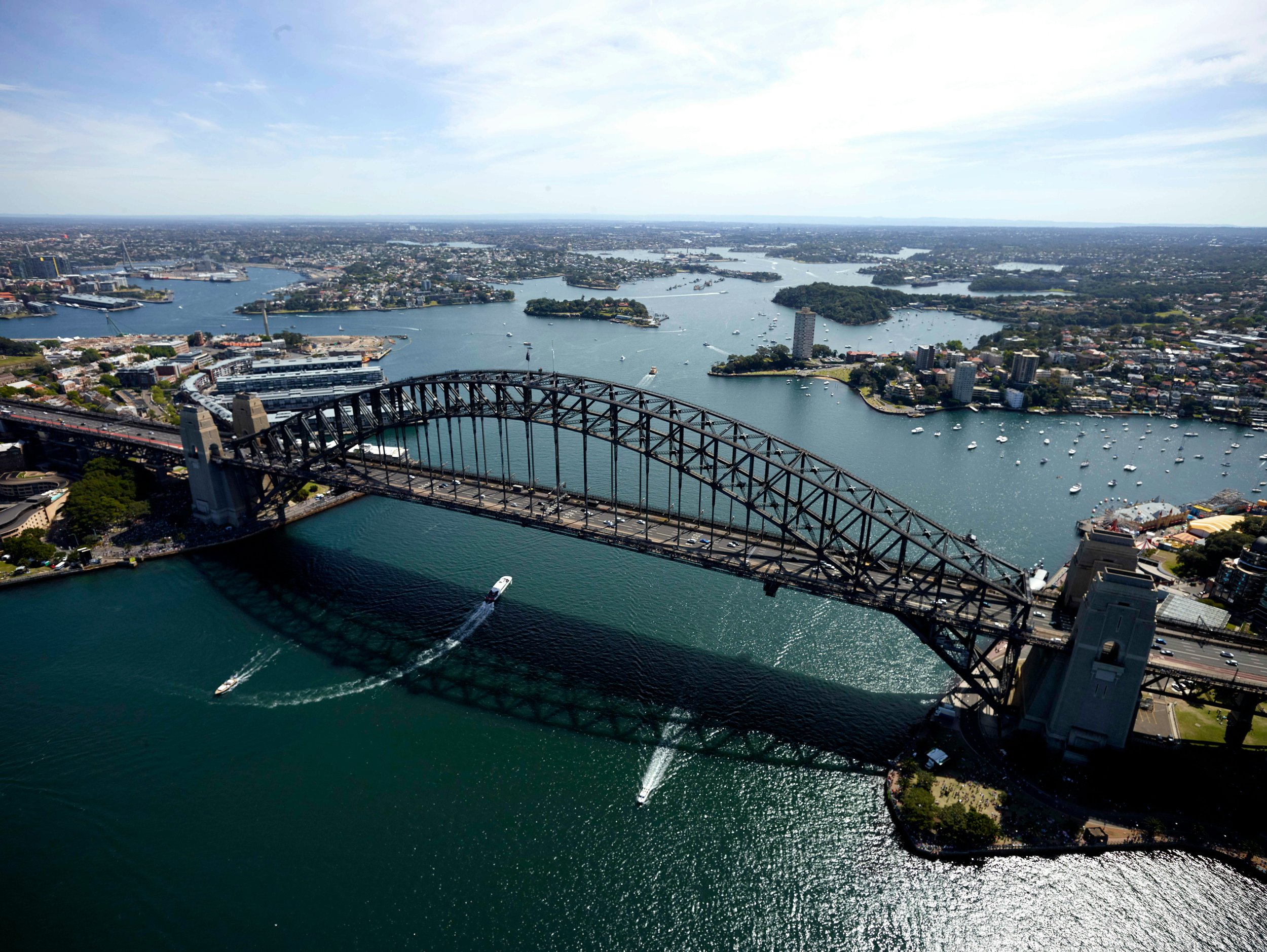
Connecting more than a quarter of a million people each day between the northern and southern shores of Sydney Harbour, construction was completed on the Harbour Bridge in 1932. With its highest point at 439 feet above sea level and a width of 160 feet, it is the world’s widest and tallest (but not longest) steel arch bridge, according to the website. It took 53,000 tons of steel and six million hand-driven rivets to build. Pedestrians can walk or cycle across the bridge while the adventurous can climb the structure for, literally, breathtaking 360-degree views. Fun facts: It takes 30,000 liters (7,925 gallons) of paint to give the Bridge just one coat; the paint used is specifically mixed and known as ‘bridge-grey’.

Dr. Chau Chak Wing Building, UTS Business School
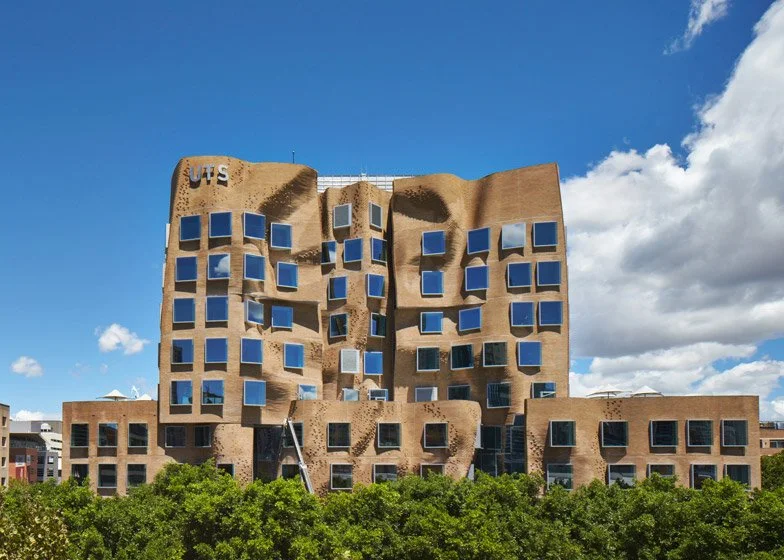
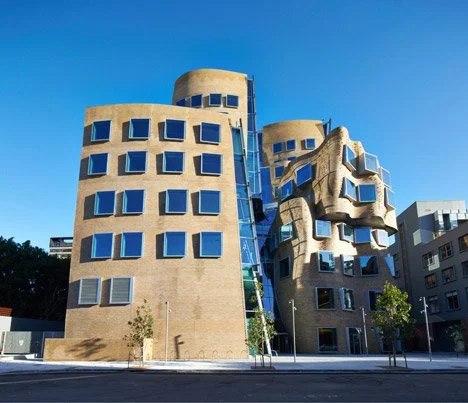
Affectionately known as the “squashed or crumpled brown paper bag”, Frank Gehry’s building features a rippling façade and angled columns. 320,000 specially designed sandstone-colored bricks were used to create the curvy façade. In contrast, the west facing façade is comprised of shards of glass to reflect the neighboring buildings. “According to Gehry, the design was inspired by a treehouse” (dezeen). Sustainable practices include the use of timber, energy efficient air conditioning and harvesting rainwater for irrigation, while a plethora of bicycle spaces, lockers, and showers encourage students and staff to cycle. Named for the Australian-Chinese philanthropist and business owner, the building is, at the very least, a conversation starter.

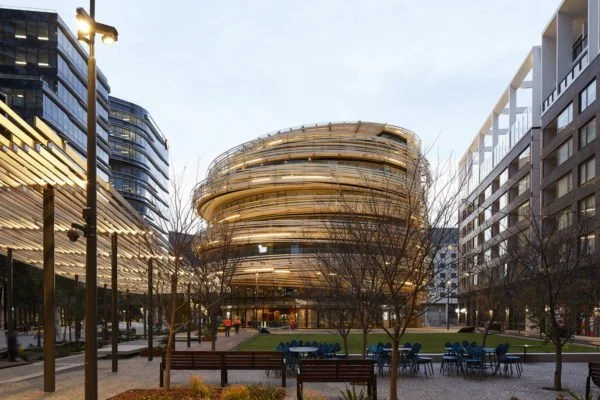
The Exchange
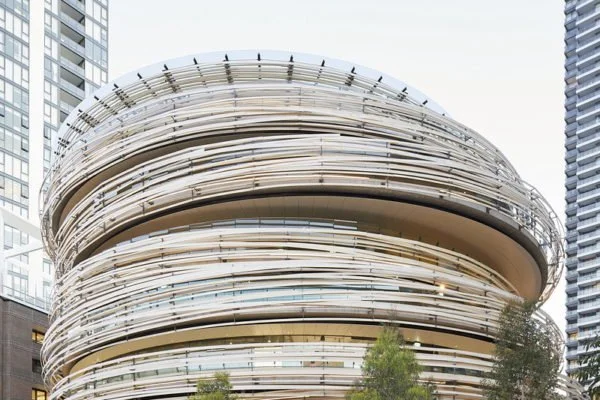
Ribbons of wood wrap around The Exchange, a community center located in Darling Harbour. The “spiraling, light filled hive” houses a library, food hall and childcare facilities. Wrapped in 20 kilometers of sustainably sourced Accoya timber, the idea was to create a soft and warm low-rise structure in contrast to the high-rise buildings in the surrounding area, according to architect Kengo Kuma & Associates. The soft wood “threads” are placed in an irregular pattern and randomly overlap each other so that the joints cannot be seen. The interior resembles a silkworm cocoon, while the façade “looks like a bird’s nest, creating an oasis in the middle of an urban jungle” (kkaa.com).

One Central Park
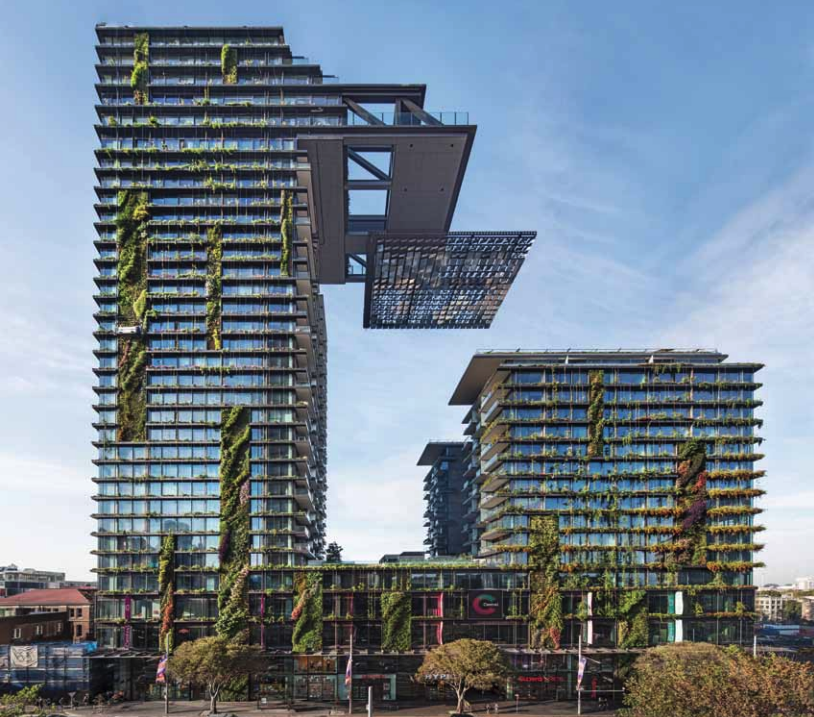
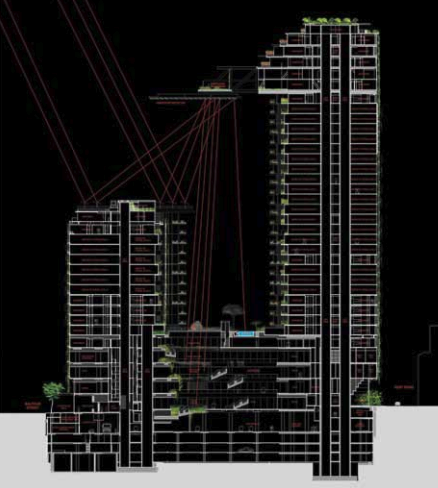
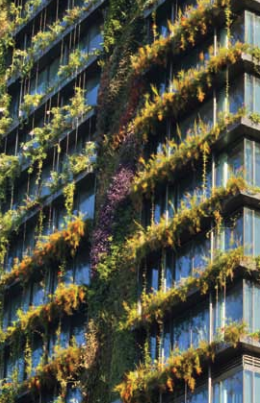
One Central Park, a mixed-use development with two residential towers and retail space, is the largest green façade in Australia, with 180,000 plants (oculus.info). A diverse mix of over 100 native and exotic plant species thrive on the building’s floor-to-ceiling glass facades, spilling over plant boxes, sprouting from staggered balconies and climbing up cables (oculus.info). The plants have been carefully chosen based on their specific microclimates and properties, and hydroponics allow them to cover approximately 50% of the building’s façade area, according to the architect Ateliers Jean Nouvel. Environmentally responsible, reclaimed water irrigates the “green screen”, while the “planted veil” cleans the air, provides shade and reduces thermal impact. Heliostats, computer-controlled mirrors that track the sun’s movement, and cantilevered reflectors on the rooftop of the taller tower, redirect sunlight to the atrium, pool deck and other shaded areas of the smaller tower, and to the park on the ground (global.ctbuh).

Queen Victoria Building
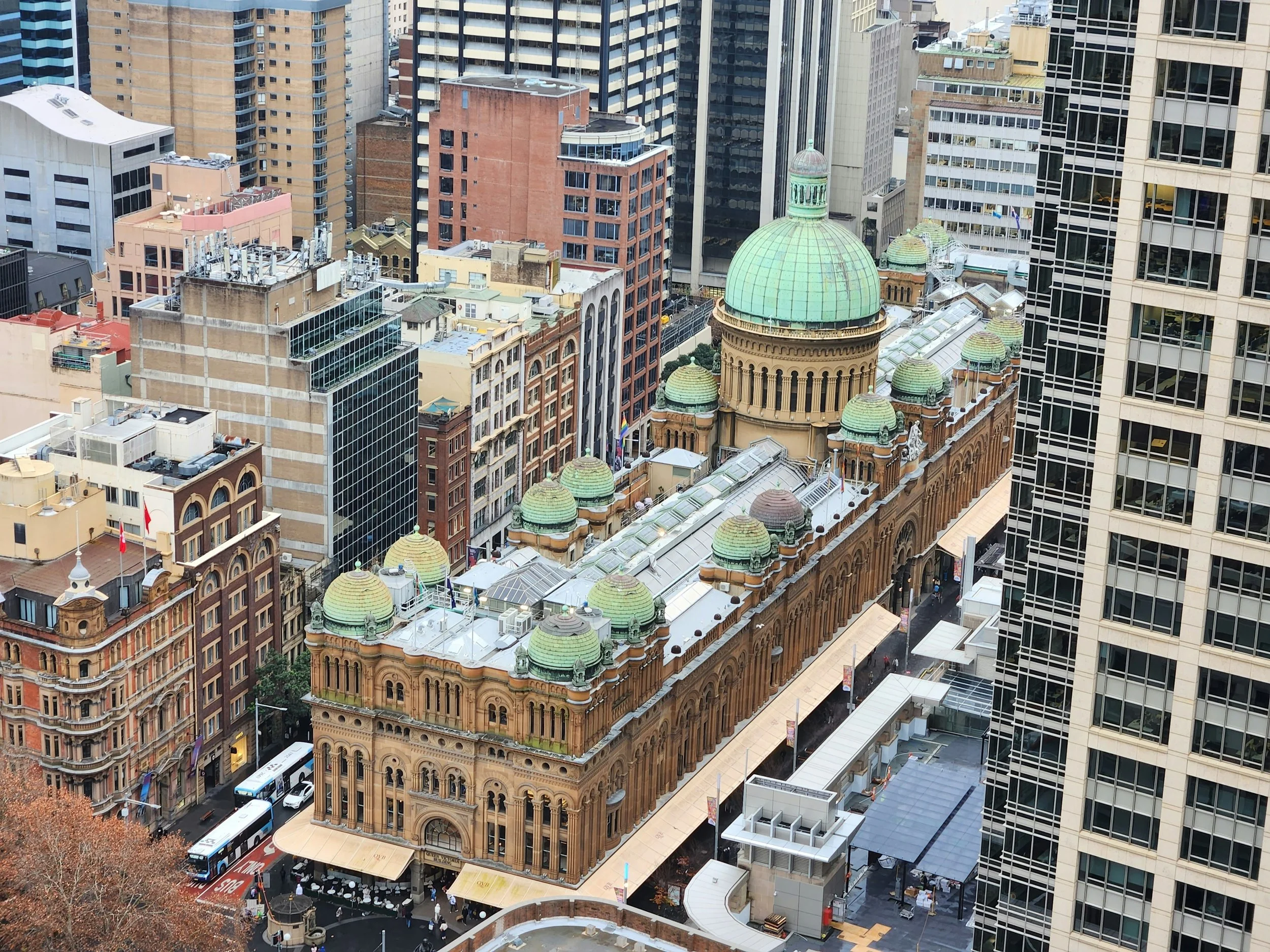
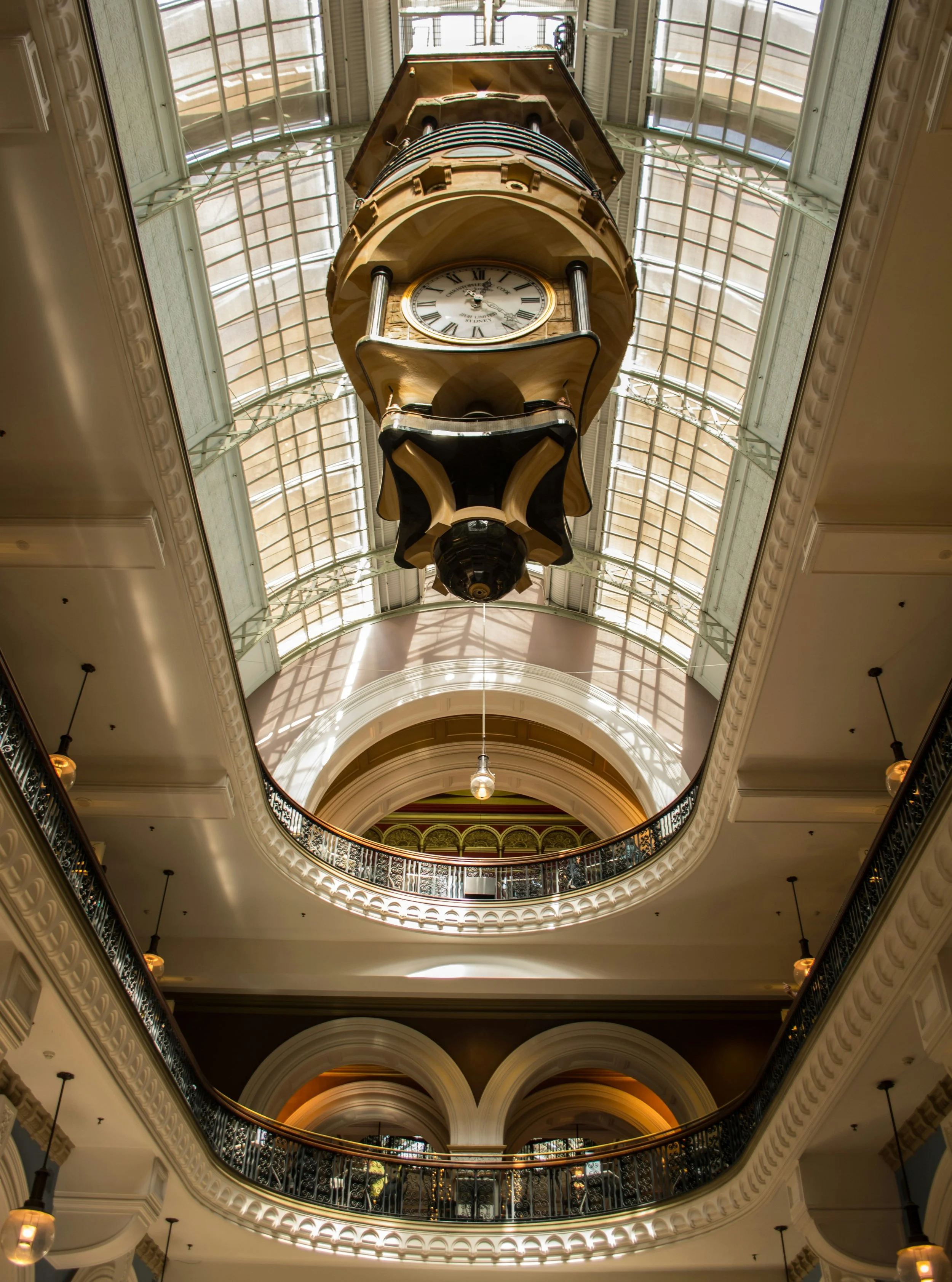
The Queen Victoria Building, a 19th-century Romanesque structure featuring stained glass windows, a grand staircase and center dome, originally housing a concert hall, showrooms, shops and markets, has been converted into a five-story luxury shopping center. Not to be missed are the two clocks. The Great Australian clock features 130 hand carved figures and 27 paintings detailing moments in Australian history. The Royal Clock “performs” on the hour between 9am and 9pm, with miniature trumpeters and scenes from English royal history emerging from the windows on the clock face.

Sydney Tower
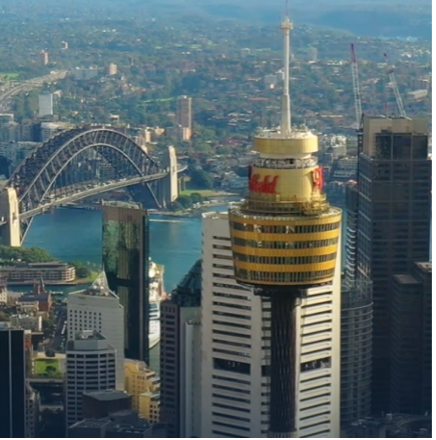
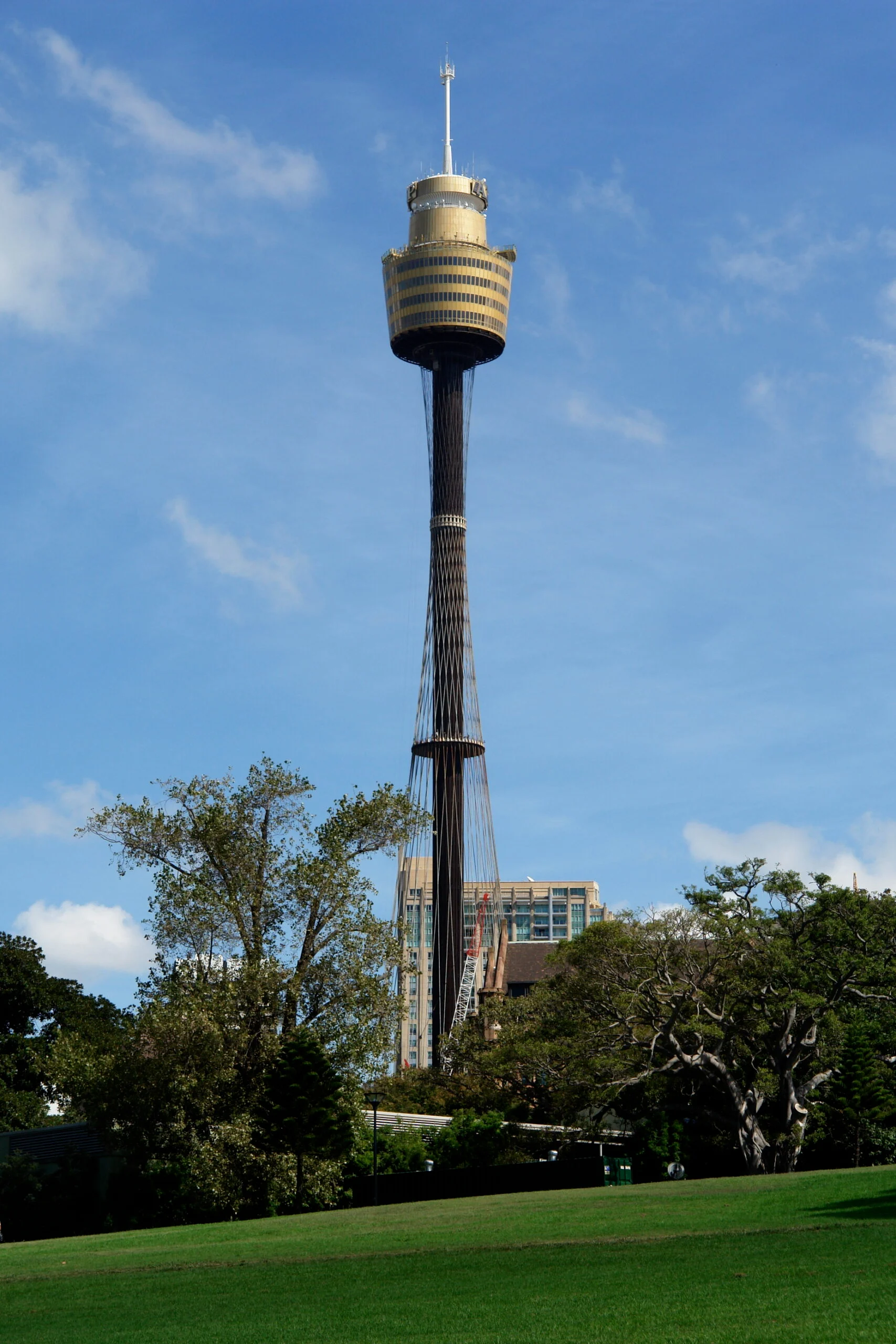
The striking design of the city’s tallest structure at 309 meters (1,014-feet) and the second tallest observation tower in the Southern Hemisphere, can withstand earthquakes and extreme wind conditions. The gold turret can hold 960 people and contains two levels including an Observation Deck with unparalleled views of the city. Fun Fact: It takes ‘Charlie”, a semi-automatic window cleaning machine, 50 liters (13 gallons) of recycled water and two days to clean all 420 windows.
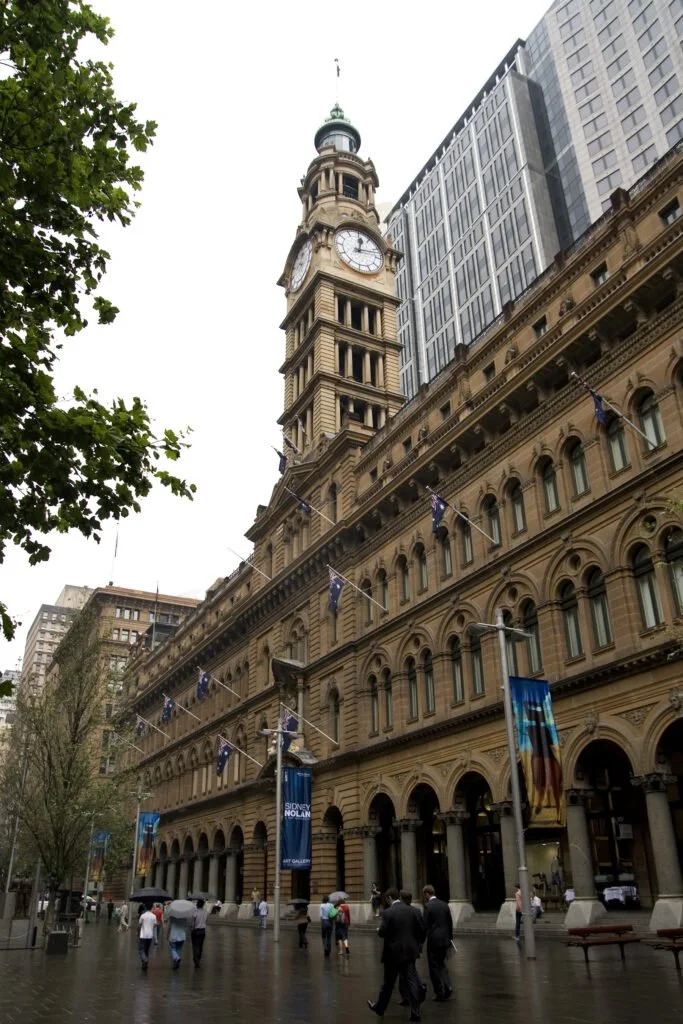
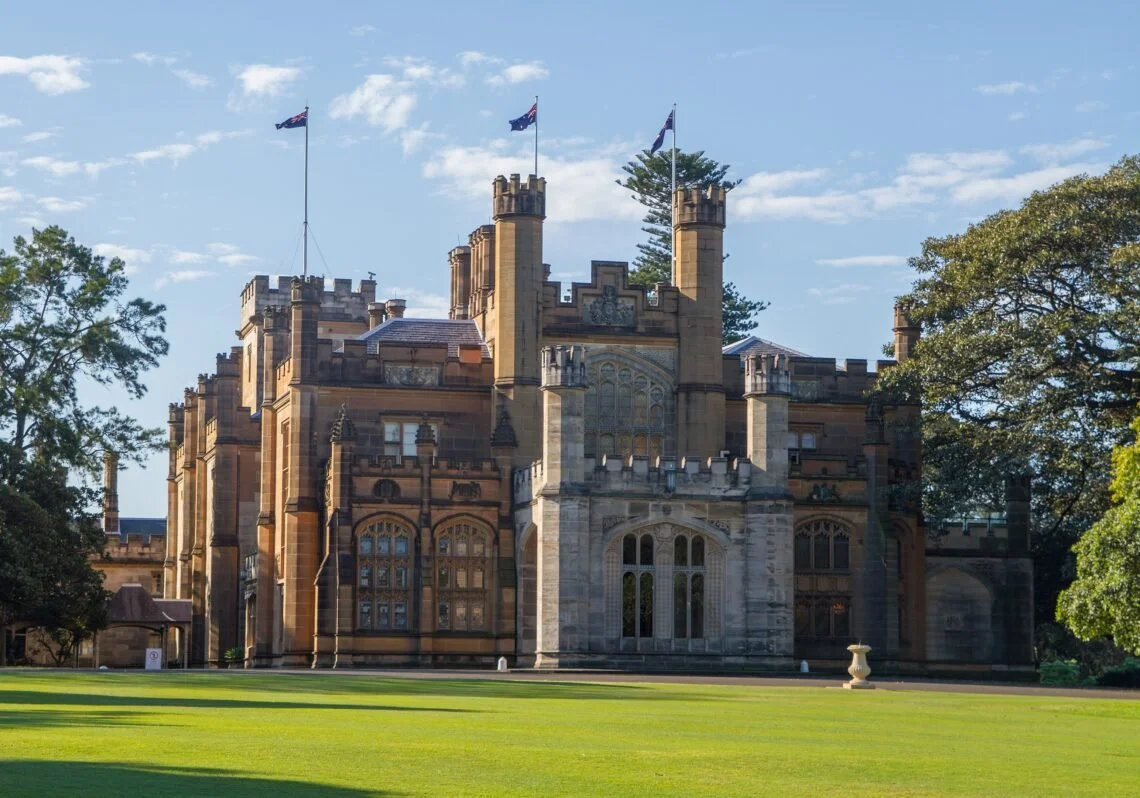
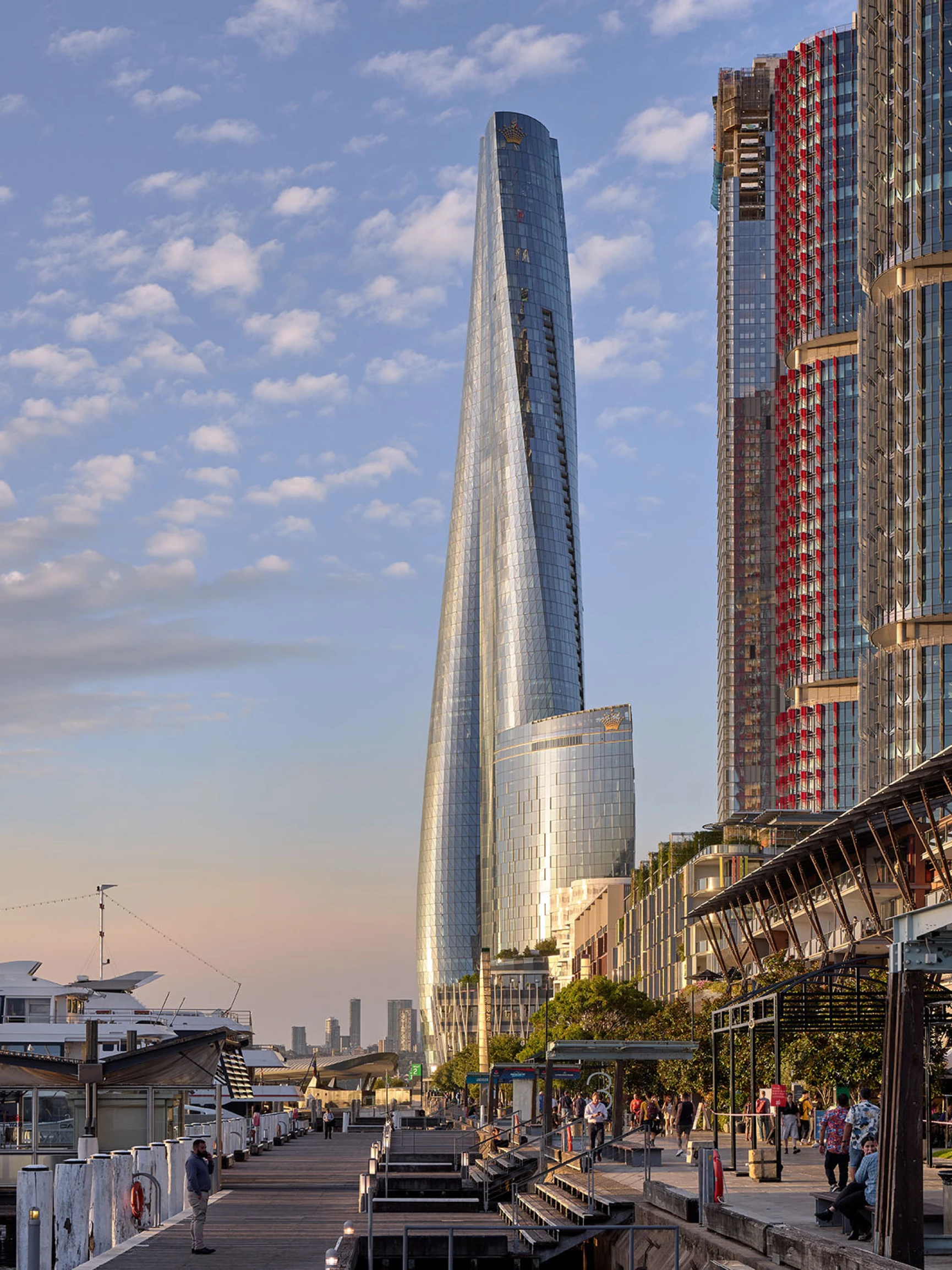
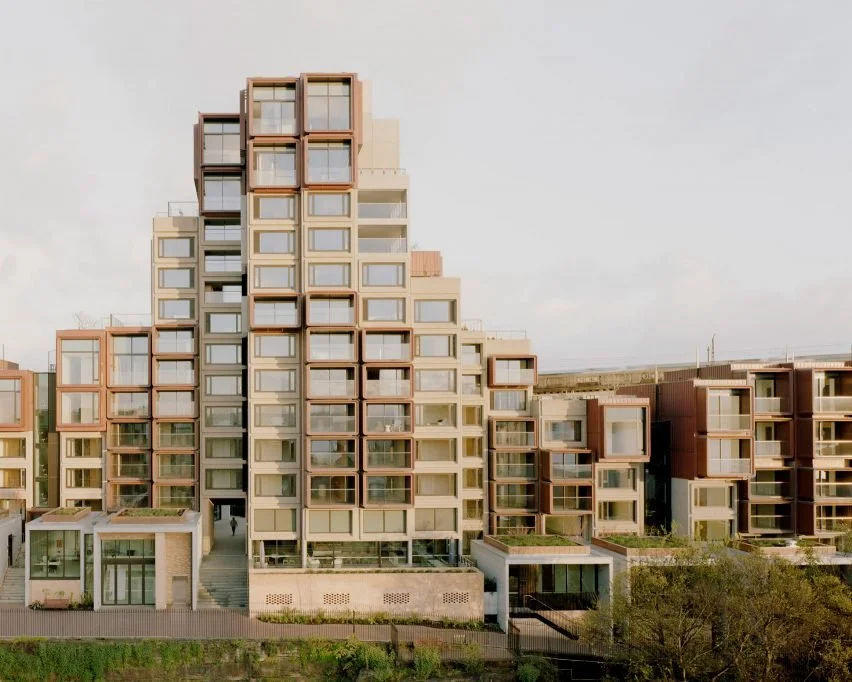
Other notable architectural structures: the General Post Office, an example of the Italian Renaissance style with an impressive bell tower, until 1996 was the main post office and is now a mixed use space and hotel; the residence of the Governor of New South Wales, Government House, constructed in the Gothic revival style with towers, tall pointed arches and windows and a steeply pitched roof, is situated within the Royal Botanic Gardens; Crown Sydney, the city’s tallest skyscraper standing at 271 meters, the modern architecture was inspired by the forms of nature and resembles three twisting petals; and RCC Sirius Project Office, a prime example of brutalist architecture that was originally designed as public housing and is now being renovated.
 
Laura McMahon