Where to find Energy, Vitality and Adventure this Chinese New Year

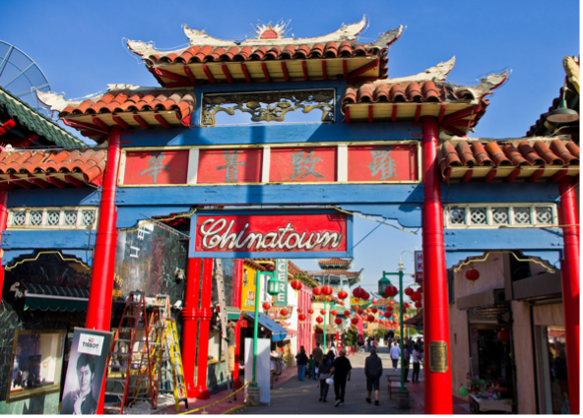
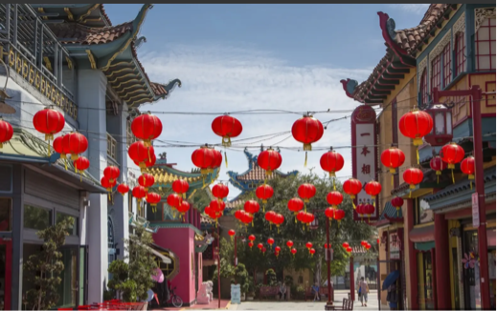
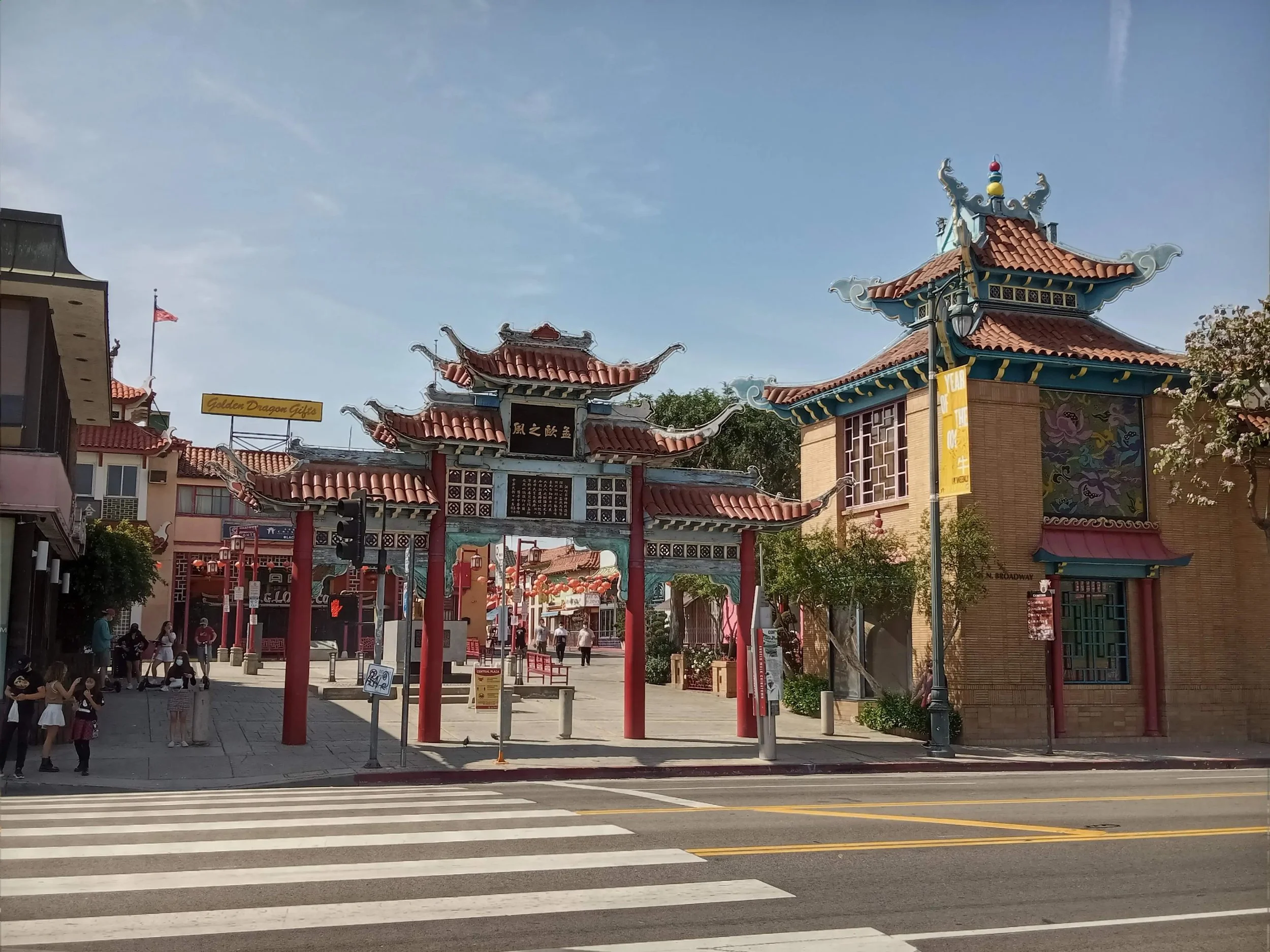
Central Plaza, image by John Perry, transitlnglosangeles.com

 
Where to find Energy, Vitality and Adventure this Chinese New Year
by Sweiskloss
February 12, 2026
This coming Tuesday, February 17th, is the Chinese New Year, the Year of the Horse. The horse gallops in with vibrant energy, symbolizes adventure and vitality, and is considered confident and independent. Visitors to Los Angeles’ Chinatown may enjoy a myriad of festivities to celebrate the New Year, as well as explore architectural splendors.
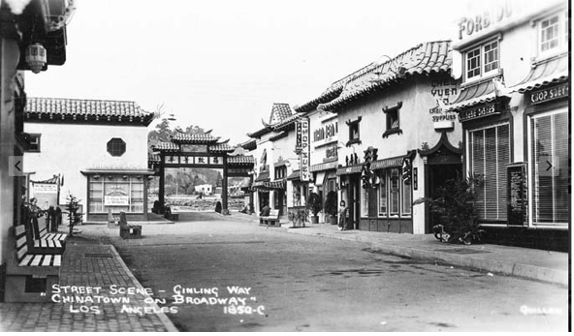
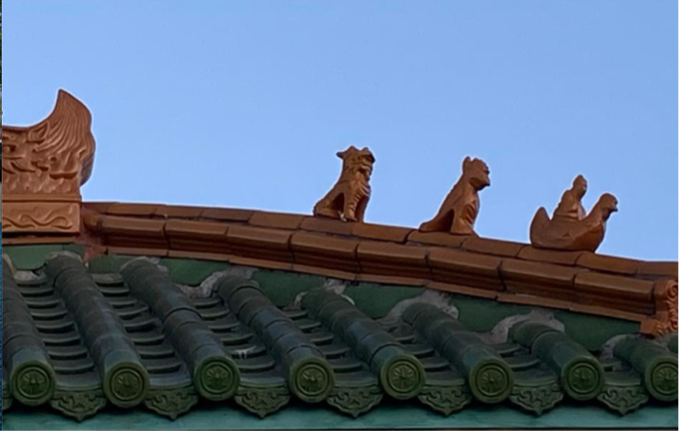
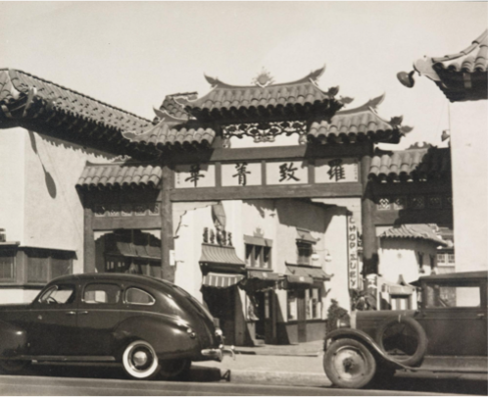
To make way for Union Station, the original Chinatown was demolished and relocated to its current location in 1938. Architects Webster & Wilson drafted the plan for the new area with a commercial center, pedestrian streets and central plaza. From hip-and-gabled rooflines to decoratively carved columns, many of the buildings reflect classical Chinese architectural elements. Animals and fish and murals of mythological creatures, traditional talismans for luck and protection, adorn the facades.
For example, fish are thought to bring prosperity and wealth, lions symbolize courage and majesty, and phoenixes epitomize virtue and good fortune. Mythical creatures such as Hangshi, a winged monkey that is believed to ward off demons and protect buildings from lightening, and Douniu, an ox shaped animal that prevents flooding, appear as decorations and carvings. Colors also play a significant role. Red is believed to bring good luck and happiness, yellow or gold signifies royalty and immortality, and blue for healing, longevity and harmony (storymaps.arcgis.com).

Gateway Monument (Dragon Gate)
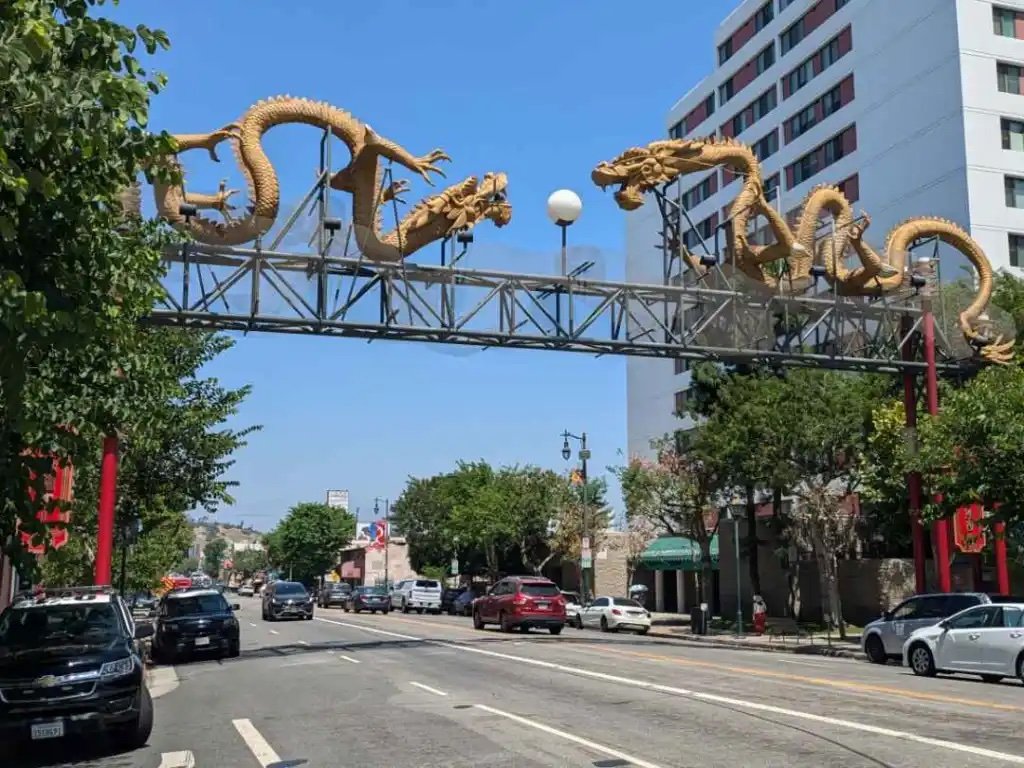
Visitors to Chinatown are greeted by two dragons mounted on an 80-foot-wide steel framework 43 feet above Broadway. Designed by architect Rupert Mok in 2001, the fiberglass dragons weigh approximately 3000 pounds, are each between 35 and 40 feet long, and are painted gold in the Qing Dynasty fashion, according to the Los Angeles Explorers Guild. Symbols of power and good fortune, the twin dragons appear to soar through the clouds fighting over a “pearl”, a recurring theme in Chinese art, while mist sporadically sprays from their mouths. Red painted pillars support the structure and are decorated with the words “Wisdom” and “Harmony” in English and Chinese. The plaque on the pillars also explain that the Gateway Monument is meant as a “symbol of mutual cooperation, harmony and prosperity for the Community and the City”.

West Gate
Situated on Hill Street, this prominent gate marks the entrance to Central Plaza. It incorporates 150-year-old camphor wood from China and displays traditional Chinese elements and ornate designs in its three arched openings. Of the four gates into Chinatown, it is the oldest.

Thien Hau Temple
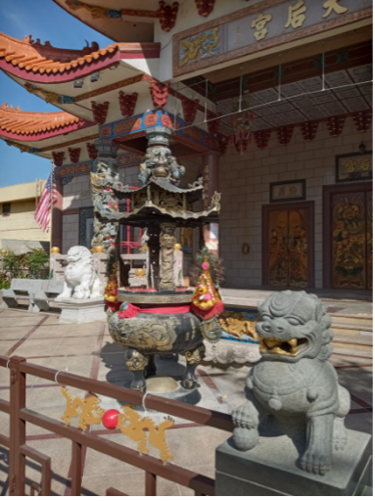
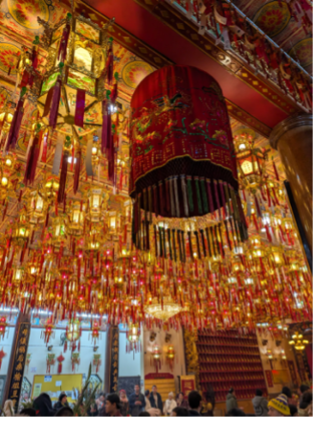
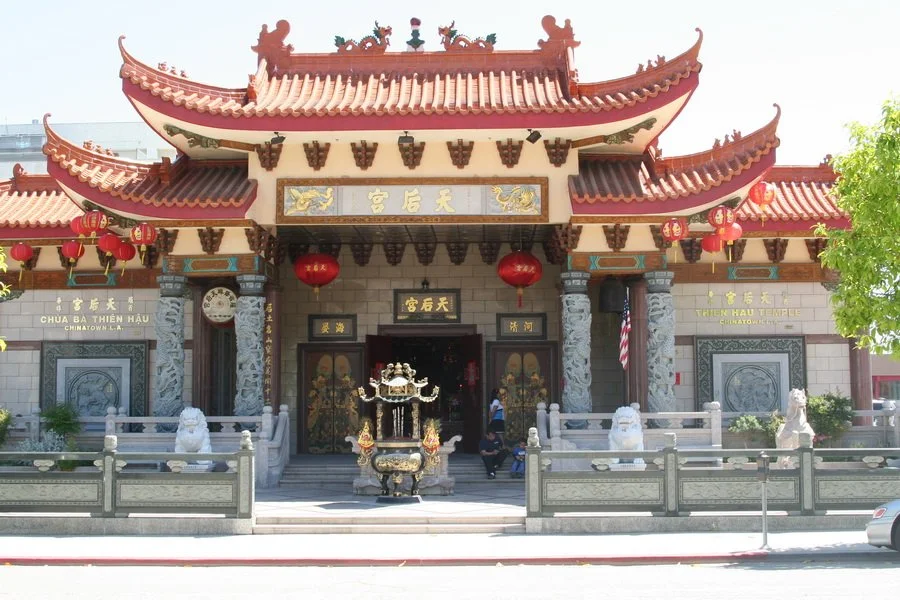
The temple on Yale Street is dedicated to the sea goddess Mazu. The original building was formerly a Christian church that was transformed into a Taoist temple. “The temple’s architecture is a stunning example of traditional Chinese design, with sweeping roofs, detailed woodwork, and colorful murals depicting scenes from Chinese mythology” (evendo.com). Lanterns hang from ceilings, casting a warm glow on the statues and offerings, while the incense burns as a reminder of prayers and devotion. In addition to Mazu, the temple also honors Guan Yu (god of war) and Fu De (god of the earth) with statues and shrines. On the eve of the New Year, the temple will hold its traditional Midnight Ceremony with firecrackers, incense and a traditional lion dance.

Central Plaza
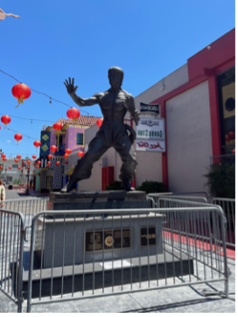
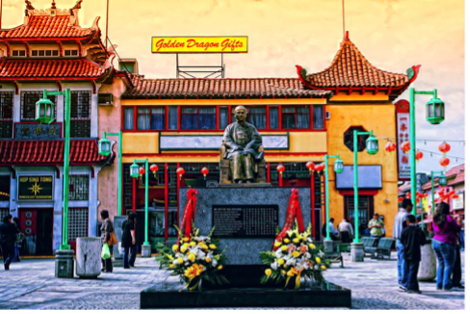
Central Plaza is the neighborhood’s hub of activity with plenty of restaurants and shops attracting tourists and locals alike. Traditional pagodas with tiered tiled roofs and flared eaves, lion statues, neon lights and red lanterns stand alongside modern buildings. Visitors may toss coins into the “Wishing Well”, modeled after the Sacred Seven Star Caverns Wishing Pool, a famous sacred site in China. Not to be missed in Central Plaza is the “Dragon Chasing Pearl” mural painted in 1941 by renowned artist Tyrus Wong. The mural symbolizes prosperity and luck, and the pursuit of knowledge. Fun Fact: Tyrus Wong was renowned for his work in film, notably as lead artist on the movie Bambi. Also in the plaza is a statue honoring film star, martial artist and cultural icon Bruce Lee, and a statue of Sun Yat-sen, Chinese revolutionary and the first leader of the Republic of China. Free festivities will be taking place in the plaza coinciding with the 127th annual Golden Dragon Parade on Feb 21. The 48th annual LA Chinatown Firecracker Run on February 28-March 1 also begins in Central Plaza.

Chung King Road

This pedestrian street behind Central Plaza is known for its intimate courtyards and traditional architecture. Specialty shops and art galleries blend past and present.
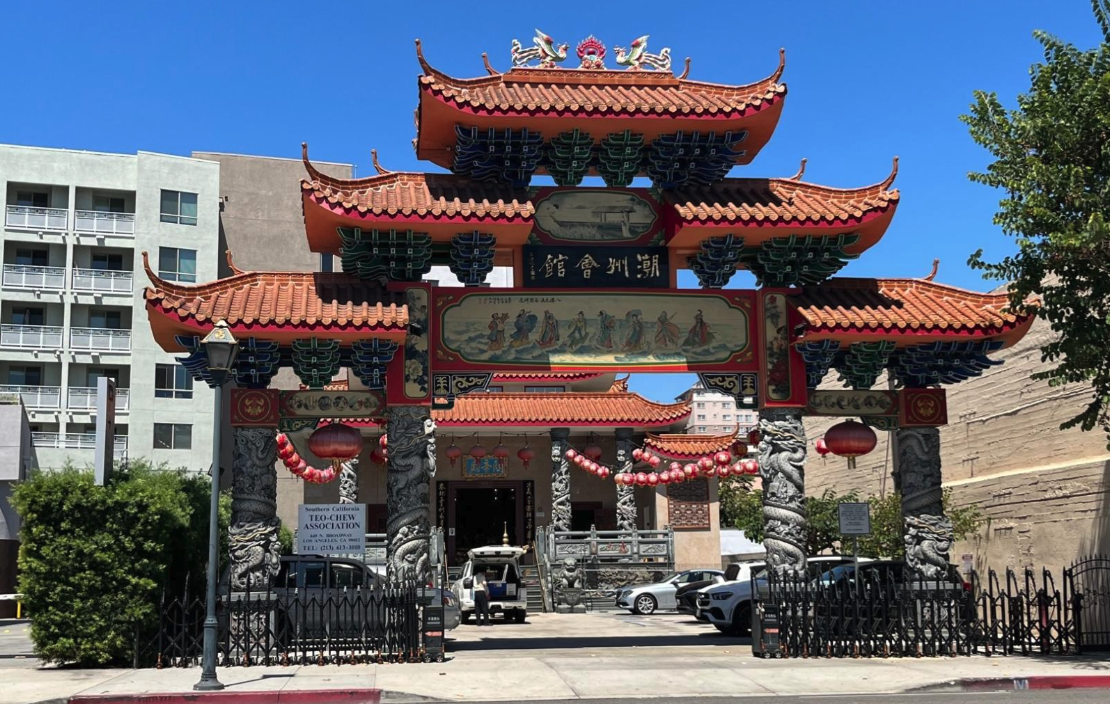
Other sites not to be missed are the Phoenix Bakery, which opened in 1938 and is known for their traditional cakes, and the Teo Chew Temple with stone lions guarding the temple and columns adorned with intricately carved dragons (transitinlosangeles.com).

Other Lunar New Year festivities around town include celebrations at the Los Angeles Zoo where visitors can enjoy traditional dances, learn calligraphy and fan decorating (Feb 21-22); the Port of Los Angeles’ 12th annual Lunar New Year Festival with live performances, a wishing wall and petting zoo (Feb 21); a family-friendly Lunar New Year Festival in Huntington Park with lion dancers and martial art demonstrations (Feb 21); cooking demonstrations and authentic cuisine at Alhambra’s Lunar New Year Festival (Feb 28); and live music, lion dancers and martial art experts at Santa Monica Place (Feb 21) (discoverlosangeles.com).
 
Laura McMahon