At the time of writing this newsletter, Italy has a lot to celebrate with 9 gold, 5 silver and 12 bronze medals at the Winter Olympics, but we’re more excited about celebrating the host country’s green accomplishments. Milano Cortina 2026 reflects Italy’s commitment to host a sustainable and environmentally responsible Winter Olympics. They have designed many of the Games around existing venues, created an Olympic Village that will be repurposed into the community, and are relying on clean energy.
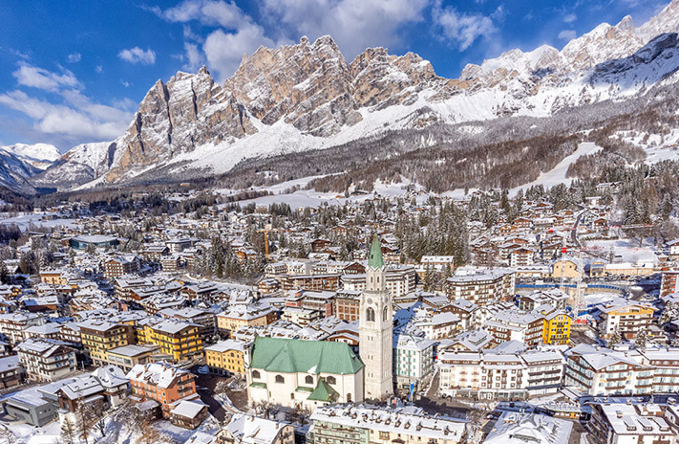
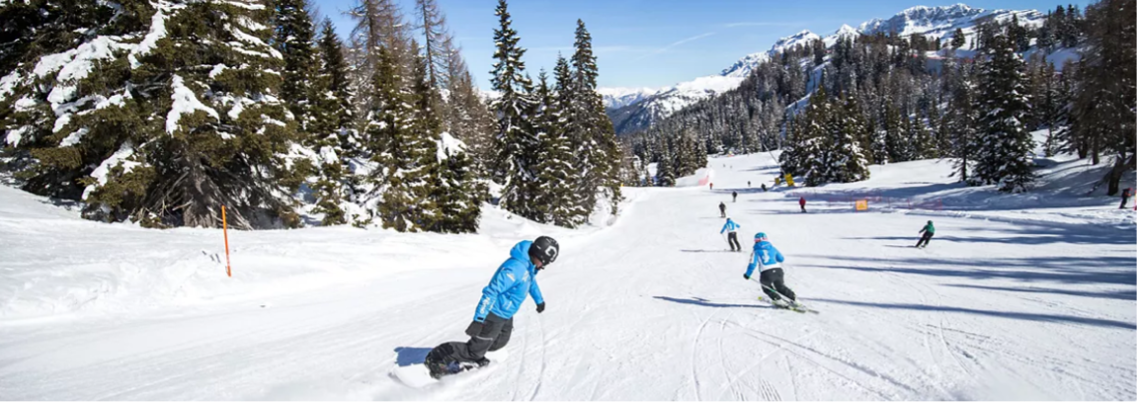
Dolomites, Italian Alps, Toptravelitaly, via Instagram
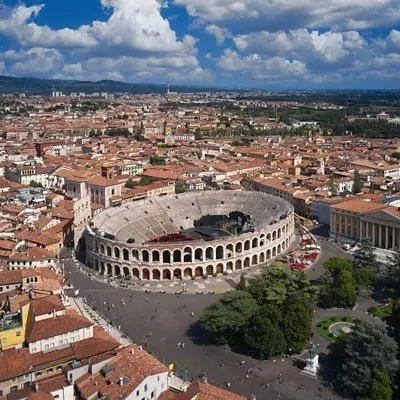
“Seeking greater sustainability, this year’s winter games have, by Olympic standards at least, scarcely entailed any construction at all” (Bloomberg.com). According to the International Olympic Committee website, 85% of the competition venues are existing, one of the highest reuse rates in Winter Olympic history. They have focused on upgrading alpine existing venues, some of which were built during the 1980’s and 90’s, while the closing ceremony arena, the Roman Arena in Verona, has been in use for more than 2,000 years - talk about getting your money’s worth!
Verona Arena, courtesy of italia.it
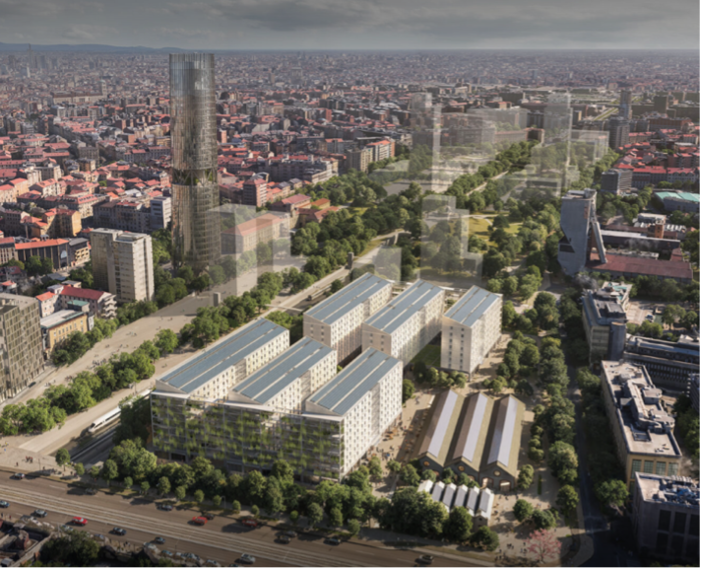
Five of the six Olympic Villages have been adapted from existing facilities, four of them from hotels. Skidmore Owings and Merrill designed Milan’s Porta Romana Olympic Village to be sustainable and community oriented. Revitalizing a former railway yard, the village features public green spaces, “the transformation of two historic structures and six new residential buildings…. [that] will be reused for student housing…. [and] affordable housing” (som.com). The design blends the area’s industrial heritage with Milan’s “streetscape” providing courtyards, flexible spaces for markets, shops and restaurants. All buildings are “LEED certified with more than 30% of the energy generated via renewable solar systems, and a rainwater collection system that is to reduce carbon dioxide emissions … by 40 percent” (urbanland.uli.org).
The state-of-the-art ice hockey rink, one of the few new construction projects, was built in a redeveloped area of Milan and was designed as a “legacy project” to be used for sports, cultural and entertainment events after the Games.
Rendering of Milano Cortina Olympic Village by som.com
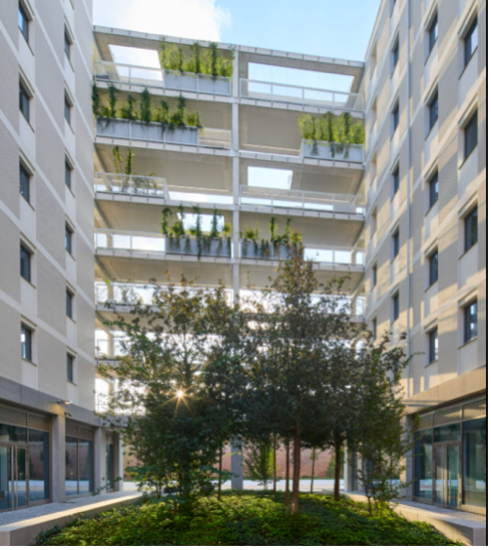
Rendering by Dave Burk @ SOM
Prefabricated panels were used to build the new mass timber residential buildings at Porta Romana Olympic Village. These panels reduced carbon emissions during construction and allowed for faster building. The tilted roofs are equipped with photovoltaic panels, and shared or common terraces sprout vertical plantings (a nod to galleried balconies, aka “case di ringhiera”, typical of Milanese architecture). These units will be repurposed into student housing as-is, including the furniture which was chosen to be more durable than the disposable cardboard beds that athletes complained about at the Paris Summer Olympics 2024 (Bloomberg.com).
“The use of traceable and responsibly sourced wood is a key part [of the 2026 Games] … with [Programme for the Endorsement of Forest Certification]-certified Italian forests at the heart of its sustainability aims” (pefc.org). Local wood from the Trentino region has been used in the redevelopment of the ski stadiums as well as used in the construction of the Olympic Village in Milan. Highlighting local craftsmanship, fourth year woodworking students designed and built the lounge at the Tesero Cross Country Ski Stadium, recycling PEFC-certified wood that had been infested by bark beetles.
The Dolomites, Trentino area, courtesy of italia.it
Renewable electricity is powering almost all competition and non-competition venues. Temporary generators are limited, with most running on HVO biofuel, a second-generation renewable fuel produced from waste materials (nationwidefuels.co.uk). To reduce car use, they are prioritizing public transport, trains and shuttles. Focusing on low-carbon transport, the official fleet includes 20% electric vehicles as well.
Snowmaking is being kept to a minimum needed for safe competition, supported by high tech systems that improve efficiency in both energy and water use. GPS and snow-depth systems reduce unnecessary production, cutting electricity use by around 30%. No chemical additives are used, and food-grade dyes are used for course marking.
Biodiversity measurements are being employed to mitigate damage to sensitive landscapes. This includes the implementation of Strategic Environmental Assessments to protect fragile ecosystems, reducing noise and light pollution in some areas that affect local wildlife, and post-Games restoration plans.
From pasta to pizza, food leftovers are being recovered across venues and redistributed. Around 24,000 items from Paris 2024, including furniture and logistical equipment are being reused.
Photo courtesy of tropical.wafle, via instagram
Perhaps no other Olympic symbol is as iconic as the torch, which is powered by Bio-LPG, a renewable energy source derived from biological raw materials, mainly waste such as used cooking oil, animal fats and residues from the agricultural industry (worldliquidgas.org). The medals are made from recycled metal waste produced by the Italian State Mint, fired in furnaces powered entirely by renewable energy, and presented in eco-friendly packaging.
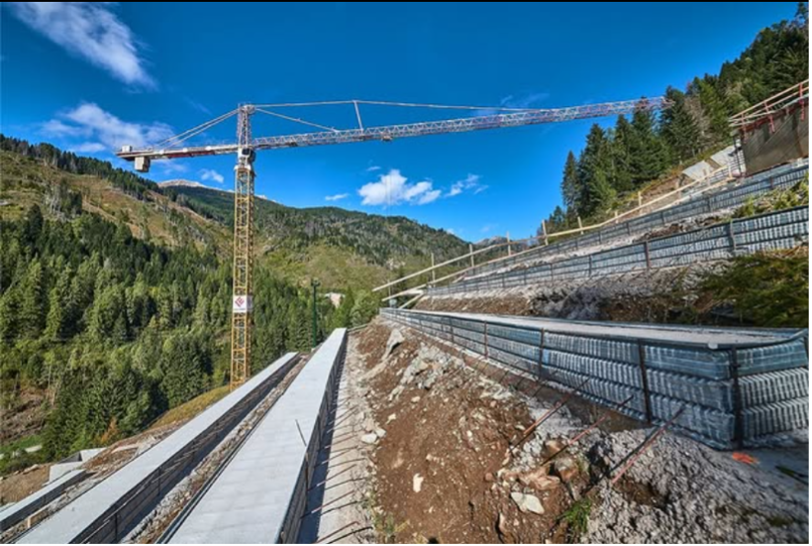
Photo of construction of a ski jump in Predazzo by aus_heavyquip_journal, via instagram
Despite sustainability pledges, environmentalists have raised concerns over the destruction of the delicate mountain habitats. As well intentioned as Italy has been to “use the Games to showcase the importance of protecting sensitive mountain ecosystems… environmentalists tell a different story” (npr.org). They refer to the felling of old growth forests to make way for infrastructure, depletion of Alpine rivers, and construction projects that are urbanizing a mountain environment that was already stressed by overtourism. Due to rising temperatures and low natural snowfalls, despite their intentions, the Games have had to rely on artificial snowmaking, requiring large amounts of water and energy. Environmentalists also worry about the carbon footprint generated by athletes and spectators and are concerned about air pollution.
Only time will tell if Italy achieves their green Olympic goals. However, Milano Cortina 2026 reflects the sports industry’s overall prioritization of sustainability, low carbon emissions, clean energy and lasting community engagement.