Why Did the Turtle Cross the Road?

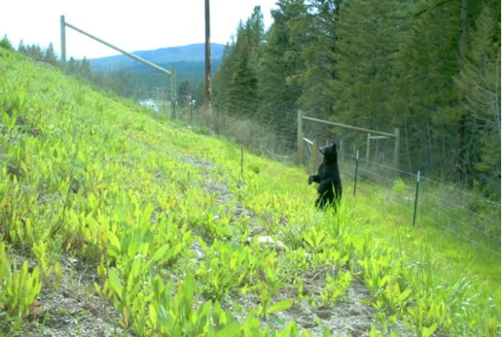
Image courtesy of wildlife.org

 
Why Did the Turtle Cross the Road?
by Sweiskloss
April 23, 2026
As we celebrated Earth Day yesterday, April 22—a day that promotes environmental stewardship—efforts to protect wildlife and ensure their ability to roam safely are gaining momentum, reflected in the increasing number of wildlife crossings across the country. As urbanization expands cities and roads, animals’ habitats are being squeezed, limiting their ability to find food, shelter, mates, and escape from threats.
Wildlife crossings are not just for the animals. From mountain lions to deer to black bears, a recent study estimates that there “are 1-2 million wildlife-vehicle collisions with large animals every year in the US, causing 26,000 human injuries, 200 human deaths and $8 billion in property damage, health care costs and lost workdays.” When placed in areas of known wildlife movement, wildlife crossings have reduced wildlife-vehicle collisions by 97% (environmentamerica.org).

The notion of wildlife crossings, passages à faune sauvag, emerged in France in the 1950’s as motorways began to fragment rural landscapes and forests. Initially they were intended to allow hunting game, specifically deer, to safely cross roadways, but they eventually evolved into broader conservation tools. According to CBS News, as of 2024, there were 1,500 dedicated wildlife crossing structures in the US across 43 states, ranging from bridges to tunnels to culverts.
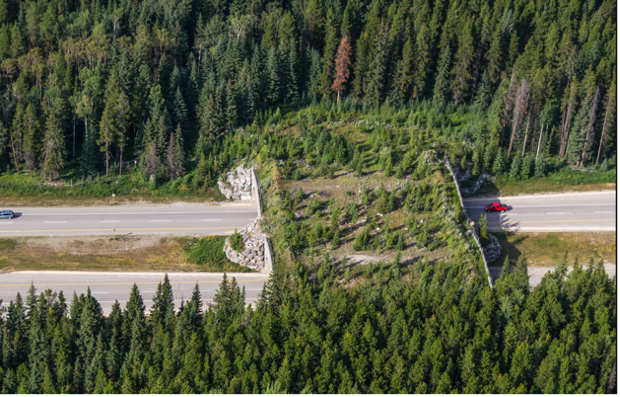
If you build it, will they come? To help guide animals to the crossings, miles of fencing along the road serve to funnel animals towards crossing points. High walls block headlights and reduce traffic noise. And native vegetation eases the transition from nature to manmade infrastructure. In terms of construction, wildlife bridges are typically shorter in span and much wider than vehicle bridges.

Several structures are “leaders of the pack” in terms of wildlife crossings.

Wallis Annenberg Wildlife Crossing, California

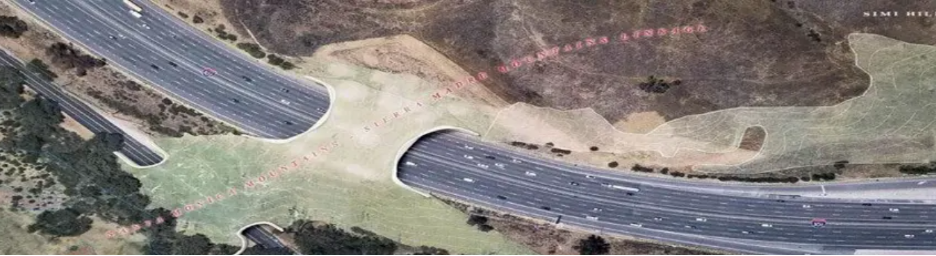
Image courtesy of smmc.ca.gov
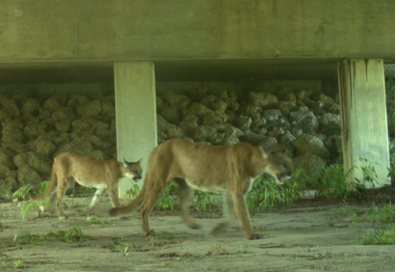
When completed, the Wallis Annenberg Wildlife Crossing will be the largest of its type in the nation. Stage One has been finished and crosses over the 101 Freeway at Liberty Canyon, while the Agoura Road structure is scheduled to be completed in Fall 2026. This crossing is critical in the linkage between the Santa Monica Mountains and the Sierra Madres Range (dot.ca.gov) and will reconnect an entire ecosystem. Altogether it will transform nearly 13 acres, span 10 freeway lanes plus an access road, and require design solutions for steep slopes, a creek bed, and heritage oak trees among other obstacles (101wildlifecrossing.org).

Besides the obvious potential for physical harm, the freeway had created islands of habitat that genetically isolated wildlife. Isolation leads to inbreeding and competition for scarce resources. In the case of the mountain lion, young lions are at risk of being killed by older ones competing for territory, food and mates.

The project’s dedicated nursery grew more than 5,000 native plants from seeds hand collected from the surrounding hills to be planted on the vegetated bridge including coastal sage scrub, chaparral, and California fuchsia.

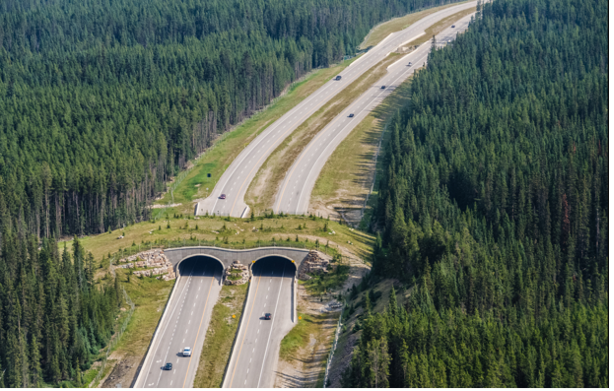
Banff National Park Crossing, Canada
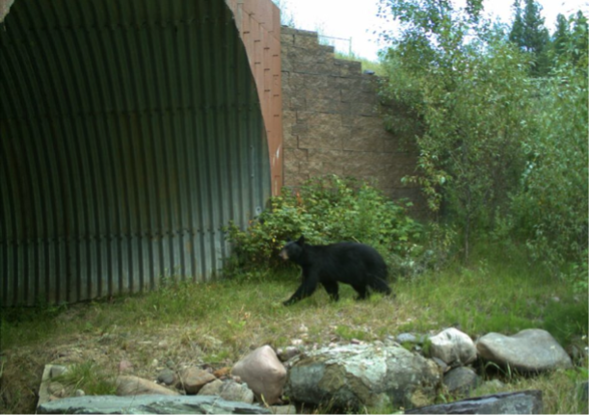
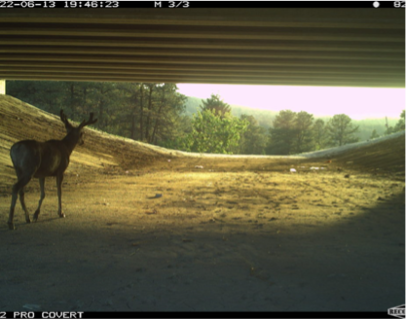
This scenic stretch of the Trans-Canada highway was once so perilous for motorists and animals it was infamously nicknamed “The Meat Maker,” averaging 100 elk-collisions each year (news.mongabay.com). Today, with a total of 44 crossing structures including six overpasses and 38 underpasses, and 50 miles of fencing, the Banff National Park Crossing “ha[s] helped reduced wildlife-vehicle collisions by 80%, with elk and deer collisions dropping by 96%...[and] researchers have recorded more than 200,000 safe crossings by animals including elk, deer, grizzly bears, wolves and wolverines” (ysy.net). Based on year-round wildlife monitoring, the crossings were carefully designed to blend with the natural landscapes. Overpasses, preferred by deer, moose and elk, are wide with vegetation to look and feel like the natural forest habitat. Underpasses vary in size to cater to the different animals, with larger tunnels favored by bears while smaller, dark culverts are preferred by cougars. Design elements also include sound and light mitigation.

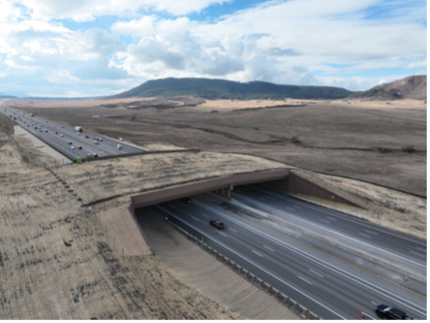
I-25 Greenland Wildlife Overpass, Colorado
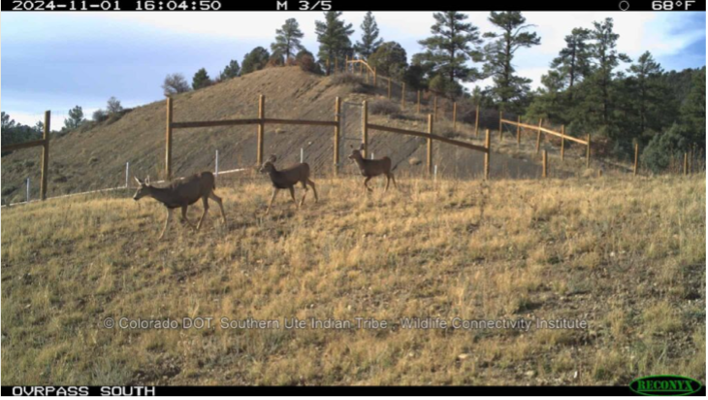
To date Colorado’s I-25 Greenland Wildlife Overpass is North America’s largest wildlife overpass (until Annenberg is completed) at 200 feet wide and 206 feet long. Spanning six lanes, the overpass connects 39,000 acres of habitat and is expected to reduce wildlife-vehicle collisions by 90% according to the CDOT. Prior to construction, there was an average of one crash a day during the fall and spring movement seasons. The overpass was specifically designed to provide safe passage for elk and pronghorn (an antelope considered North America’s fastest land animal) who prefer wide open spaces as opposed to the five underpasses that were already in use. Eight-foot-tall fencing guides animals towards the overpass, which uses dirt, natural vegetation and concrete and fencing to block noise and the sight of cars below. Other mammals that have benefited from safe passage on this key migration corridor include bear, mountain lions, and coyotes, and data from 2023 showed approximately 5,300 instances of mule deer using the underpasses (douglasco.gov).

Lake Jackson Eco Passage & Alligator Alley Underpass, Florida
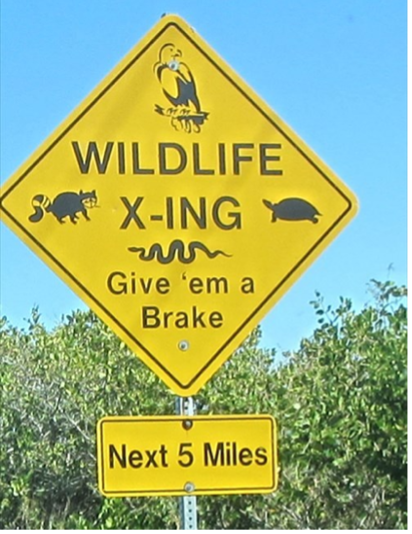
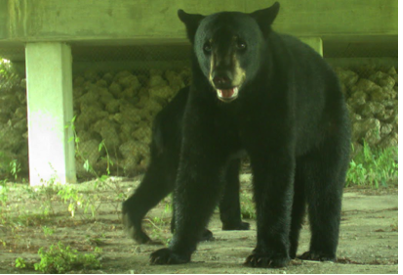
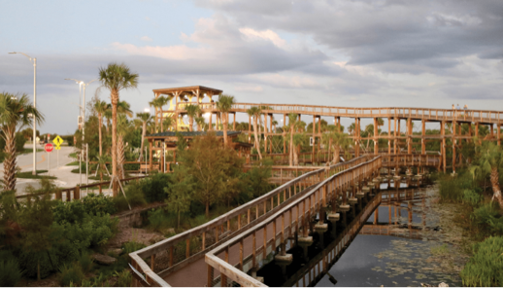
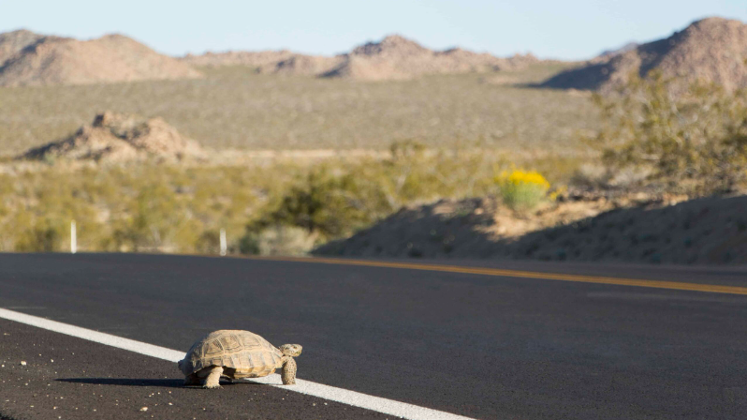
As turtles know “slow and steady wins the race” and thanks to Florida’s Lake Jackson Eco Passage, turtles and other reptiles can safely migrate between the lake and surrounding uplands. According to their website, the Tallahassee highway was the world’s deadliest turtle highway “with a 98% mortality rate” (atlasobscura.com) but are now protected by the underpass and fences. Further south, Alligator Alley Underpass, a section of I-75 that is surrounded on both sides by the Everglades, has almost 40 underpass crossings that serve not just gators, but also black bears, deer and panthers. As part of an Everglades restoration program, an ADA-friendly, free elevated boardwalk, with native landscaping, allows visitors to safely observe alligators and other wildlife.

US-93 Highway Crossing, Montana
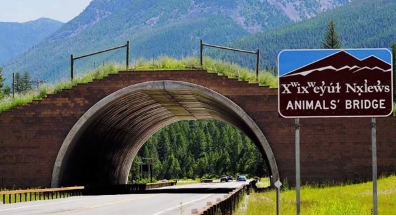
According to the Montana Free Press, “the average Montana driver faces a 1-53 chance of hitting an animal each year” posing serious risks to humans and animals alike, and costing Montana tens of millions of dollars annually. A 2022 study estimated the average cost of a deer collision is $19,000 and an elk collision can exceed $73,000 when factoring in insurance claims, emergency response and road damage (montanafreepress.com). US 93 has more than 80 wildlife and fish crossing on the Flathead Indian Reservation, which “used Indigenous knowledge provided by tribal wildlife ecologists to design safe highway crossings for wildlife and people” (news.mongabay.com) and have “reduced wildlife-vehicle collisions by at least 71%” (bozemandailychronicle.com). The current project is not fully completed but features over 40 crossing structures and fencing along a 56-mile stretch, that will connect grizzly bear, elk, deer, coyote and wolverine populations.

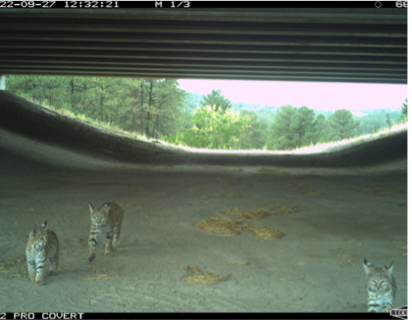
Other crossings, in states such as Arizona, Wyoming and Utah have recorded animals from bighorn sheep and bobcats to toads and salamanders safely bypassing highways allowing for essential migration. The first ever I-5 wildlife crossing in Oregon, the Mariposa Preserve Wildlife Crossing, is scheduled for 2028 and will pass through the heart of the Cascade-Siskiyou National Monument. The vegetated overpass is designed to blend into the natural landscape and will feature “naturalized, grassy and forested surfaces designed to mirror the surrounding terrain to encourage” elk, deer, black bears and cougars to use the crossing rather than attempt the highway.

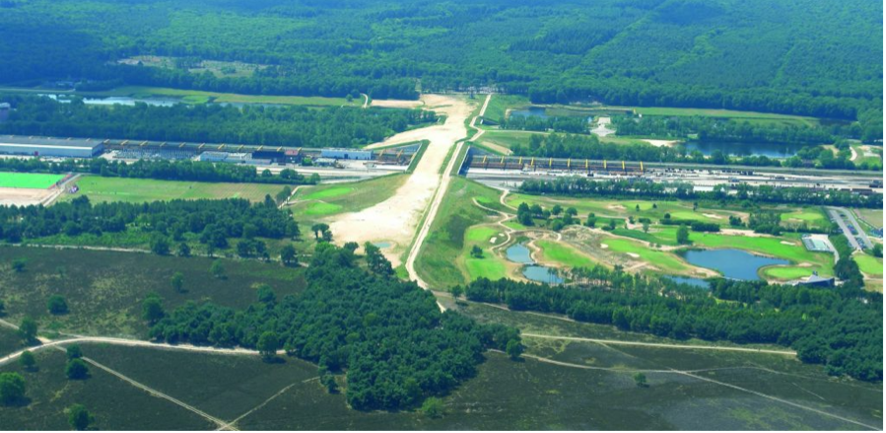
Natuurbrug Zanderij Crailoo, courtesy of visit.nl

Dwarfing them all is the world’s longest ecoduct- wildlife overpass, the Natuurbrug Zanderij Crailoo crossing in the Netherlands, which is 164 feet wide and 2,624 feet long, and spans a railway line, business park, highway and sports complex.
 
Laura McMahon