A Streetcar Named Desire
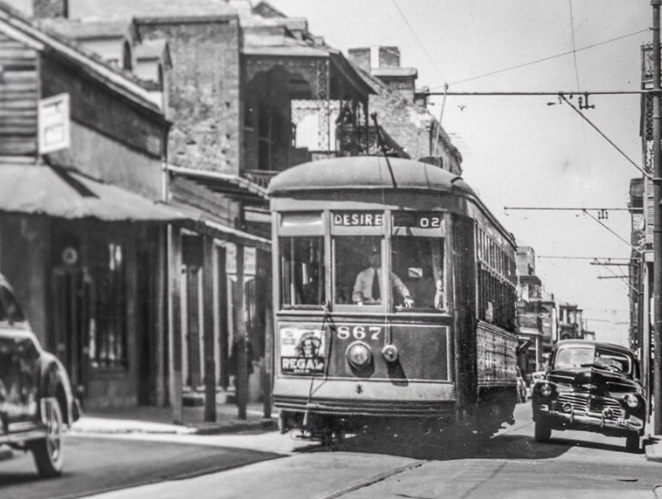
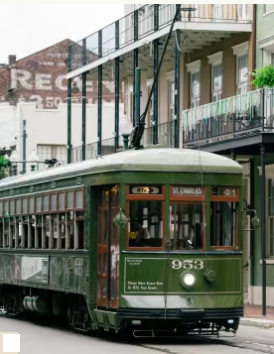
Desire Streetcar, courtesy of The Historic New Orleans Collection, via heartoflouisiana.com

 
A Streetcar Named Desire

by Sweiskloss
Sep 17, 2026
Celebrating its 75th anniversary, the movie adaptation of Tennessee Willilams’ famous play, A Streetcar Named Desire, premiered on September 18, 1951. Starring Marlon Brando, Viven Leigh, Karl Malden and Kim Hunter, the movie produced unforgettable lines, incredible performances and won four Oscars. A quiet force in the play, the streetcar had a significant role both literally, as the actual streetcar Stella takes to Blanche’s house, and symbolically, representing the implosive force that leads to Blanche’s ruin. Williams chose the title of his work based on an actual streetcar line that ran in the French Quarter of New Orleans with the destination sign “Desire.”

Streetcars became popular in US cities in the 1890’s with the dawn of the electric age. Replacing horsedrawn carts, the introduction of reliable electric-powered trolley systems allowed cities to expand, creating new suburban communities, spurring economic growth and making travel within the city easier. Interestingly, “streetcars” and “trolleys” are technically the same vehicle, but the terms reflect regional and historical differences with ‘trolley’ favored in the East, and ‘streetcar’ prominent in the West.
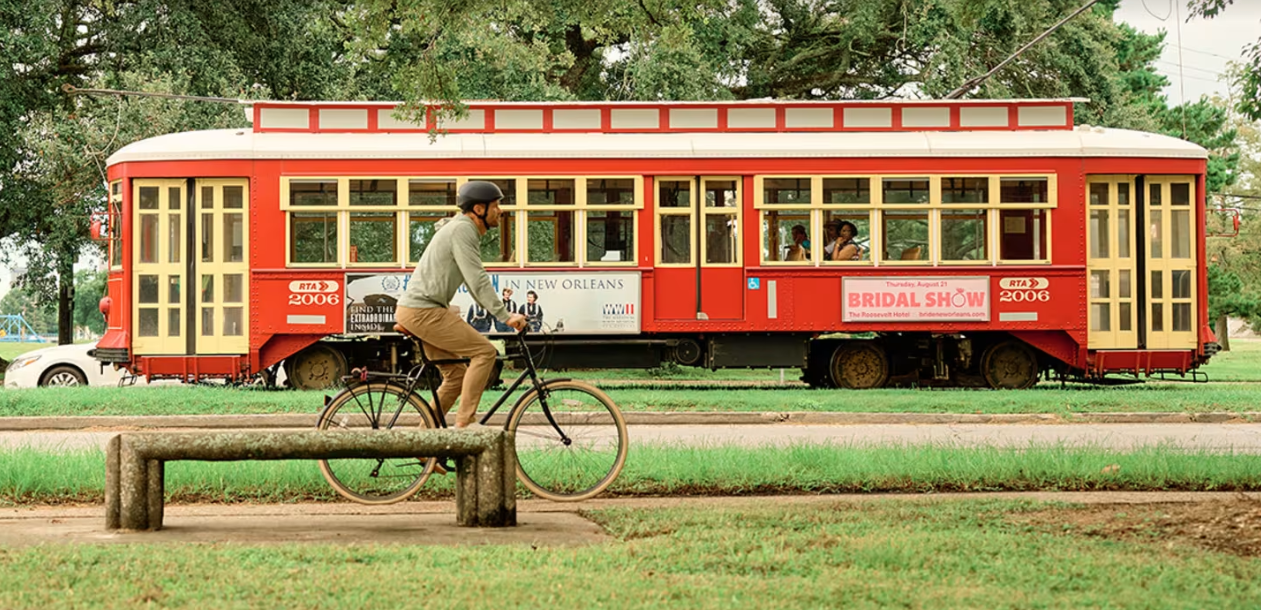
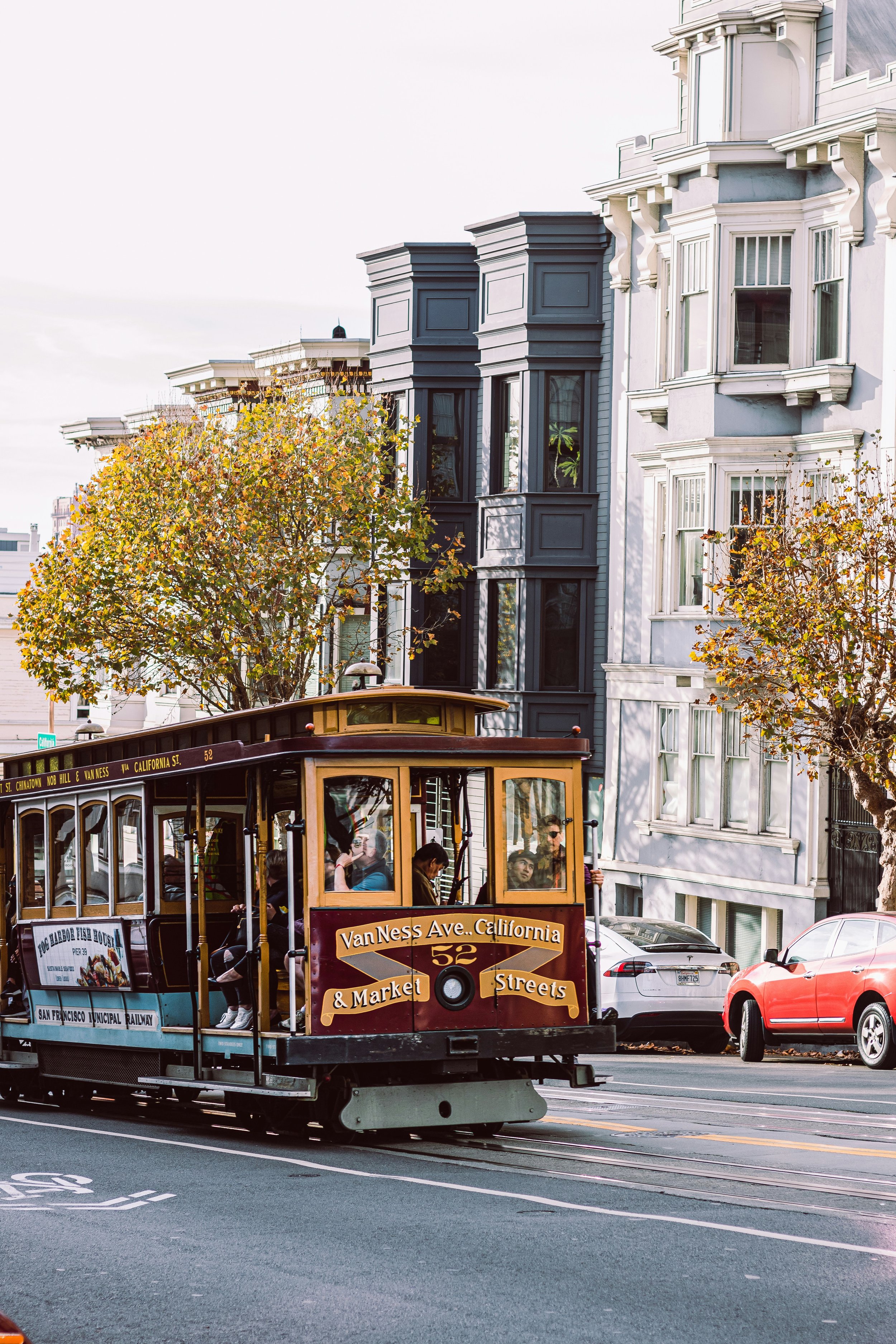
Early streetcar designs featured a classic aesthetic with nostalgic color palettes from two-tone cream and forest green, to crimson and maroon, to royal blue and mustard yellow with chrome accents. Mechanically simple, the streetcar was completely dependent on physical contact with the overhead trolley poles and continuous wiring. The boxy shaped car was built with a rigid single chassis that was placed on twin-wheel trucks that limited the length and turning flexibility. A high-floor layout required passengers to climb narrow steps from the street level, while the inside had wooden bench seating. Famous historic lines that are still running today are New Orlean’s St Charles Line and San Francisco’s F-Market & Wharves Line.

New Orlean’s St Charles Line
The St Charles Streetcar Line in New Orleans is the oldest continuously operating streetcar line in the world, running the iconic cars along St Charles Avenue since 1835, switching to electric in the 1890’s (spotatrain.com). The olive-green Perley Thomas cars feature authentic mahogany seats, exposed ceiling fans, wooden window sashes and brass fixtures. Framed by a canopy of Live Oak trees, the line passes by some of the city’s most significant architectural structures from the Greek Revival homes and Victorian mansions in the Garden District, to celebrated culinary institutions such as Commander’s Palace, and past Loyola and Tulane Universities and Audubon Park.

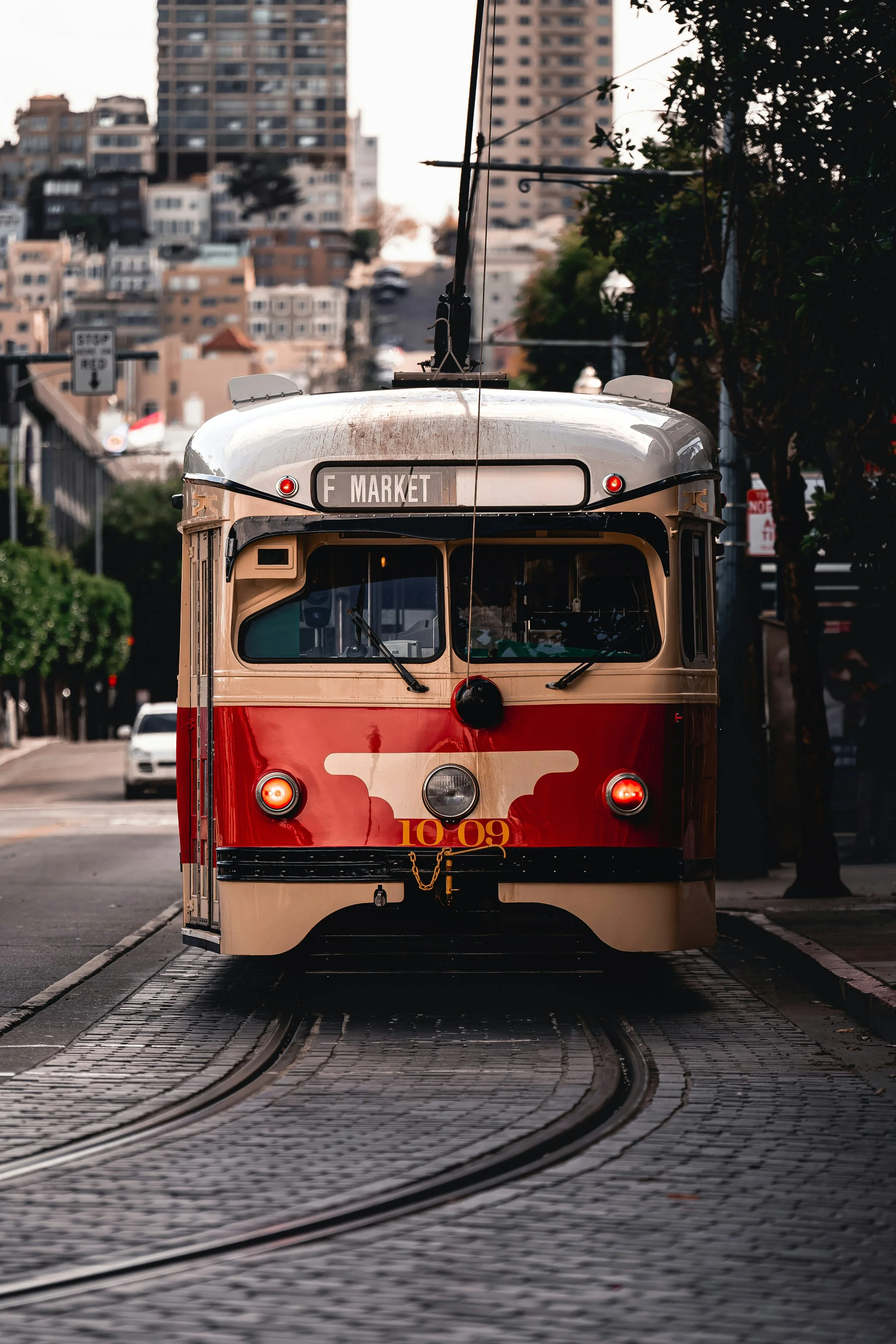
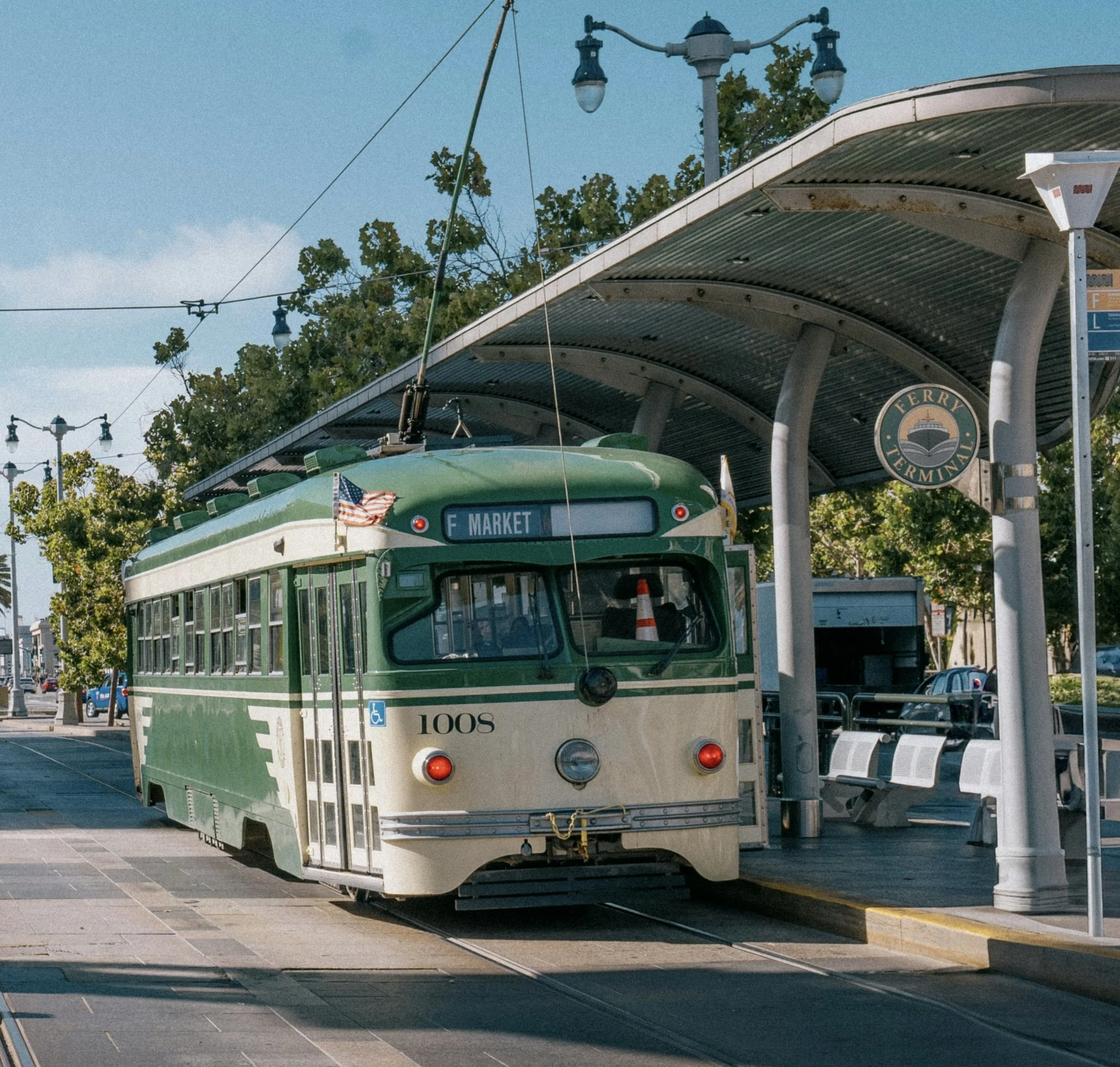
San Francisco’s F-Market & Wharves Line
San Franciso’s famous streetcars are “museums in motion” featuring vintage vehicles that operate daily as part of San Francisco’s public transport system. The 20 vintage cars featured in today’s fleet have been acquired from cities around the country. They have been restored to their original grandeur (and made ADA compliant) with authentic paint schemes to represent their origins. The line runs six miles each way along Market Street between Fisherman’s Wharf and the Castro District with stops along way at Union Square’s retail district, the landmark skyscrapers of the financial area, The Embarcadero, Pier 39 and Fisherman’s Wharf. In tribute to their New Orleans’ origins, cars 913 and 952 are named “Desire”.

The popularity of streetcars began to decline with the advent of the automobile age, government investment in highways and cities’ development of mass transit (cnsmaryland.org). “By the late 1950’s, the clang of the trolley bell had all but disappeared from America’s streets” (firsttimedriver.com).

A Rekindled Love Affair with the Streetcar
 
 
In recent decades, several major cities in the US have joined a national trend “rebooting what was once considered an antiquated mode of urban transportation” (cnmaryland.org). Seattle, Cincinnati, Dallas, Tucson and DC, among other cities, have reintroduced modern streetcar lines, “serv[ing] not only as transportation but as engines of urban renewal” (firsttimedriver.com). Today’s electrically powered trolleys have become part of urban revitalization projects and focus on universal accessibility and urban integration. Equipped with onboard batteries or super capacitators, the streetcars can drop their poles and drive through wireless zones. And their accordion-like flexible joints allow them to “snake” around tight city corners. With accessibility being a priority, modern streetcars provide level, zero-step, barrier-free boarding, interiors with an abundance of clear floor space (good for wheelchairs and strollers), and mobility grab bars, while stop announcements are communicated verbally and visually on overhead monitors. Compared to diesel buses, the cars are also quieter and generate less pollution. While streetcar routes are generally shorter in relation to cars or slower than buses, they “can be a boon for the tourist industry” and lead to commercial and residential development. “Portland’s investment in its streetcar in 2001… led to $4 billion in development in Portland’s urban core” (kupmc.ku.edu).

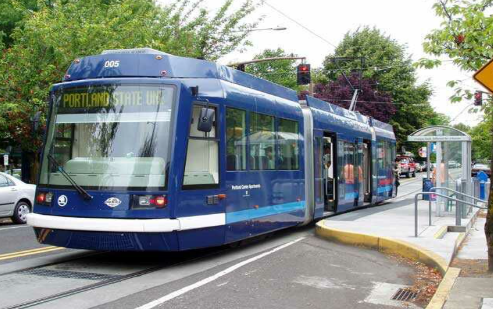
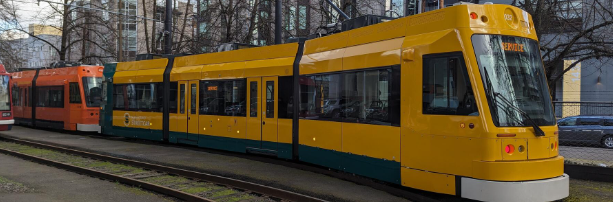
The Portland Streetcar, Portland, Oregon
In 2001, Portland unveiled the first new streetcar service system in the US since World War II and helped revitalize the Pearl District, one of city’s densest residential neighborhoods. According to their website, 49% of the city’s new housing units were built along the streetcar system. Now known as the NS Line, the route travels through Portland State University to the waterfront and the Nob Hill neighborhood via the popular shopping and dining area of the Pearl District. The NS Line makes frequent stops to prioritize local neighborhood connectivity. The streetcar features a modern style and lighter-weight design. Plans for expansion include incorporating hybrid battery-electric streetcars running on 100% renewable energy.

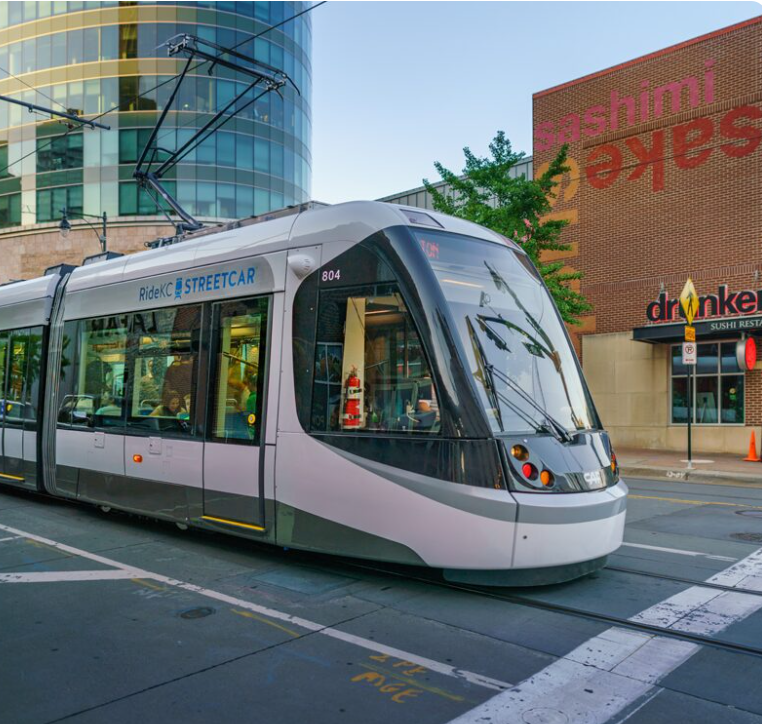
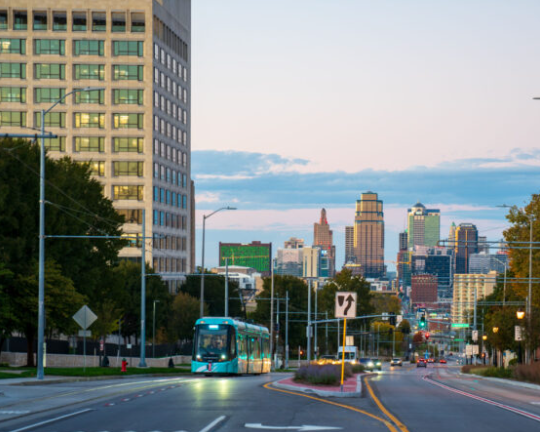
KC Streetcar, Kansas City, Missouri
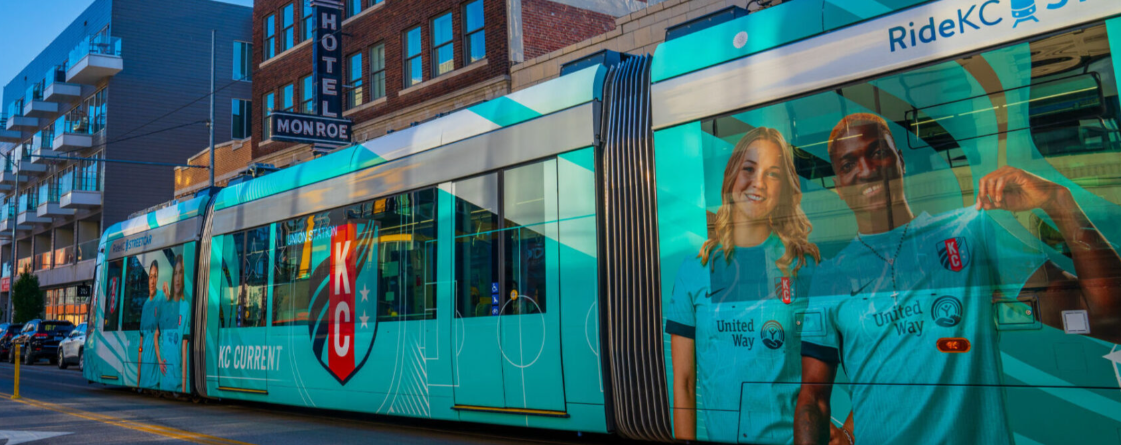
Kansas City used the KC Streetcar to help reshape urban spaces, creating pedestrian improvements, new development opportunities and connections between neighborhoods from the River Market and growing Riverfront, to the University of Missouri-Kansas City. The system is free to ride, helping make it a part of everyday transportation through downtown. Its modern vehicles feature 100% low-floor design with no interior steps, and curb-height platforms for seamless boarding, accommodating wheelchairs, bicycles and strollers alike. The streetcar is integrated directly in Main Steet’s urban fabric, alongside sidewalks, parking areas, landscaping and pedestrian crossings. In a nod to the city’s historic streetcars, today’s streetcars continue the numbering system where it left off more than 50 years ago.

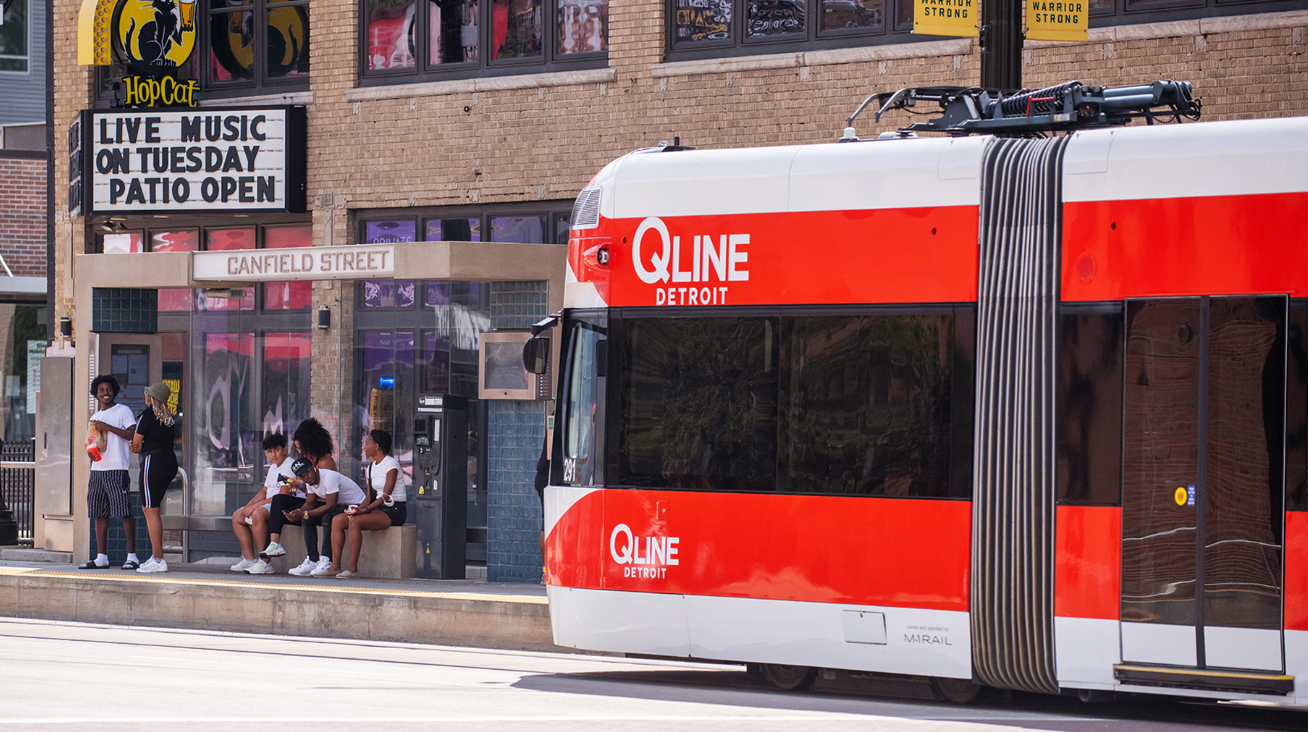
QLINE, Detroit, Michigan
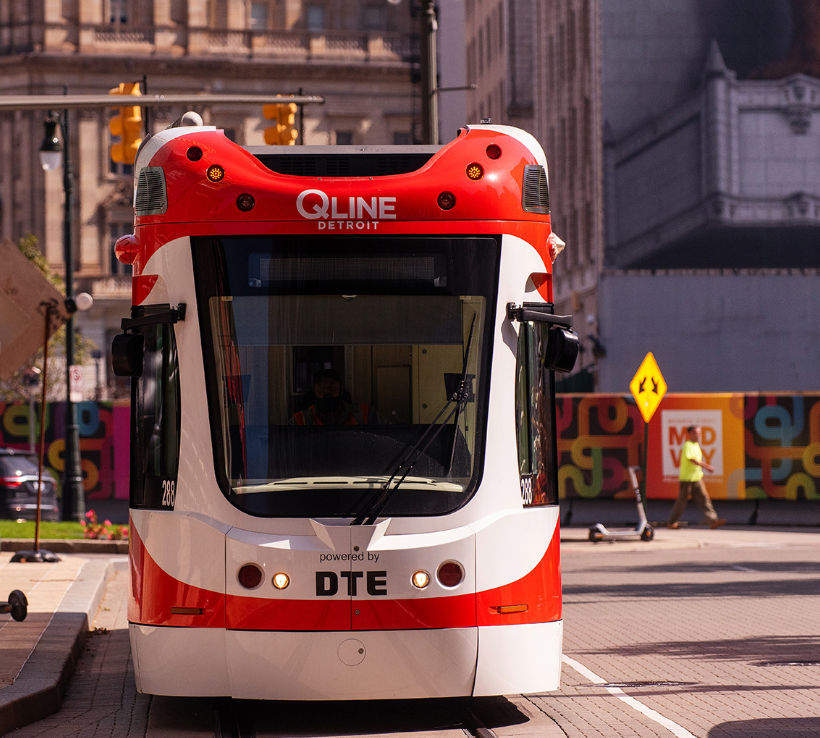
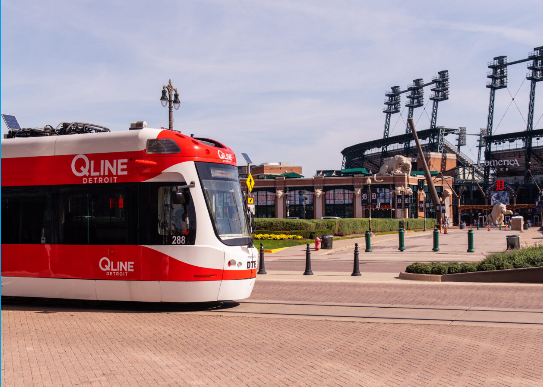
Bridging the city’s history with its future, Detroit’s QLINE was designed as more than a transportation system; it is part of the ongoing revitalization of Woodward Avenue, one of the city’s most historically significant streets. Free to ride, the route connects downtown with Midtown and New Center, passing through some of the city’s main attractions and landmarks from the Opera House, to the Detroit Institute of Art, to Little Caesars Arena where the Pistons and Red Wings play, and Campus Martius Park with its popular seasonal “beach”. The modern streetcar features low-floor vehicle and level boarding platforms, while onboard Wi-Fi, USB charging, digital information and real-time arrival displays bring contemporary technology to this historical corridor. The streetcars travel without the aid of the overhead catenary system for part of the way, drawing power from the onboard energy storage system (brookvillecorp.com). Contemporary stations and sleek vehicles create a striking contrast with the historical architecture along the avenue, while at the same time connecting with the emerging residential, commercial and civic development.

OKC Streetcar, Oklahoma City, Oklahoma
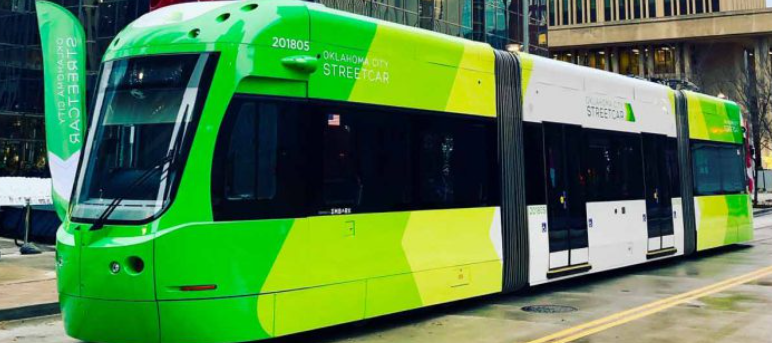
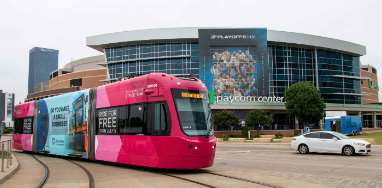
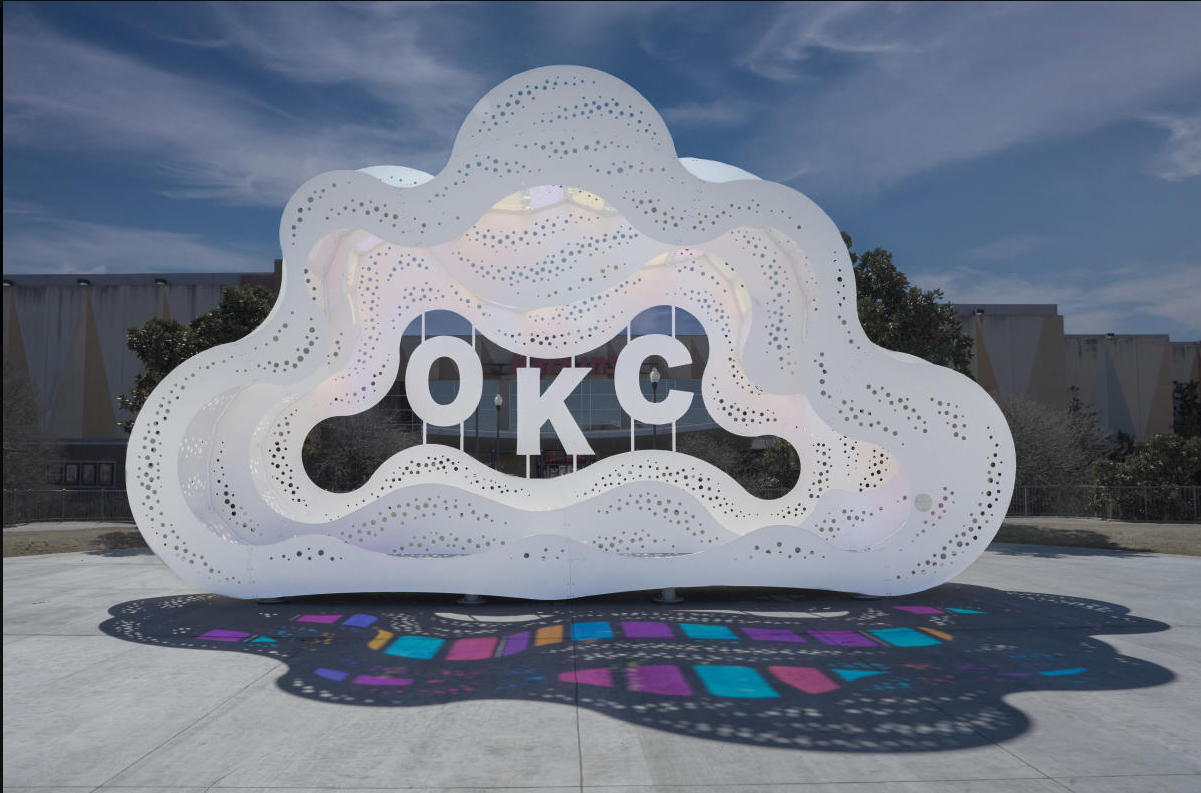
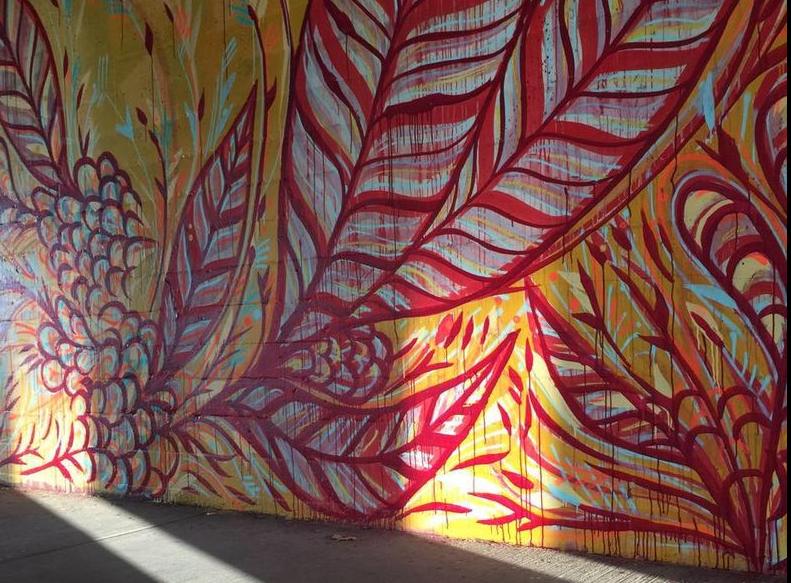
The OKC Streetcar has helped revitalize the city’s downtown area, connecting nearly five miles of hotels, dining and attractions such as the Bricktown Entrainment District, Automobile Alley, and the Museum of Art. According to Visit OKC, the streetcar “has already proven to be an economic catalyst,” encouraging new development along the route while easing traffic congestion and reducing air pollution. The free-to-ride, sleek and modern cars feature low floor areas and curb-level boarding for improved accessibility while large windows, wide doors and open interiors create bright light-filled spaces. Wi-Fi, USB charging and real-time passenger information make the streetcars convenient for residents and tourists alike. Onboard energy storage systems allow the streetcar to traverse sections of the route without dependance on the overhead catenary system, as the batteries recharge when reconnected to overhead power supply. Public art pieces and murals along the route further enhance the passenger experience. The most recent installation, Cloud Embrace, an immersive sculpture that uses light and color inspired by Oklahoma skies, was positioned in the high traffic pedestrian plaza and is easily viewed from the OKC Streetcar.
 
Laura McMahon