Beyond the Books

Photo by Jordan Rathkopf, Brooklynpaper.com

 
Beyond the Books

by Sweiskloss
Sep 3, 2026
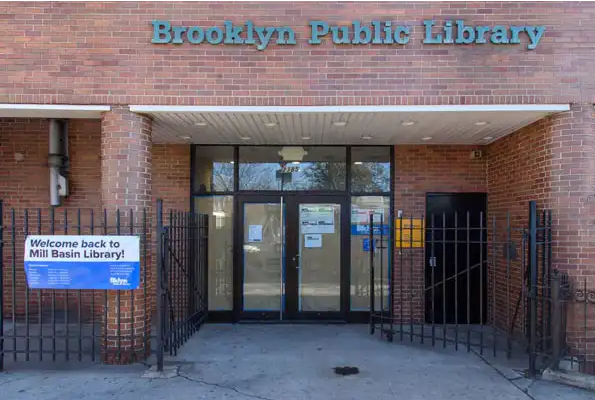
It’s back to school time. And while for most students that means endless hours on Google researching papers and asking ChatGPT for help, for me it evokes nostalgic memories of visiting the Mill Basin Public Library in Brooklyn, NY.

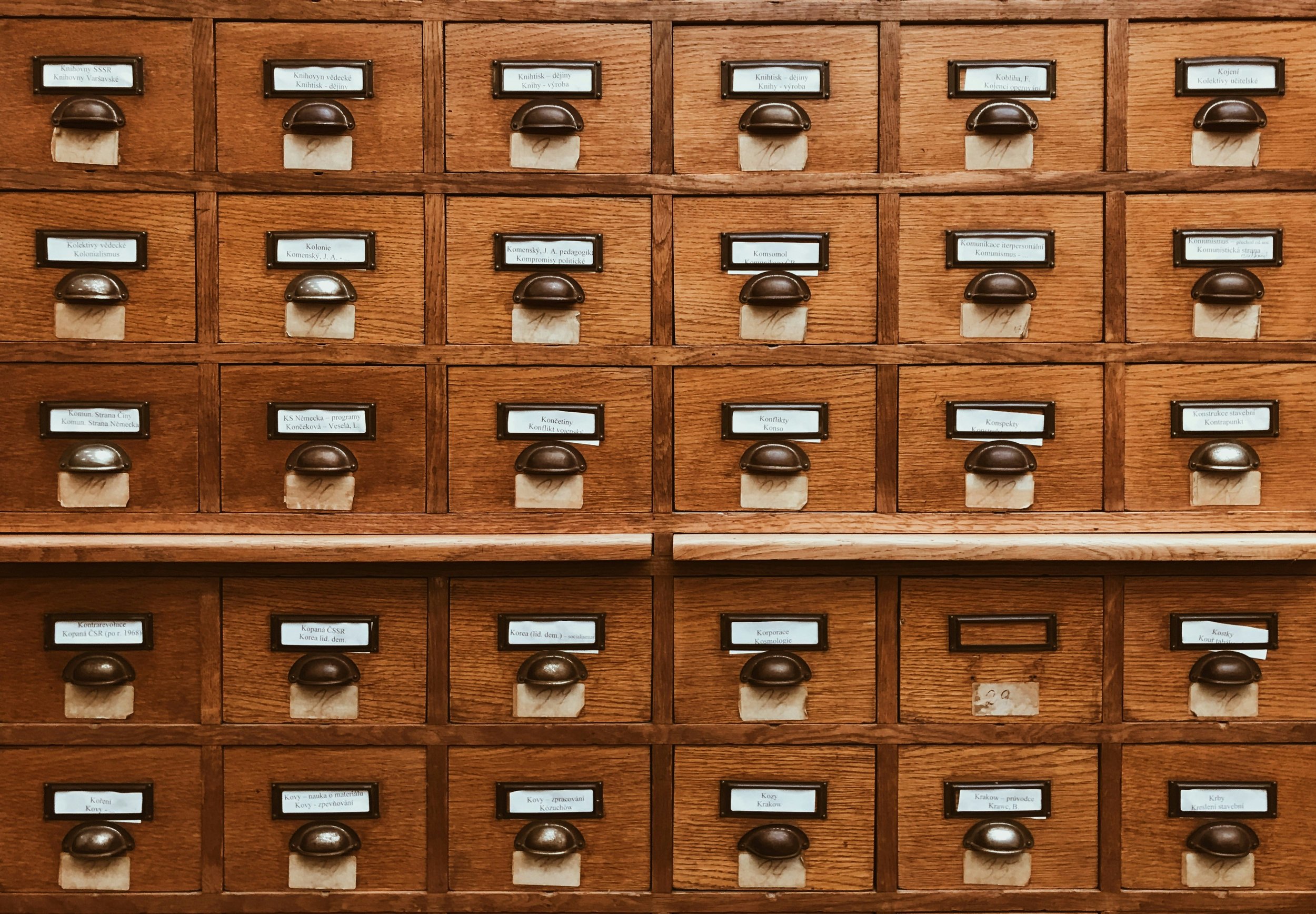
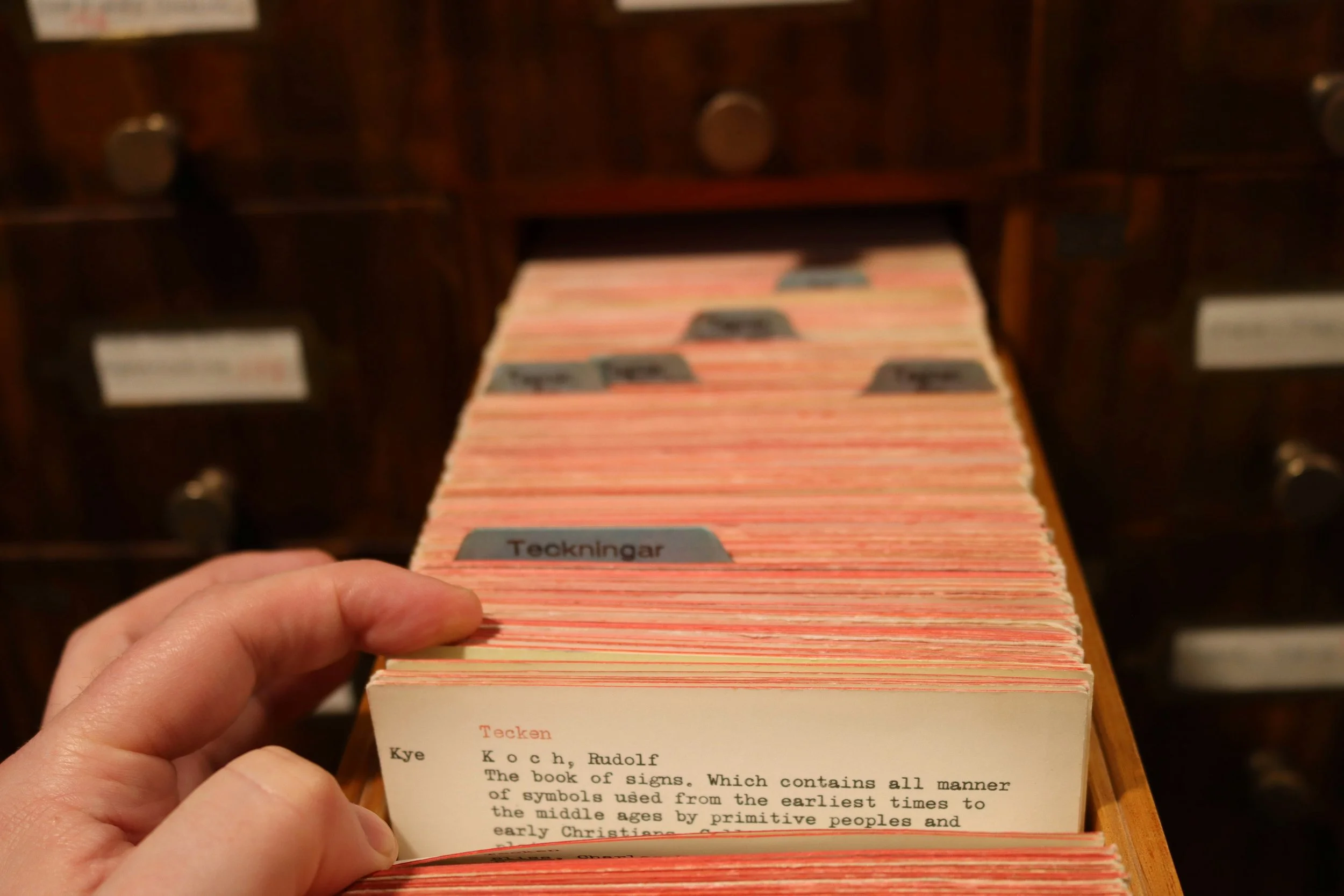
I can remember (just barely) doing homework after school at the library’s communal tables, leafing through the Dewey Decimal card system, and checking out books with my official library card. Compared to the high-tech microfilm of yesteryear, today’s spaces have embraced technology, offering everything from microchipped tags for contactless checkouts and digital e-books, to soundproof studios, 3D printers and robotic book retrieval systems.
But while technology has transformed how libraries operate and expanded what they offer the public, the fundamental architectural principles behind these civic spaces remain remarkably consistent. Light, sound, circulation and spatial organization must all be carefully considered to create environments that support learning and community. Expansive windows and glass atriums can flood interiors with natural light, but architects must also consider incorporating frosted glass, louvers or other shading strategies, as direct sunlight can damage books and create glare on digital screens. Material selection also plays an important role in maintaining the library’s number one rule: Silence! Porous wood panels, acoustic materials and perforated metal ceilings can help absorb and diffuse sound. Spatial layout is also crucial, with vibrant children’s zones and high traffic areas (read noisy) such as cafes and help desks placed on different levels than reading rooms.

Stunning public libraries throughout the US showcase a range of architectural styles from historical masterpieces to futuristic monuments. Designed to inspire, these civic structures have become visual icons and city landmarks.

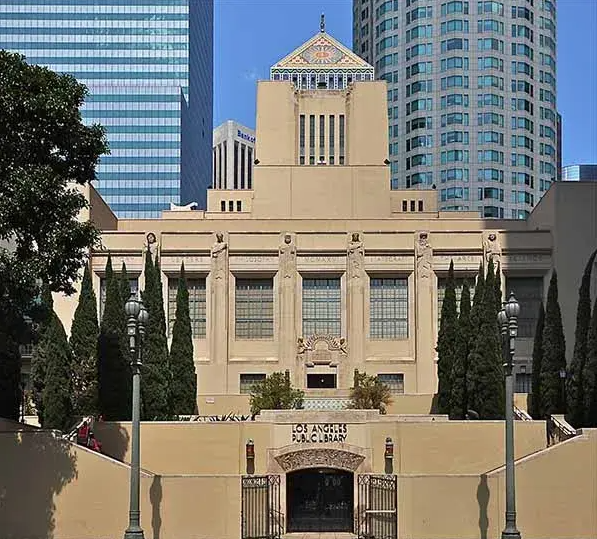
Richard J Riordan Central Library, Los Angeles, CA
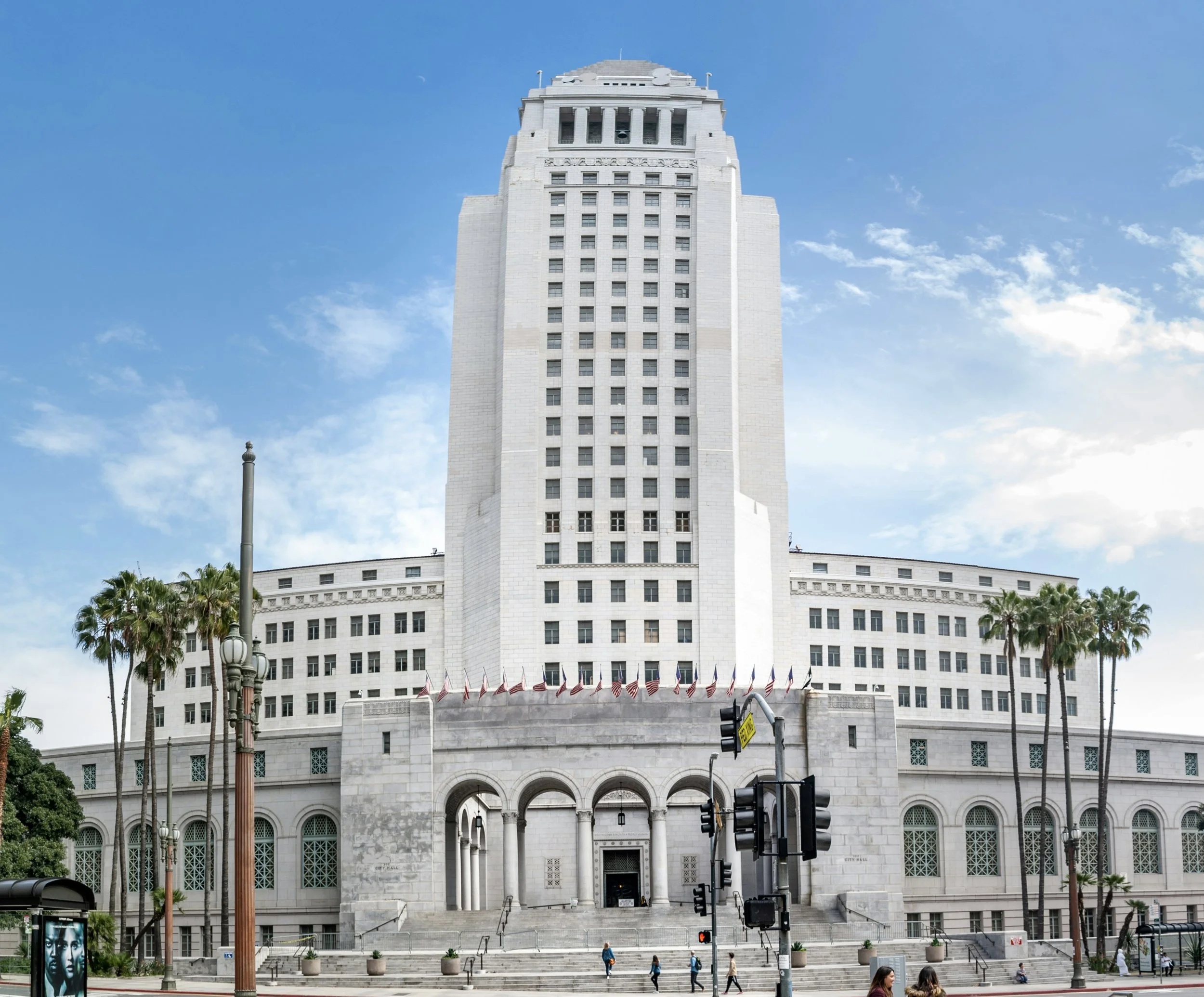
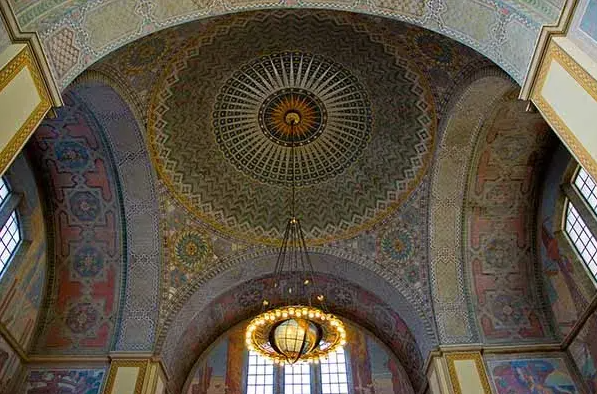
A blend of Art Deco, Egyptian Revival and Mediterranean influences, Los Angeles’ Central Library reflects the city’s diverse history and cultures. Designed by Bertram Goodhue and opened in 1926, the library features a striking pyramid tower, geometric patterns, a golden mosaic sunburst and a golden hand holding the “Torch of Knowledge.” An 8-story grand rotunda is crowned by a 2,000-pound bronze chandelier, along with intricate ceiling stencils of zodiac signs and celestial patterns. The soaring open space floods the lower levels with natural light. Vibrant murals by Dean Cornwell depict California’s history, while Spanish-style tiles and rich wood carvings add to the grandeur. The public library houses an extensive collection documenting California’s Spanish and Mexican histories, a restaurant menu collection that traces the culinary evolution of California dining, and an archive of Hollywood and Media history.

Stephen A. Schwarzman Building, New York Public Library, New York, NY
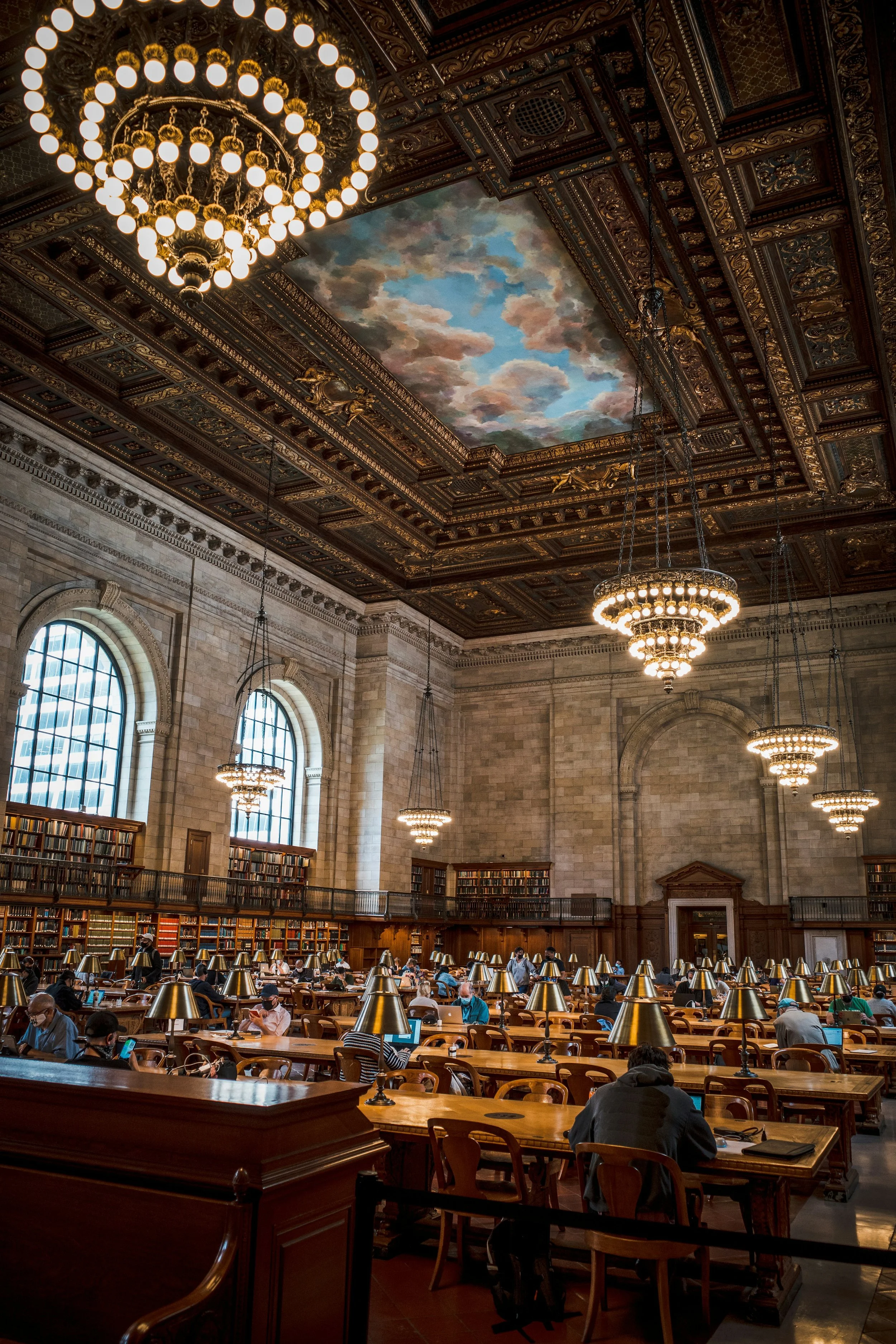
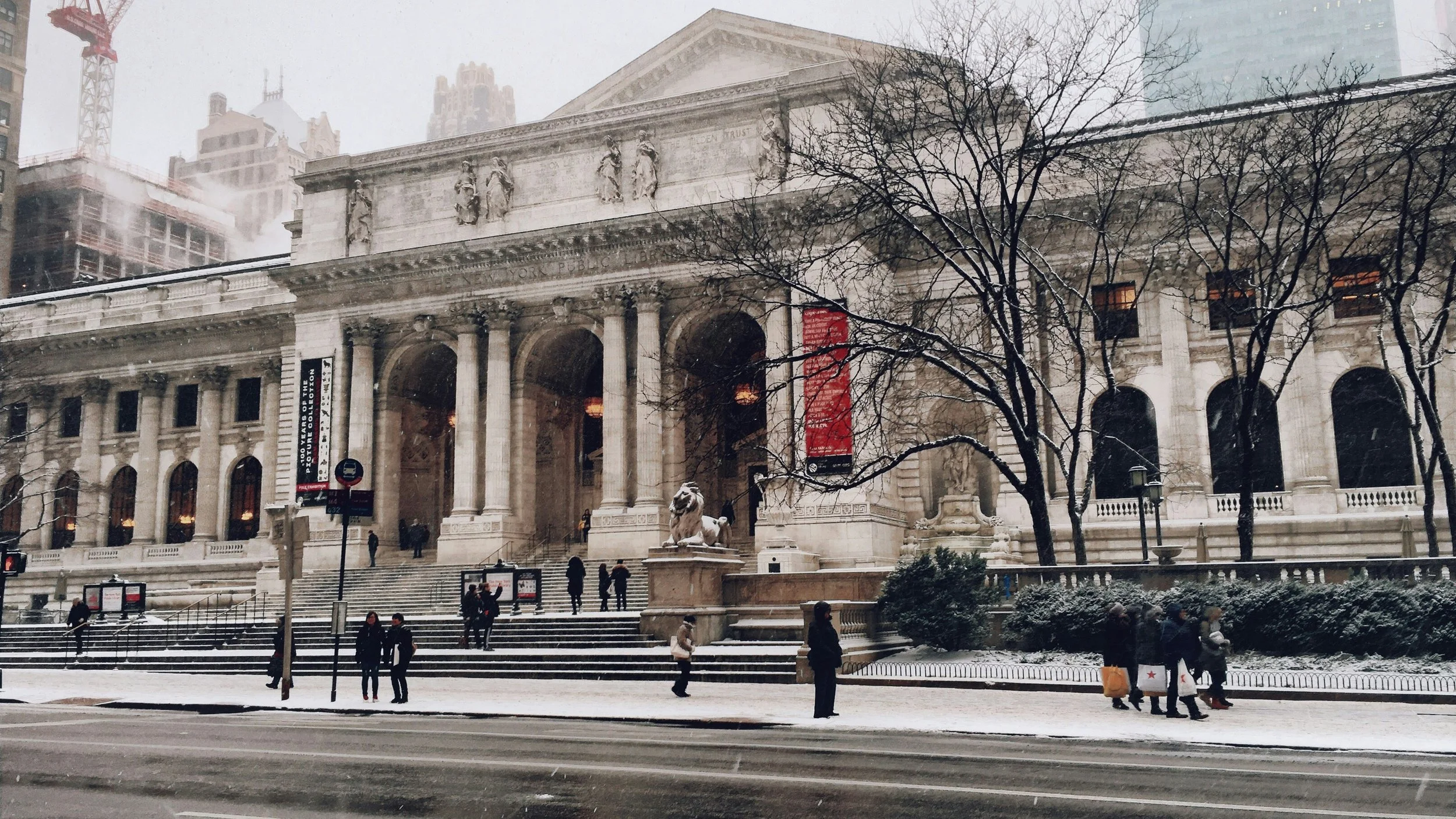
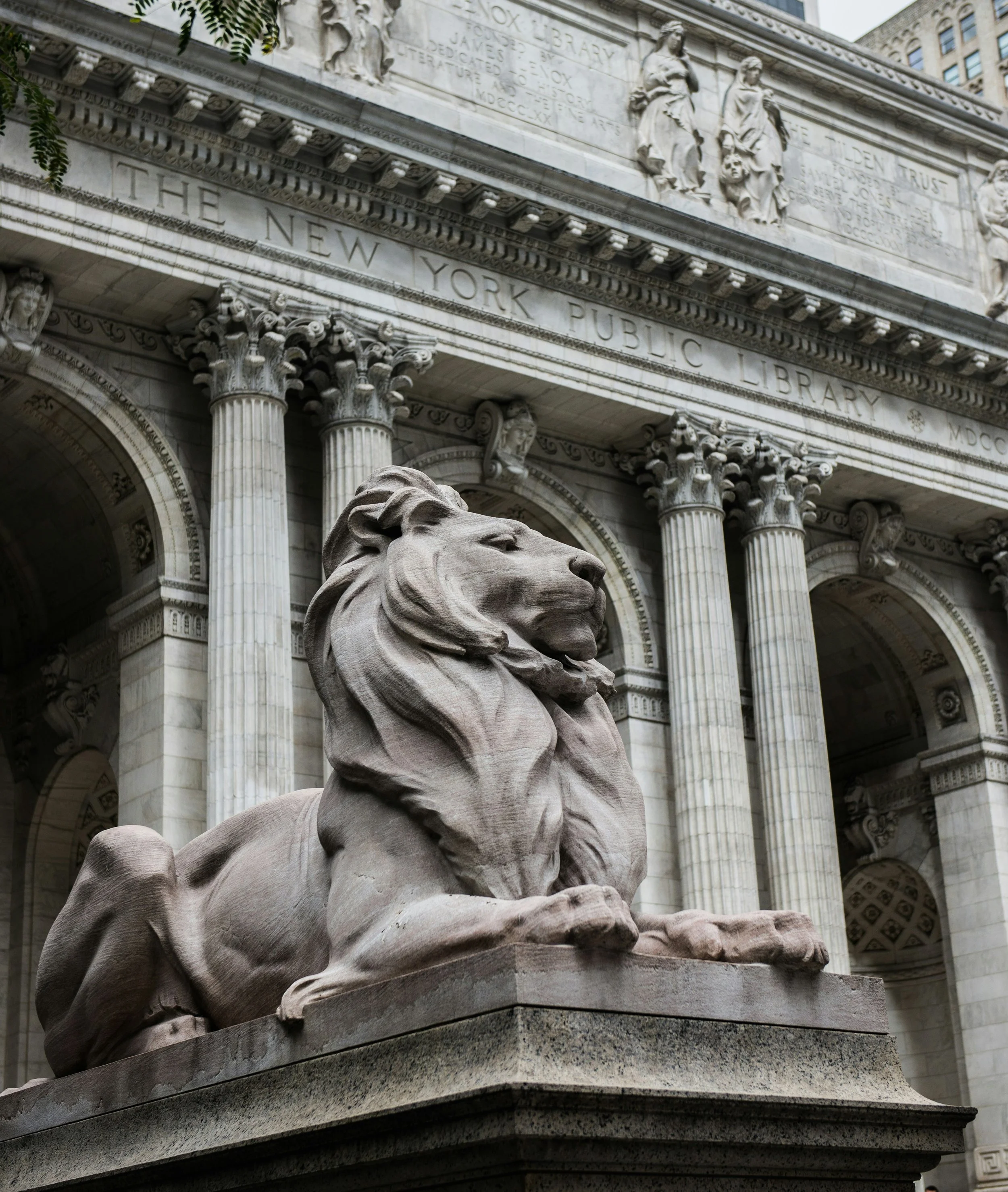
The Schwarzman Building of the New York Public Library is one of the Big Apple’s most iconic landmarks with its famous stately lions, Patience and Fortitude, guarding the front entrance. Designed by Carrère and Hastings in 1895, the building features the symmetry and balance typical of the Beaux-Arts style with a central portico, recessed wings and end pavilions, all made from white Vermont marble. The crown jewel of the building is the Rose Main Reading Room with arched windows, ornate chandeliers and a breathtaking 52-foot gilded ceiling displaying murals of vibrant skies and billowing clouds. The collection itself houses over 50 million items ranging from historical documents including an original copy of the Bill of Rights, to literary artifacts such as Dicken’s writing desk and to cultural touchstones such as the original stuffed animal that inspired the Winnie-the-Pooh children’s classic.

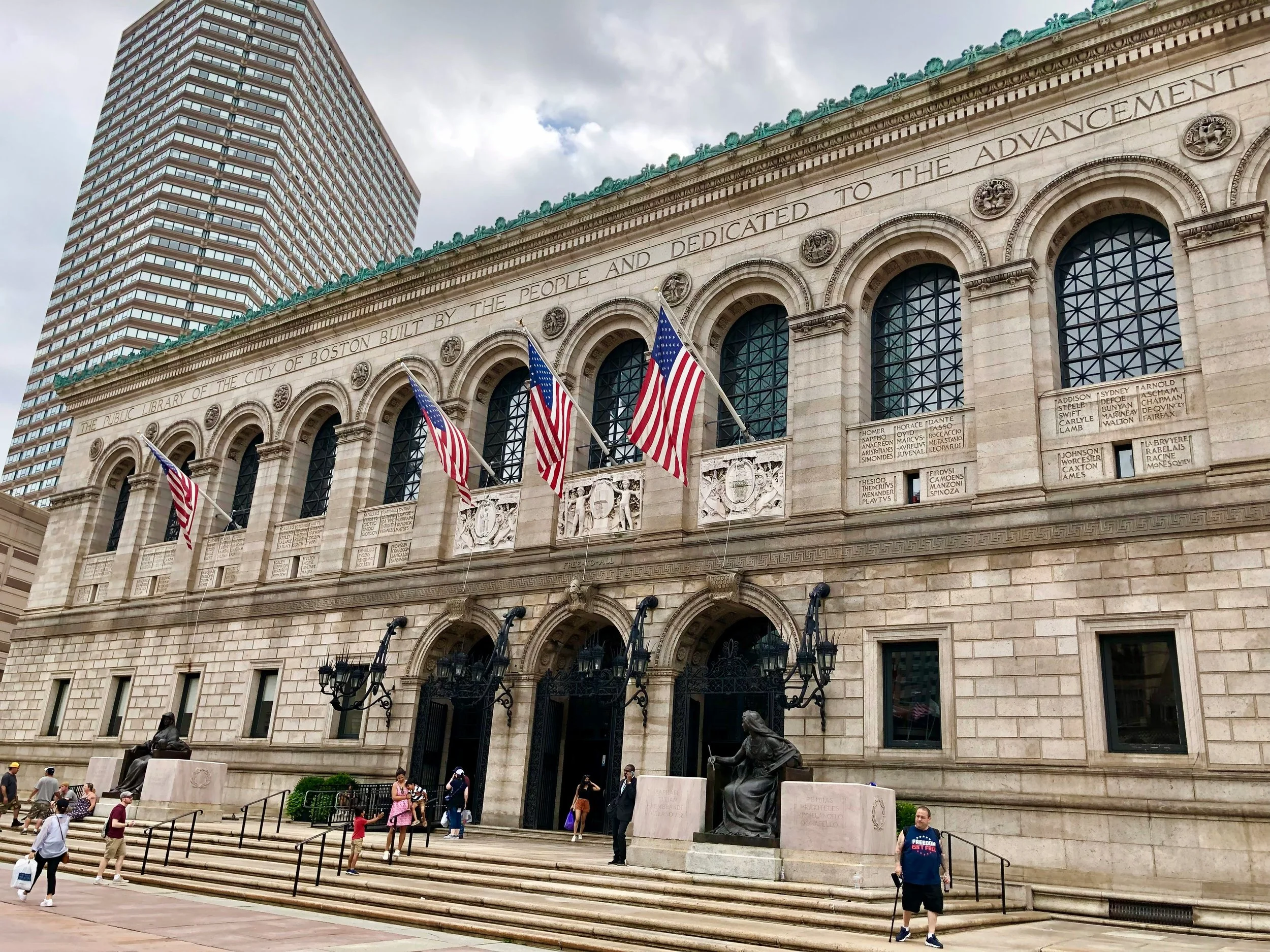
Boston Central Public Library, Boston, MA
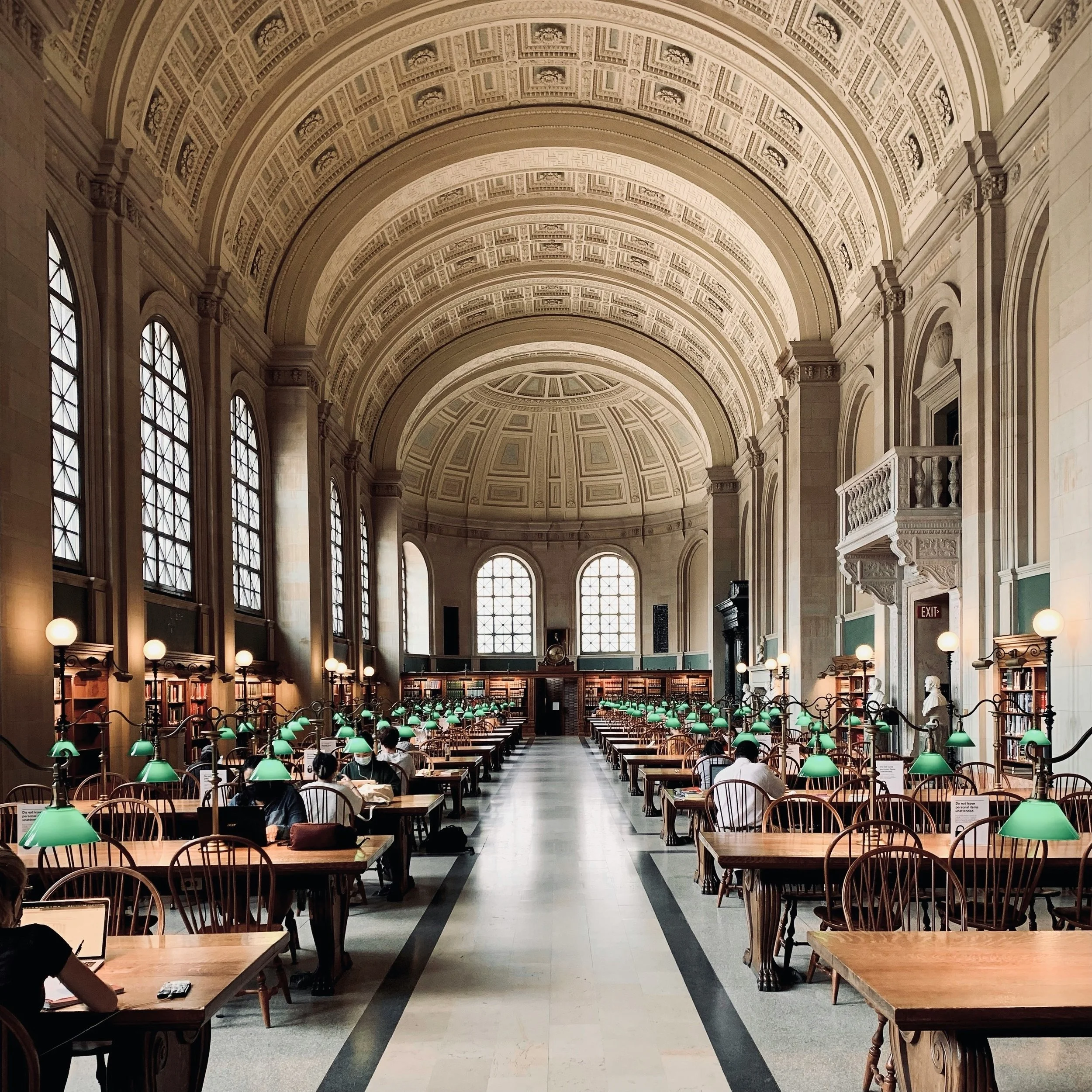
Opened in 1895 in Copley Square, the Boston Central Public Library was the first municipal library in the US. Conceived as “a palace for the people,” the library was modeled after the Bibliothèque Sainte-Geneviève in Paris and built in the Classic Revival style with wide proportions, three main arched doors, and large second-story arched windows. The exterior decorations reference Boston’s maritime ties with a dolphin-and-seashell cornice. The interior features a serene Italian Renaissance-style courtyard, as well as a Grand Staircase and yellow Siena marble walls. The famous Bates Hall reading room boasts a 50-foot barrel-vaulted ceiling, English oak shelves and tables, bookcases and signature green lamps restored to match their original grandeur. Elsewhere in the library visitors can enjoy murals by John Singer Sargent and panels by Edwin Austin Abbey.

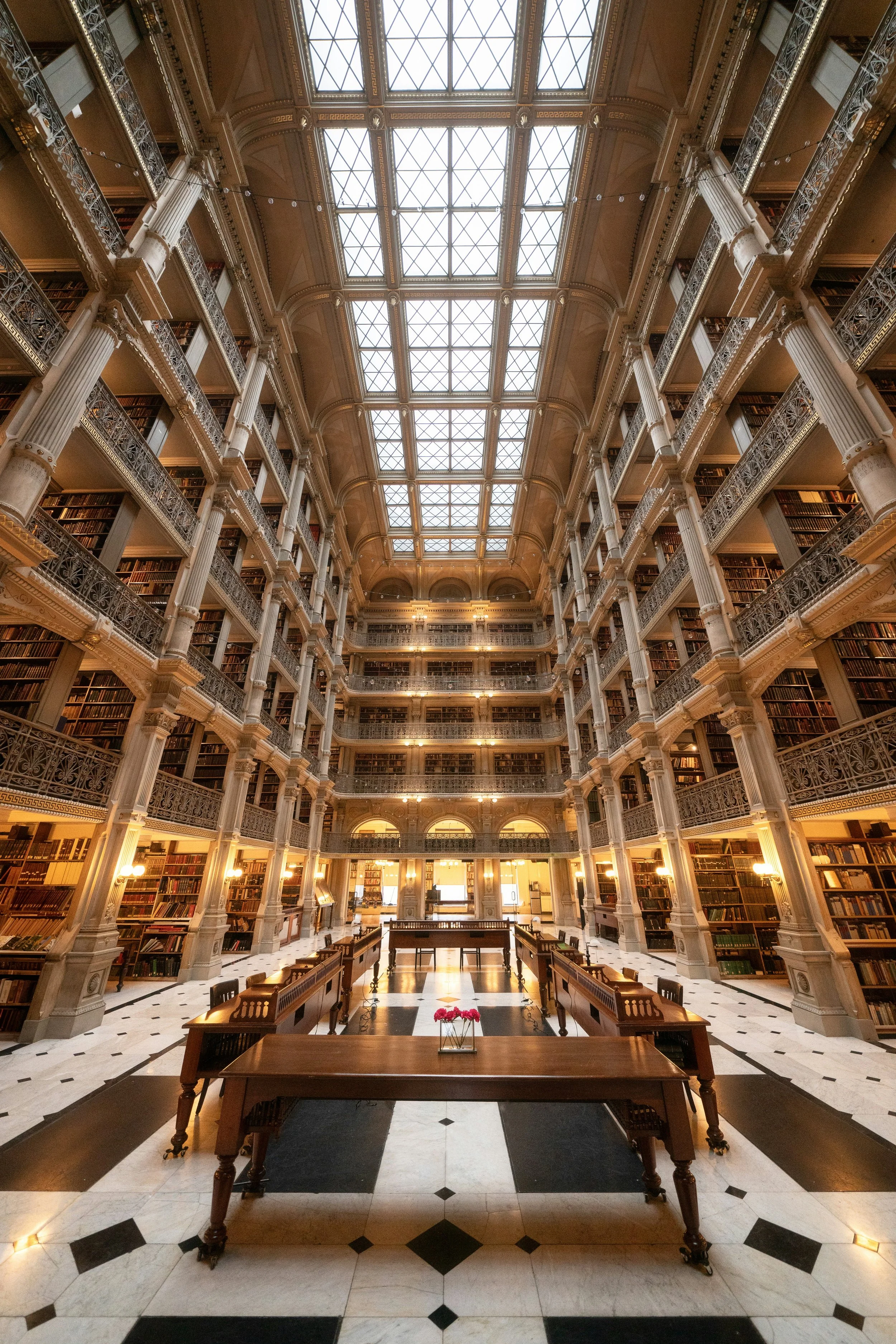
George Peabody Library, Baltimore, MD
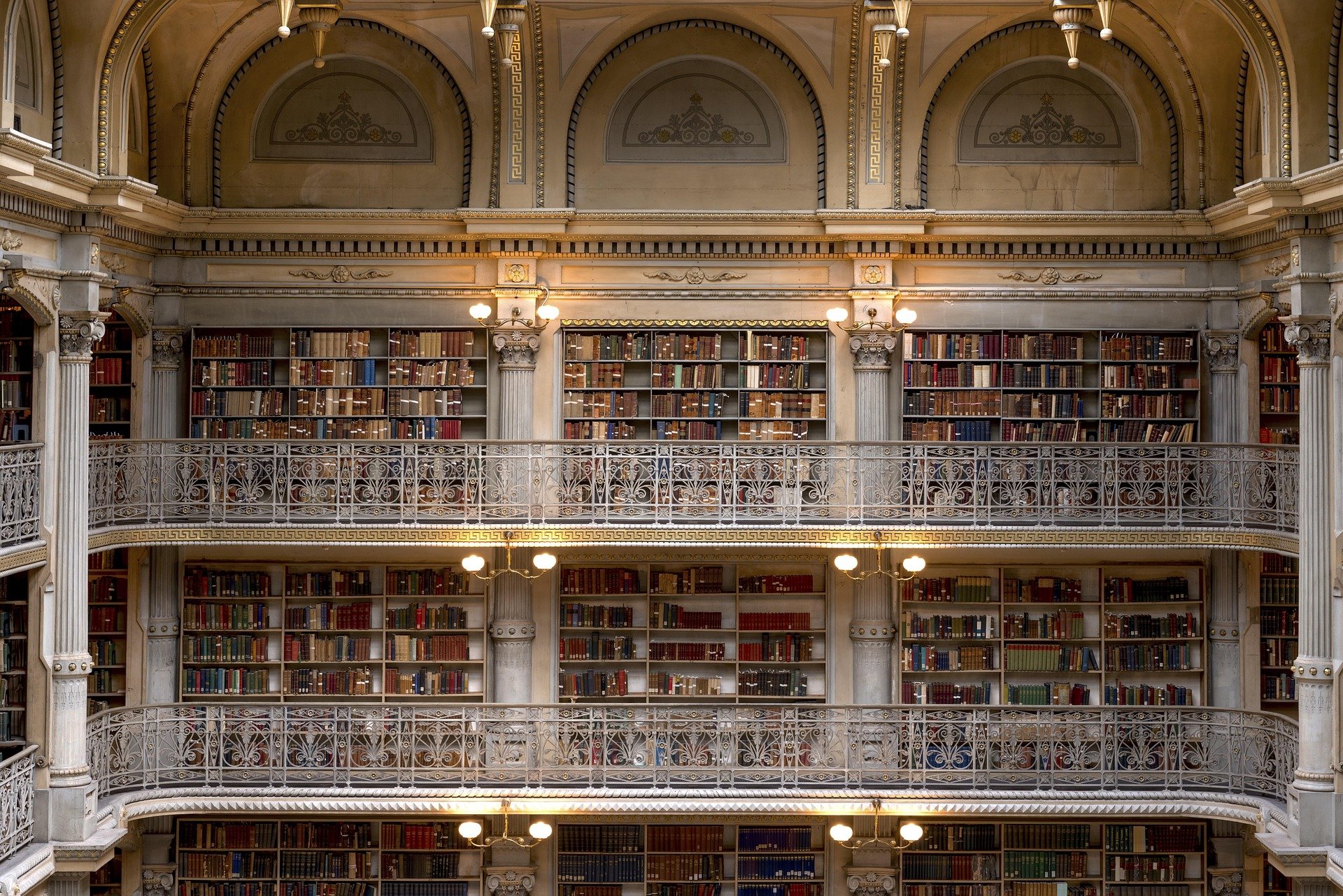
Part of the Johns Hopkins University campus, the Geoge Peabody Library has been described as a “cathedral of books.” The library’s neo-Classical interior boasts five tiers of cast iron balconies, decorative columns and gold leaf details. Rising 61-feet beneath a massive, frosted skylight, the space is illuminated by warm amber light that highlights the black-and-white marble floors. The research library houses approximately 300,000 books including a collection of rare books from the 16th century, early maps, manuscripts on natural history, archeology and folio illustrated plate books.

Seattle Public Library, Seattle, WA
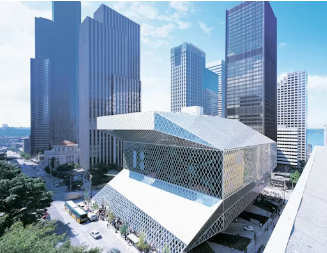
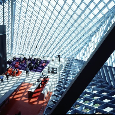
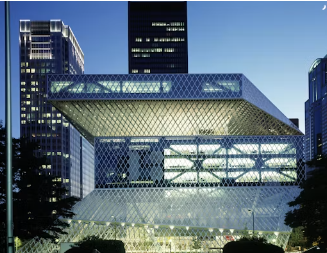
Renovated by famed Dutch architect Rem Koolhaas in collaboration with LMN Architects, the Seattle Public Library reimagines what a library can be. Its striking 11-story glass and steel asymmetrical structure is wrapped in nearly 10,000 diamond-shaped panels that filter daylight and reflect the city skyline. Reinventing the traditional library layout, the flexible interior is organized into five distinct zones connected by four functional and colorful ‘in-between’ public spaces. The highlight of the library is the Book Spiral that organizes the collection along a continuous, wheelchair accessible ramp. Other innovative spaces encourage gathering, collaboration and exploration, such as the 50-foot-high “Living Room,” the Mixing Chamber with help desks, the Red Room painted 13 shades of red, and the Betty Jane Narver Reading Room on the top floor offers panoramic views of Elliott Bay and the Olympic Mountains.

James B. Hunt Library, Raleigh, North Carolina
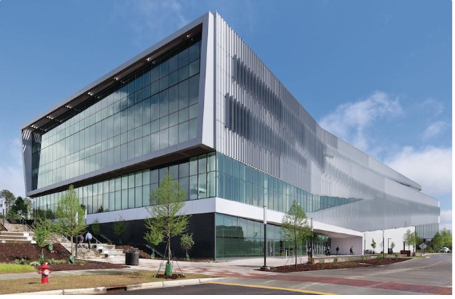
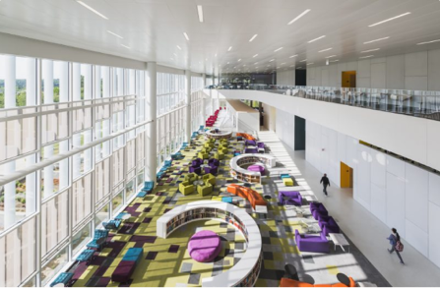
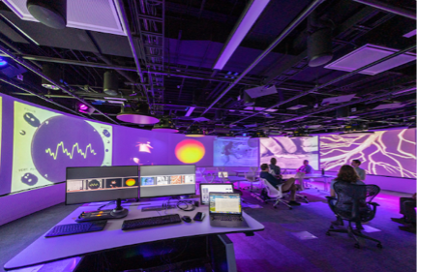
Described by Time magazine as “the Library of the Future” the Hunt Library combines architecture, technology and sustainability. Designed by Snøhetta, it features interactive technology zones, digital displays, video game development labs and music studios. The bookBot automated storage and retrieval system can hold up to two million items while only using one-ninth the space of traditional shelving. Committed to sustainability, the library is flooded by natural light, shaded by solar fins, and cooled and heated by innovative chilled beam and radiant panel systems. Rooftop solar panels warm the water, while the green roof is irrigated by the rain garden filter storm run-off (lib.ncsu.edu).

Harold Washington Library Center Chicago, IL
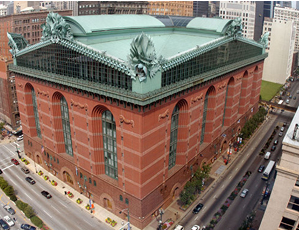
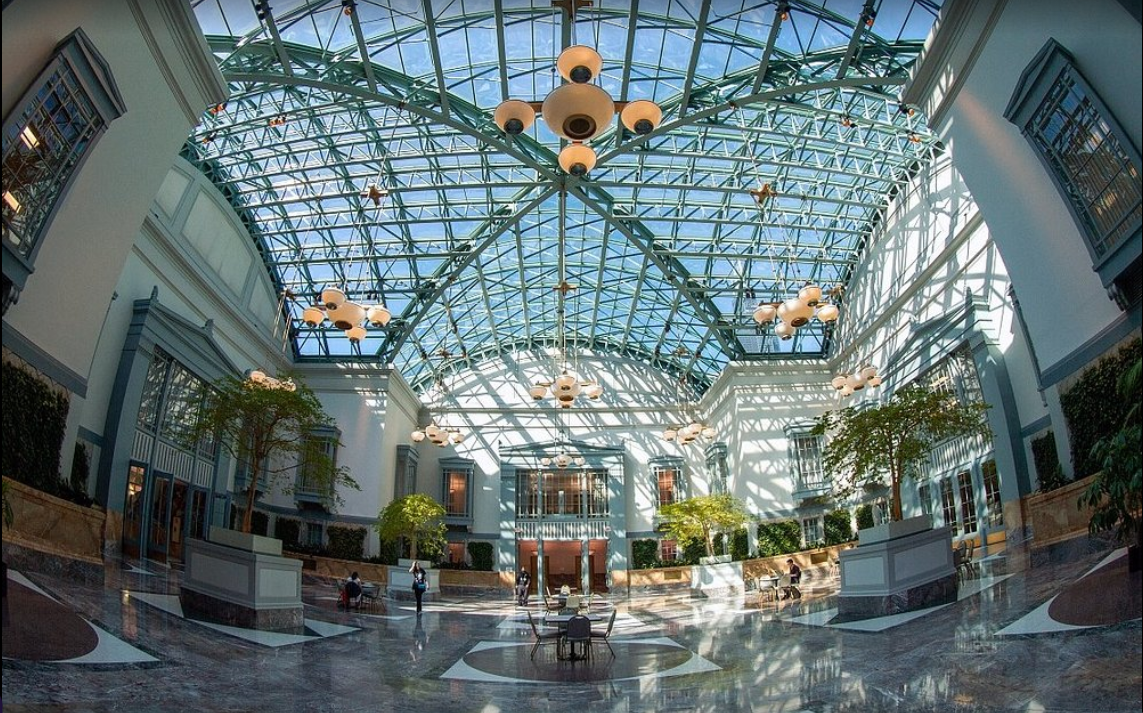
A major civic Chicago landmark and one of the largest public libraries in the US, the Harold Washington Library is a masterpiece of late 20th century Postmodern architecture designed by Thomas Beeby. Named in honor of the city’s first African American mayor, the building incorporates references to Chicago’s architectural heritage and civic history. Five massive owls, symbolizing growth and wisdom, crown the building, including a 20-foot-tall owl perched above the main entrance, clutching an open book. The highlight of the interior is the dramatic Winter Garden, featuring a soaring glass roof that floods the atrium with natural light.

Kansas City Public Library, Kansas City, MO
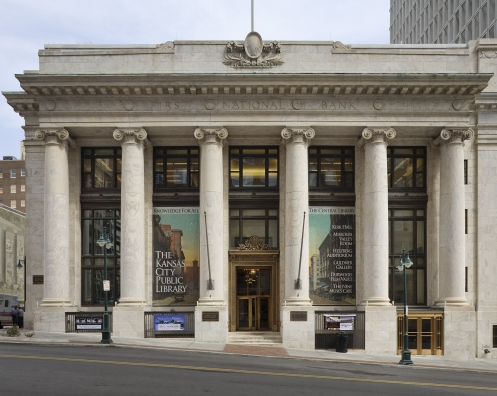
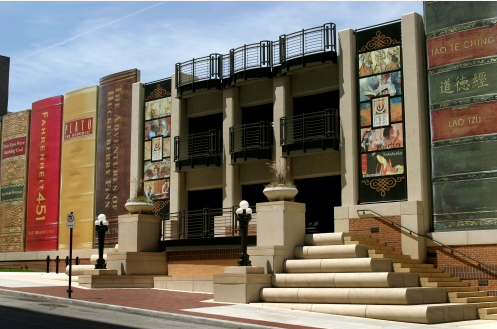
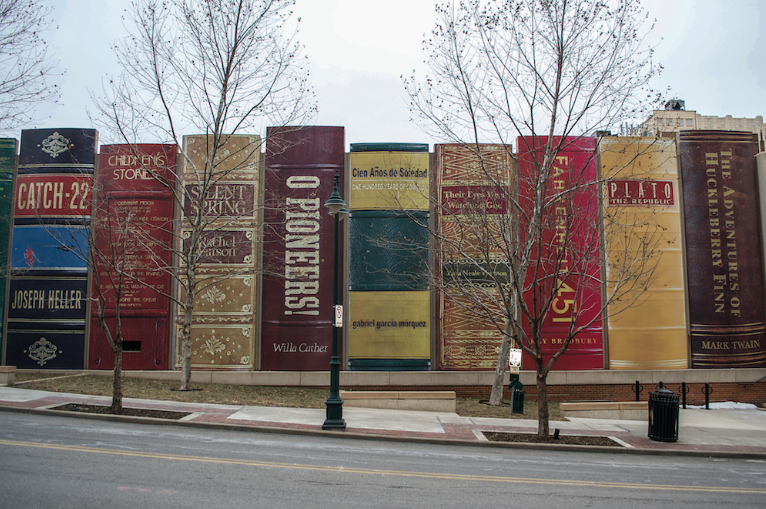
Situated in the former First National Bank building, the Kansas City public library features a colorful and eye-catching façade. The 25-foot Community Bookshelf features 22 book spines of titles voted on by local readers. Making the list: To Kill a Mockingbird, Romeo and Juliet, and Lord of the Rings, to name a few. Inside, the Stanley H. Durwood Film Vault, the original bank vault with walls of reinforced concrete and a 35-ton steel door, has been transformed into a 28-seat theater. The rooftop terrace with native plant garden offers scenic views of the city.
 
Laura McMahon