Celebrating Antoni Gaudí
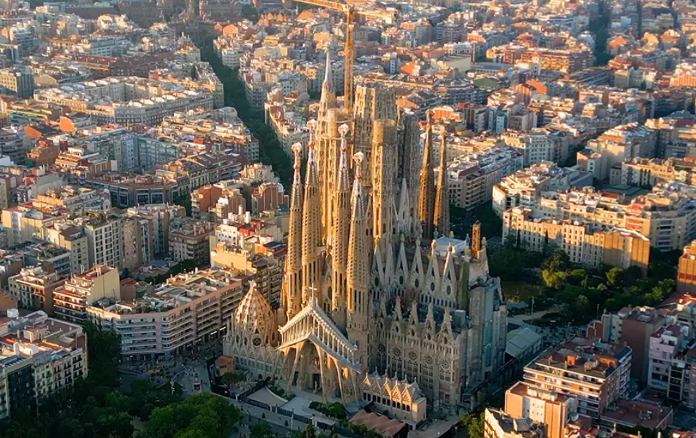
Image courtesy of getyourguide.com

 
Celebrating Antoni Gaudí

by Sweiskloss
June 4, 2026
Love his work or hate his work, you have company. His admirers have called him a visionary while his critics have found him chaotic. His work has been described as whimsical while others see it as overwhelming. Whatever you think of his work, it is distinctive. It has left an enormous cultural and visual mark on Barcelona, and has shaped the city’s architectural identity. Next week will mark the 100th anniversary of the death of Catalan architect Antoni Gaudí.

Gaudí (1852-1926) was a pioneering architect and central figure in the experimental Modernisme movement. His style was defined by curvilinear organic forms, asymmetrical and flowing surfaces, and vibrant colors. His works are often richly ornamental, expressive (even fantastical), innovative, and tactile. His designs were inspired by his love of nature, geometry, Catalan heritage and a deep Catholic faith.

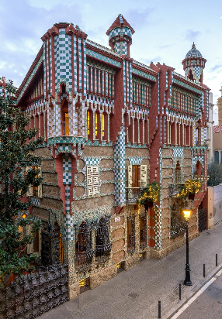
Casa Vicens
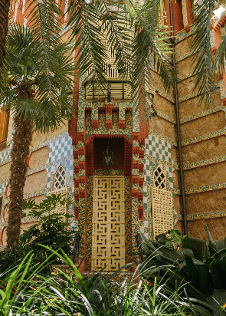
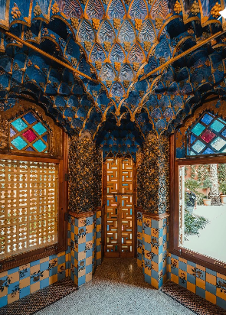
His first major project, Casa Vicens, was built in 1883-1885 as a summer house for a wealthy businessman. Gaudí’s design focus was on the garden and how light and air entered the house. On the exterior, the cast iron gate features representations of palm tree leaves while the green and white ceramic tiles showcase floral motifs. The façade of red brick and colorful tiles was influenced by Moorish architecture. He sought to bring the outdoor indoors with an intricate papier-mache ceiling in the smoking room that mimics palm fronds and vegetation. Plant and bird motifs adorn the interior jewel-colored walls, mosaic floors and mural paintings.

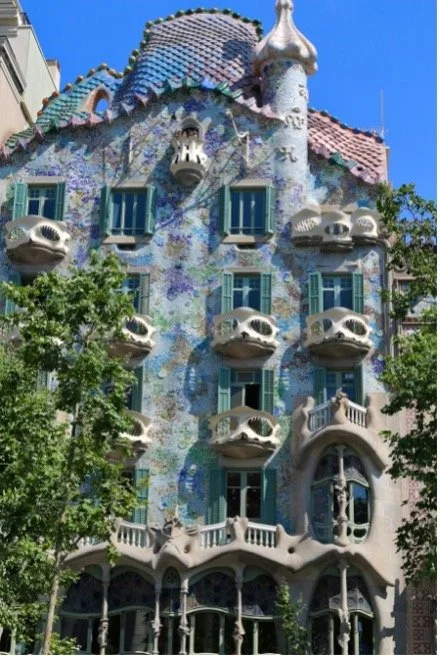
Casa Batlló
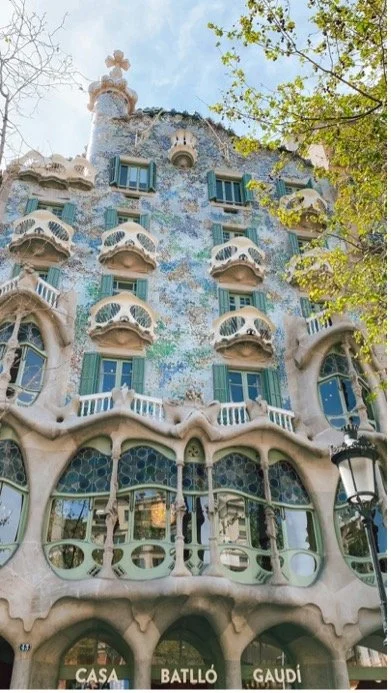
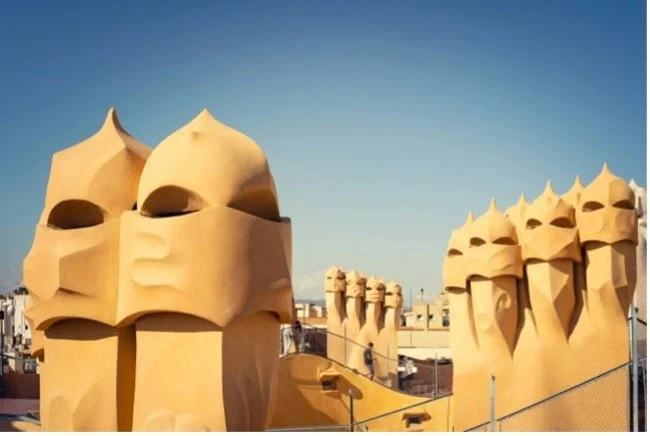
Renovating the private residence on Passeig de Gracia, Gaudí created a bold and imaginative structure that is known locally as the “House of Bones” due to its skeletal columns and balconies that resemble masks (insightvacations.com). The undulating façade features a colorful mosaic of broken ceramics and glass shards creating a wave-like effect. The organic design continues in the interior with curved walls and swirling ceilings while stained glass windows play with reflections of sunlight. A highlight of the structure is the roof which resembles the scales of a dragon and features a turret crowned by a four-armed cross, a recurring symbolic element in Gaudí’s work (lapedrera.com). As legend tells it, Gaudí drew inspiration from the story of St George and The Dragon. The roof also has a colorful mosaic chimney.

Park Güell
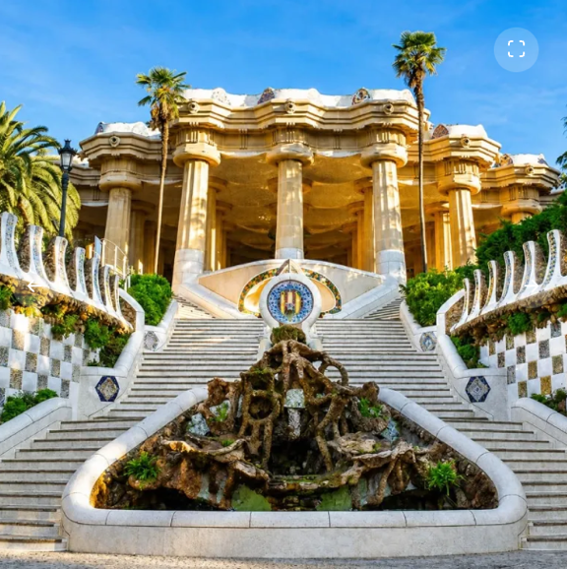
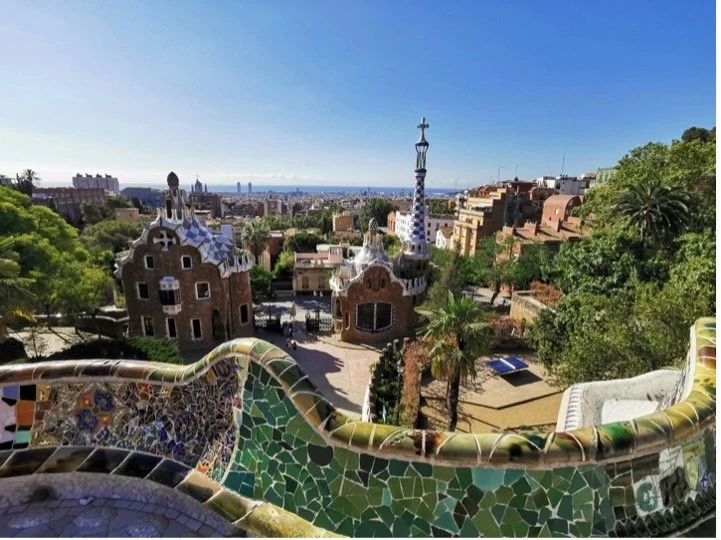
Originally conceived as a luxury estate, this sprawling hilltop site evolved into a surreal public garden that offers breathtaking views of the city. A whimsical blend of natural and fantastical elements, the park is characterized by Gaudí’s trademark fluid lines and shapes mimicking nature, and features serpentine benches, colorful mosaics and organic forms (insightvacations.com). The centerpiece of the park is the double staircase with its famous sculpted dragon covered in broken ceramic pieces, that leads up to the Hypostyle Hall of 86 columns. The Gaudí House Museum, which was the architect’s residence for almost 20 years, is located within the park and houses a collection of furniture and objects he designed.

Casa Milà
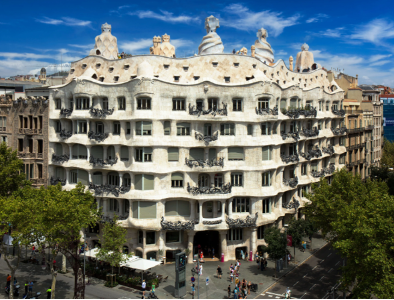
Nicknamed La Pedrera ("The Quarry") for its rugged stone façade, Casa Milà is celebrated for its architectural innovation and imaginative design. The residential building blends fantasy with functionality. Revolutionary in its architectural techniques, Gaudí employed an innovative steel and stone structural frame that minimized the need for load bearing walls. This allowed for larger windows, flexible floor plans and adaptable interior spaces. Organized around two light-filled courtyards, the building maximizes natural ventilation and daylight. The iconic rooftop transforms chimney and ventilation towers into sculptural forms that resemble medieval knights. The attic consists of a series of catenary arches that create a lightweight yet strong structural system that supports the roof. Inside, the apartments feature richly detailed plaster, intricate moldings, and suspended ceilings decorated with motifs of flowers and fruit, geometric shapes, spirals and even inscriptions (lapedrera.com).

La Sagrada Família
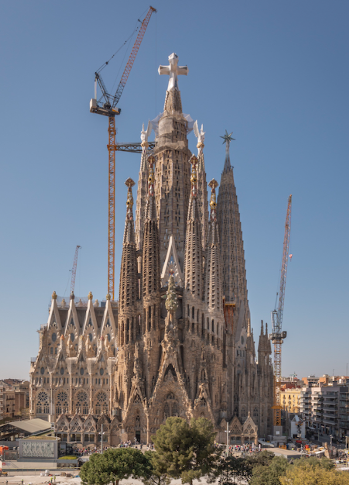
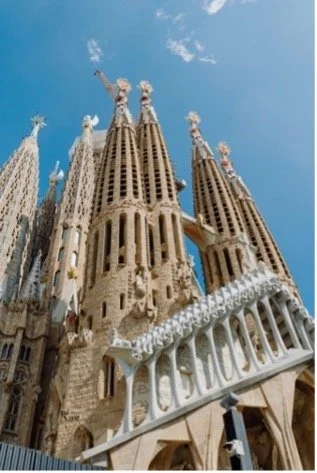
The undisputed symbol of Barcelona, Gaudí took over the commission for La Sagrada Família (meaning ‘The Holy Family’) in 1883 and worked exclusively on the basilica from 1914 until his death in 1926. The monumental structure is a fusion of Gothic architecture and Catalan Moderisme style, and at 566 feet, it is the world’s tallest church. It consists of The Three Facades (Nativity, Passion, and Glory), the central nave and 18 towers symbolizing the twelve apostles, four evangelists, the Virgin Mary and Jesus Christ. The Saint Barnabas bell tower on the Nativity façade was the only one Gaudí would see finished before his death. In fact, only 25% of the church had been erected when he died. Using Gaudí’s designs and computer modeling, construction has continued for decades. This past February the final Tower of Jesus Christ was completed, a mere 144 years after construction began.
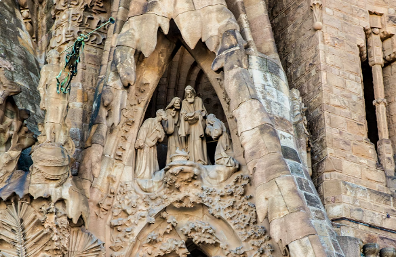
La Sagrada Família is steeped in symbolic ornamentation with decorative sculptures depicting the life of Christ, theological themes and mysticism, and representational animals and plants. The bell towers are the most visible elements of the design and, with their shape and taper towards the top, emphasize the symbolic ascent towards God.
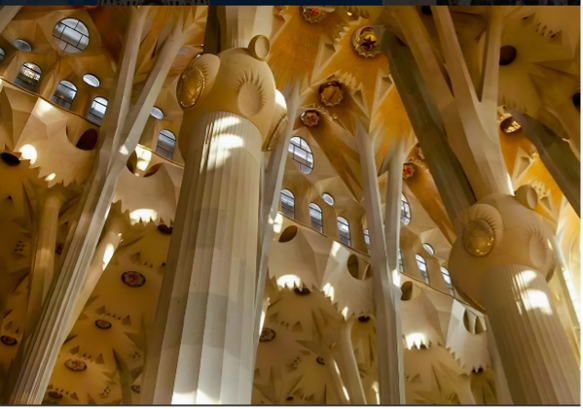
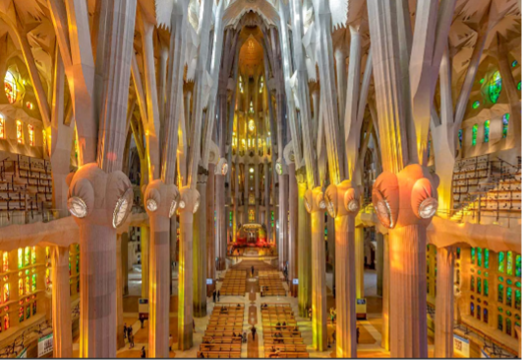
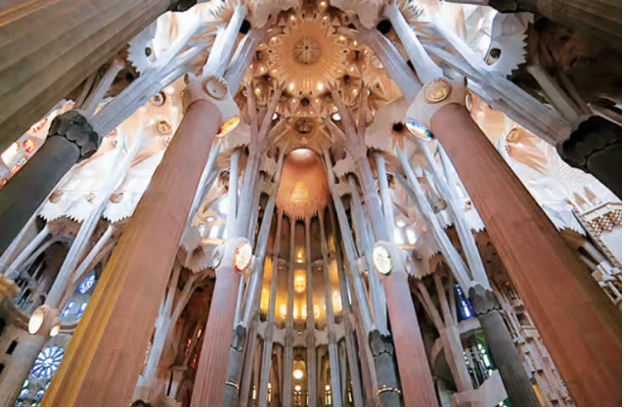
Inspired by nature, the central nave is designed to resemble a stone forest. Branching columns support the ceiling like trees, creating an atmosphere filled with natural light. The Baldachin, the ceremonial canopy above the altar, is framed by the branching columns and lit by colorful stained glass (lapedrera.com).
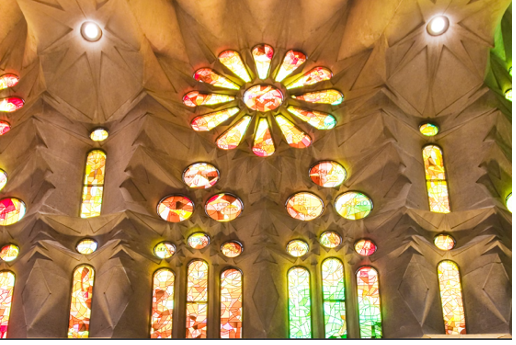
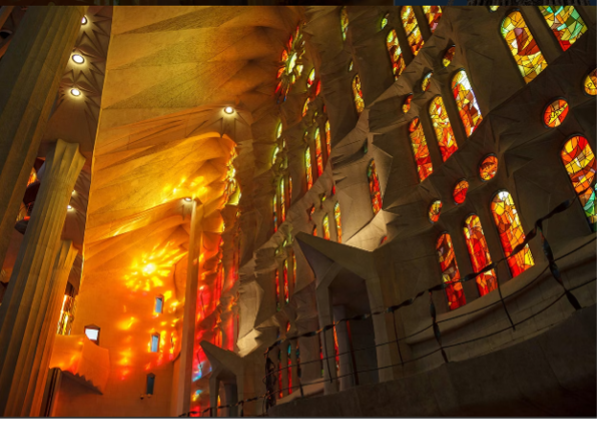
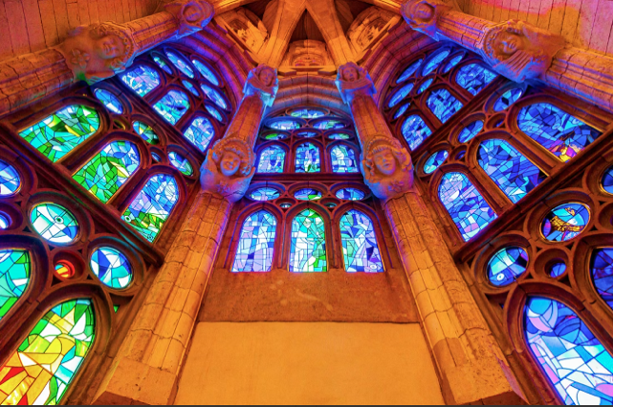
Light plays an important role in Gaudí’s design, and the stained-glass windows are one of the most stunning features of the basilica. They are a masterpiece of color and natural light and transform the interior into a dynamic shifting work of art. The bottom windows, with the names of saints, are the most intensely colored and kept at eye level for the worshipers to read. The top windows are transparent to ensure an abundance of light floods the space. The colors of the windows are also imbued with symbolism – the cool tones of deep blues and greens representing dawn and birth adorn the Nativity façade, while fiery tones of red, orange and gold prevail on the Passion façade.
Fittingly, Gaudí is buried at La Sagrada Família.

Work is now shifting to the interior, with a final completion date estimated to be 2034. As Gaudí once famously joked, “My client is not in a hurry”, referring to God (popsci.com).

La Sagrada Família has sparked controversy from the onset and George Orwell once called it “one of the most hideous buildings in the world” (popsci.com). And one of our very own here at SweisKloss has referred to it as “a hot mess.” Regardless of your opinion of his otherworldly structures, there is no denying that “the work of Antoni Gaudí is the kind of architecture that stops you in your tracks” (wallpaper.com).
 
Laura McMahon