GOOOAAAL!

TRIONDA, the official FIFA World Cup 2026™️ ball, meaning “three waves” in Spanish, courtesy of fifa.com

 
GOOOAAAL!

by Sweiskloss
June 11, 2026
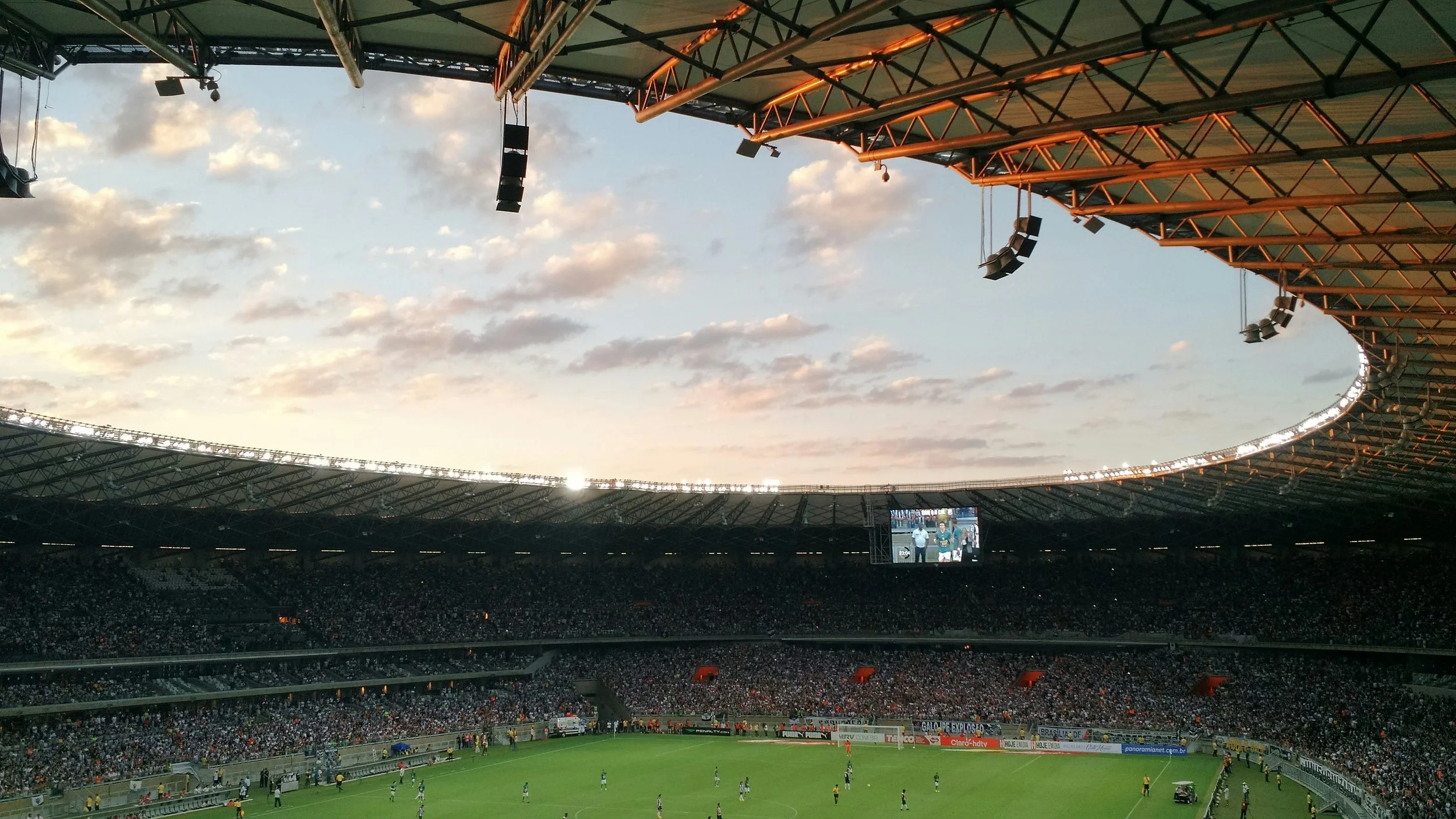
FIFA World Cup 2026™️ kicks off today. Weather you call it football, soccer, or even fútbol, the excitement has reached a fever pitch, with more than 5 million tickets already sold according to FIFA. According to Forbes, “the 2026 FIFA World Cup is poised to be the largest sporting event in history, engaging over six billion people.” That’s roughly three-quarters of the world’s population!
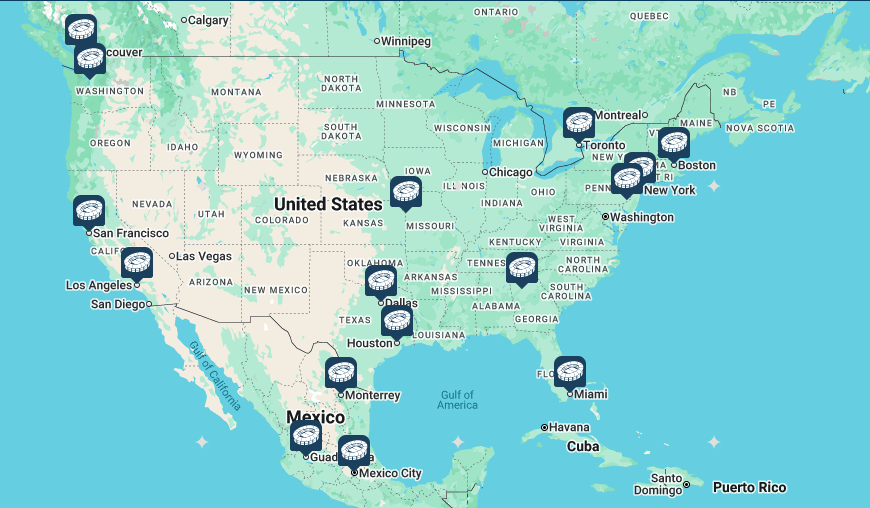
For the first time in World Cup history, the tournament will be hosted by three countries, the United States, Canda and Mexico. It will be the largest World Cup ever held, expanding from 32 to 48 national teams with a total of 104 matches being played across 16 cities in North America from June 11 – July 19. Hosting venues, 11 in the US, 3 in Mexico and 2 in Canada, offer striking architecture and bold designs that reflect their cities’ landscapes, histories and cultural identities.

A lot of preparation has gone into these venues to ensure they provide a consistent experience for the players.
The turfgrass team of researchers, professors and students at Michigan State University and University of Tennessee, responsible for the quality and durability of the pitches of all 16 venues, has been working on this task for the last six years. Using three species of grass, and special equipment that mimics cleats and measures ball bounce, they have devised the best type or combination for each stadium. They have factored in climate considerations including sunlight (or lack thereof in domes venues), varying temperatures and altitudes, irrigation systems and artificial grow lights in some instances, according to cnn.com.

Many of the US stadiums are built for NFL games, with fields that are approximately 75% -80% the size of a regulation soccer pitch. To enlarge the pitch, rows of seats have had to be removed.

FIFA’s policy prevents stadiums from displaying the commercial names, logos, advertisements, etc. from corporate sponsors that are not official partners, hence stadium names are being rebranded with generic city names. We are listing the original stadium name in parentheses.

MEXICO

Estadio Cuidad de Mexico (Estadio Azteca)
Mexico City’s Stadium will host the World Cup’s opening match between Mexico and South Africa, making it the first venue to host three FIFA World Cups: 1970, 1986 and 2026. The oldest of the three Mexican stadiums, it recently underwent a renovation to get it match-ready. The cantilever design eliminates interior columns and guarantees unobstructed visibility from every seat. Upgrades included increased seating capacity, making it the largest stadium in Latin America, new LED viewing screens, and a roof extension to provide more shaded areas for spectators, players and officials.

Estadio Monterrey (Estadio BBVA)
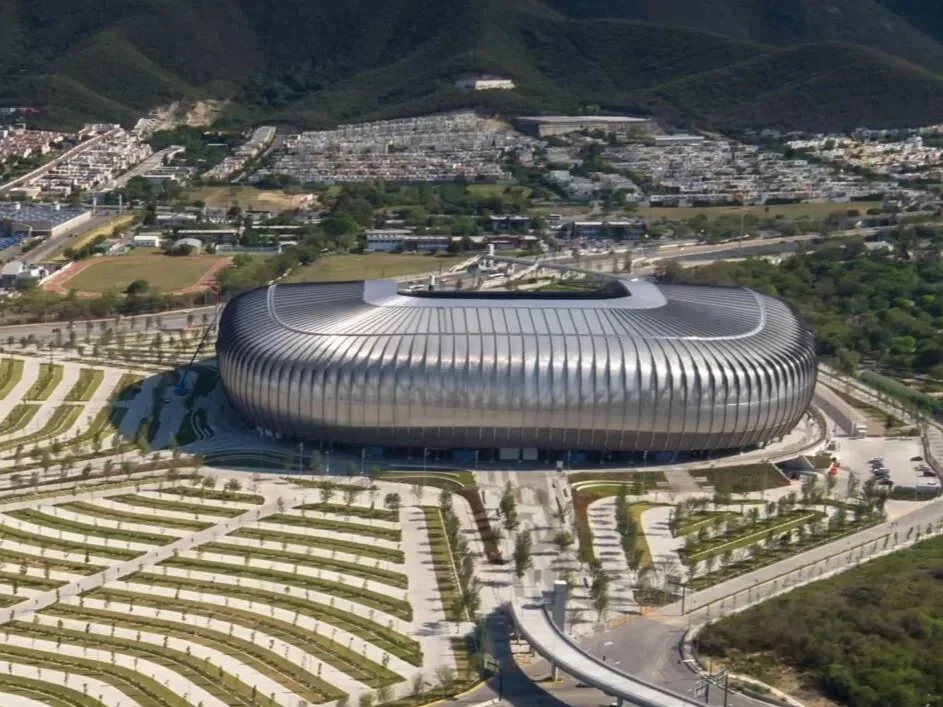
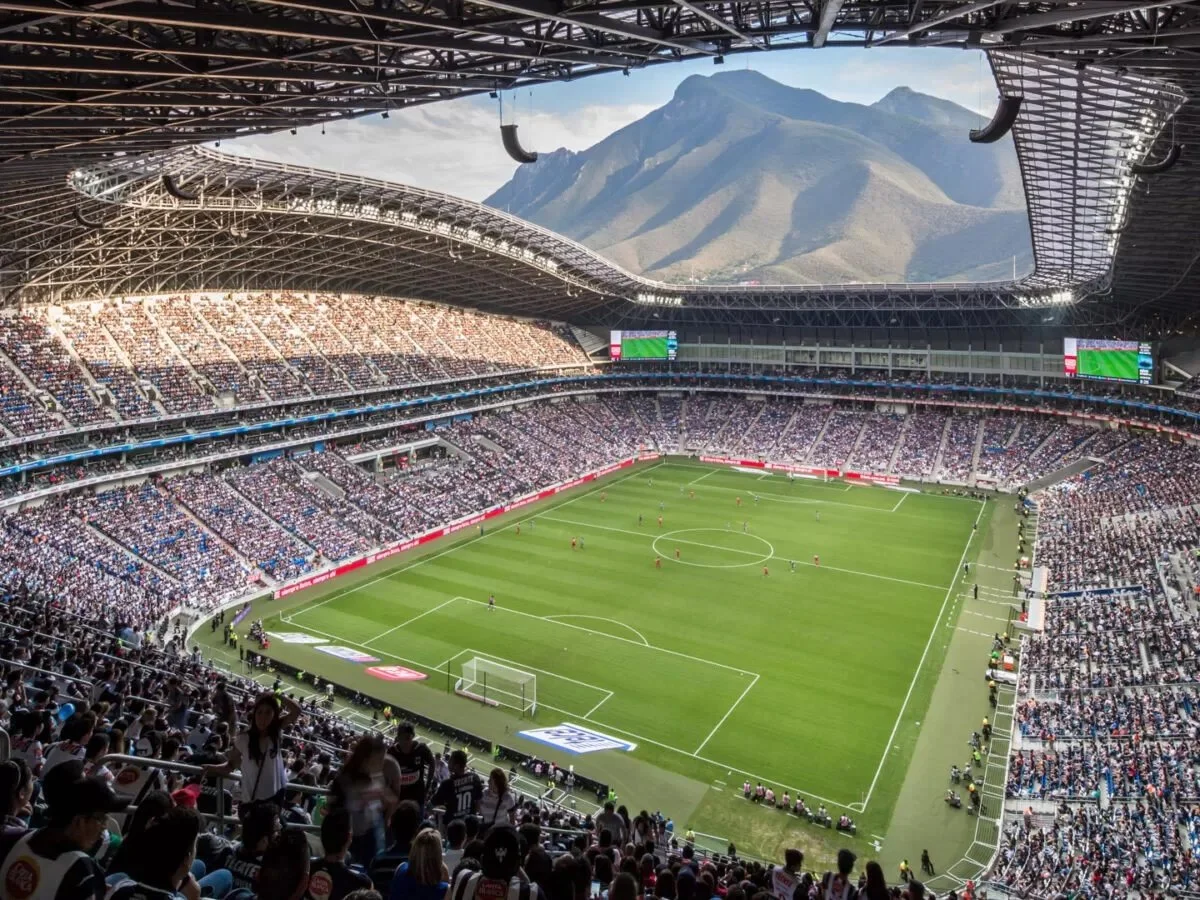
The design of Estadio Monterrey reflects the region’s history of steel manufacturing. The metal exterior cladding “referenc[es] the steel mills that shaped Monterrey’s industrial identity and earn[ed] the building its popular nickname, ‘the steel giant’” (archdaily.com). The stadium is also set against the backdrop of the towering 6,000-foot-tall Cerro de la Silla mountain which is echoed in the sweeping and curved façade. The south end of the bowl opens directly towards the mountain, establishing a visual and physical relationship with the regional landscape as well as improving natural ventilation.

CANADA

BC Place, Vancouver
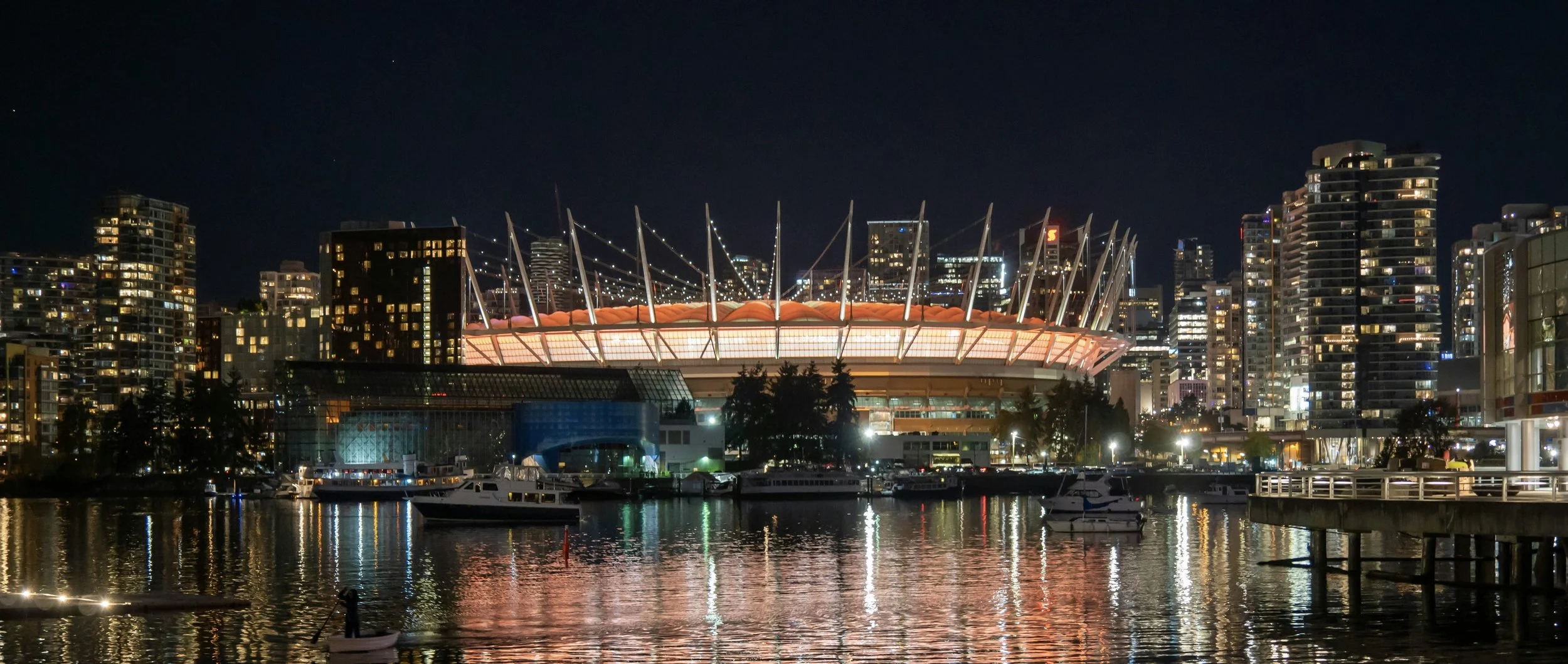
BC Place’s distinctive design is a defining feature of Vancouver’s skyline. The retractable cable-supported roof is one of the largest of its kind in the world. “The roof’s lightweight engineered system and illuminated exterior give the venue a contemporary identity while responding to Vancouver’s often unpredictable climate” (parametric-architecture.com). Located in downtown Vancouver, the design of the stadium was informed by the urban landscape, featuring a sleek and modern aesthetic using glass and steel. The transparent façade and open concourse area provide views of downtown Vancouver and waterfront district while at the same time provide natural light and reduce energy consumption. BC Place was the first Canadian stadium to launch the reusable cup program, in its goal to achieve Zero Waste Certification, along with strategies to streamline waste diversion and recycling initiatives.

THE UNITED STATES

Los Angeles Stadium (SoFi Stadium)
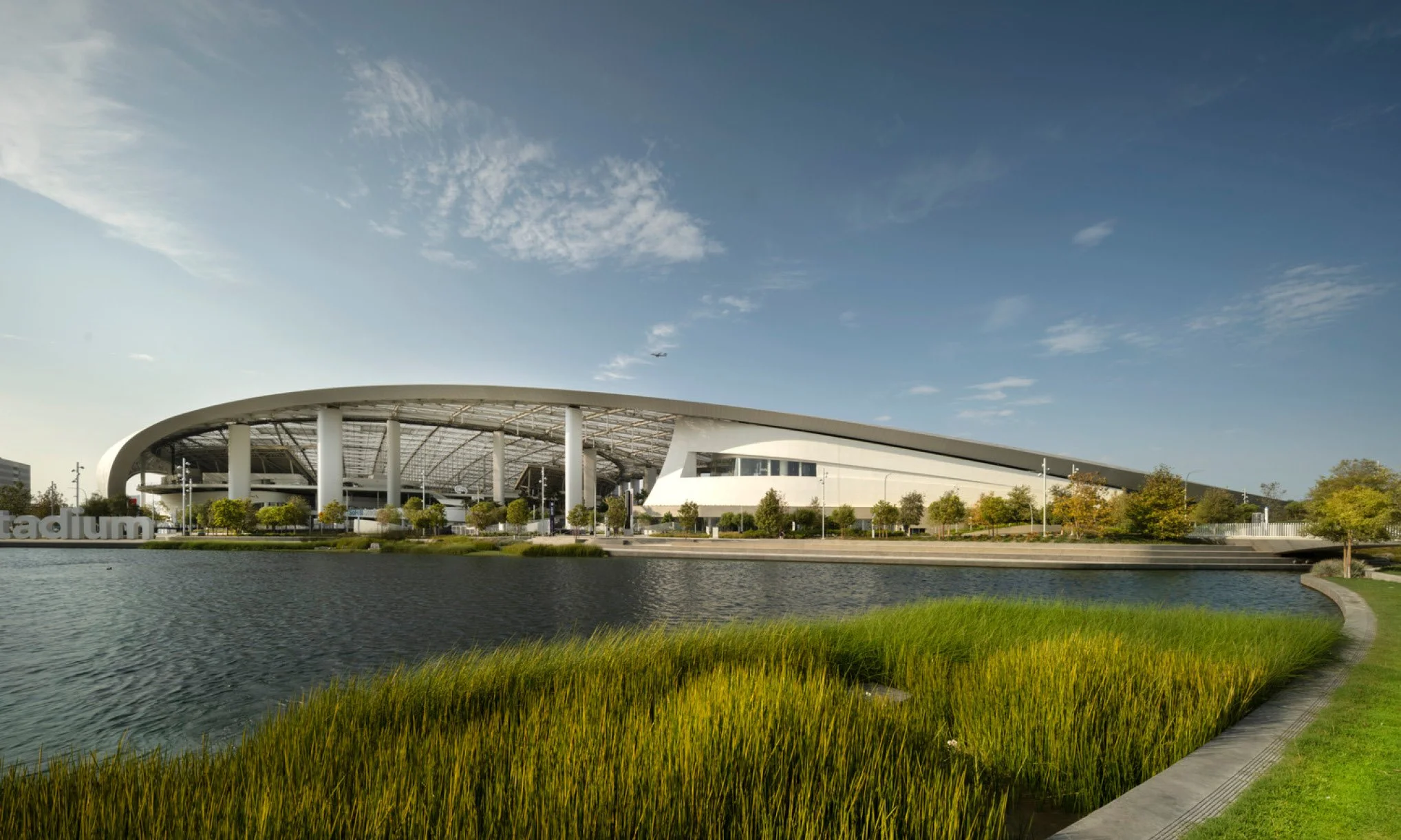
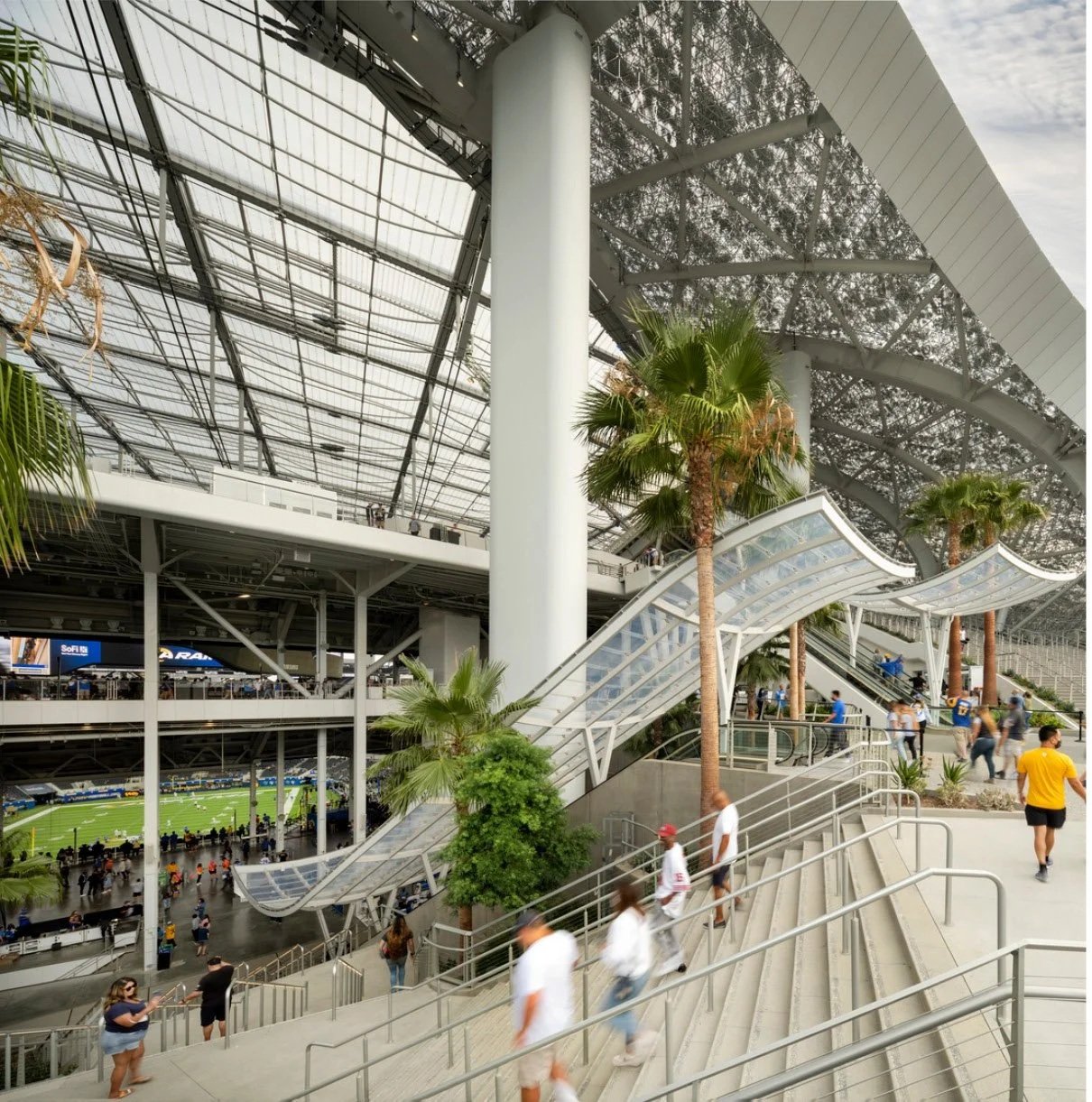
Los Angeles Stadium’s architecture is informed by Southern California’s lifestyle, climate, geography and landscape according to HKS Architects. The venue is defined by the sweeping translucent canopy roof that extends beyond the stadium and creates a sheltered open-air environment. The dramatic curves and shape of the roof are inspired by the Pacific coastline and ocean waves. To grow FIFA-required natural grass under this canopy, grass grow-lighting technology was suspended on wheels to roll over the top of the grass according to HKS Architects. The open-air design also allows for natural light and air flow while meandering paths along the concourse reinforce Southern California’s indoor-outdoor living. Fans won’t miss a goal or penalty kick thanks to the Infinity Screen, a 70,000 square foot dual sided videoboard that is visible from all seating areas. And the stadium is a leader in sustainable venues. The water recycling system collects 70-80% of stormwater runoff that is then used for irrigation, nearly 700 tons of waste were diverted from landfills in 2025 via recycling, composting and food donations, and the building generated over 93% of its total electricity consumption with renewable energy in 2025 (sofistadium.com).

Seattle Stadium (Lumen Field)
Seattle Stadium is regarded as one of the loudest and most atmosphere-driven stadiums in North America. The venue was built with acoustics in mind. Its steep seating and distinctive roof arches help trap crowd noise. Despite being an open-air facility, most of the seats are sheltered beneath the stadium roof, shielding fans from the elements. A highlight of the stadium is the “Hawks Nest,” the pyramid shaped bleacher section. Located along Seattle’s industrial waterfront, the open-ended design provides views of the city’s skyline and surrounding landscape including Mount Rainier. Committed to sustainable practices, they source ingredients and vendors within three miles of the stadium to reduce transport emissions, lower air pollution and shrink their carbon footprint.
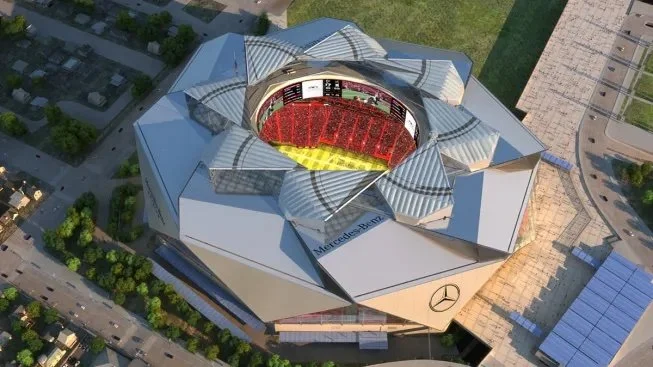
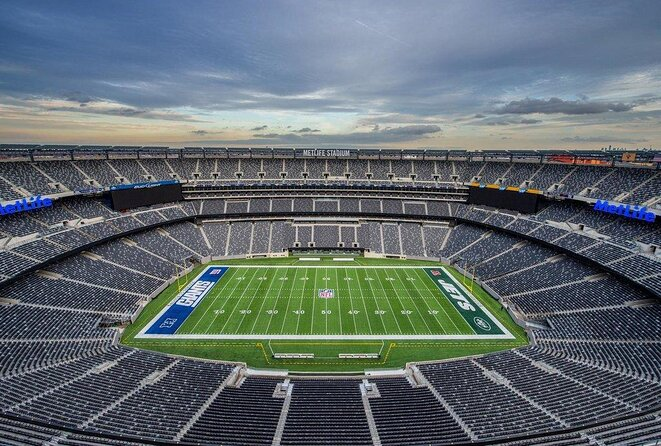
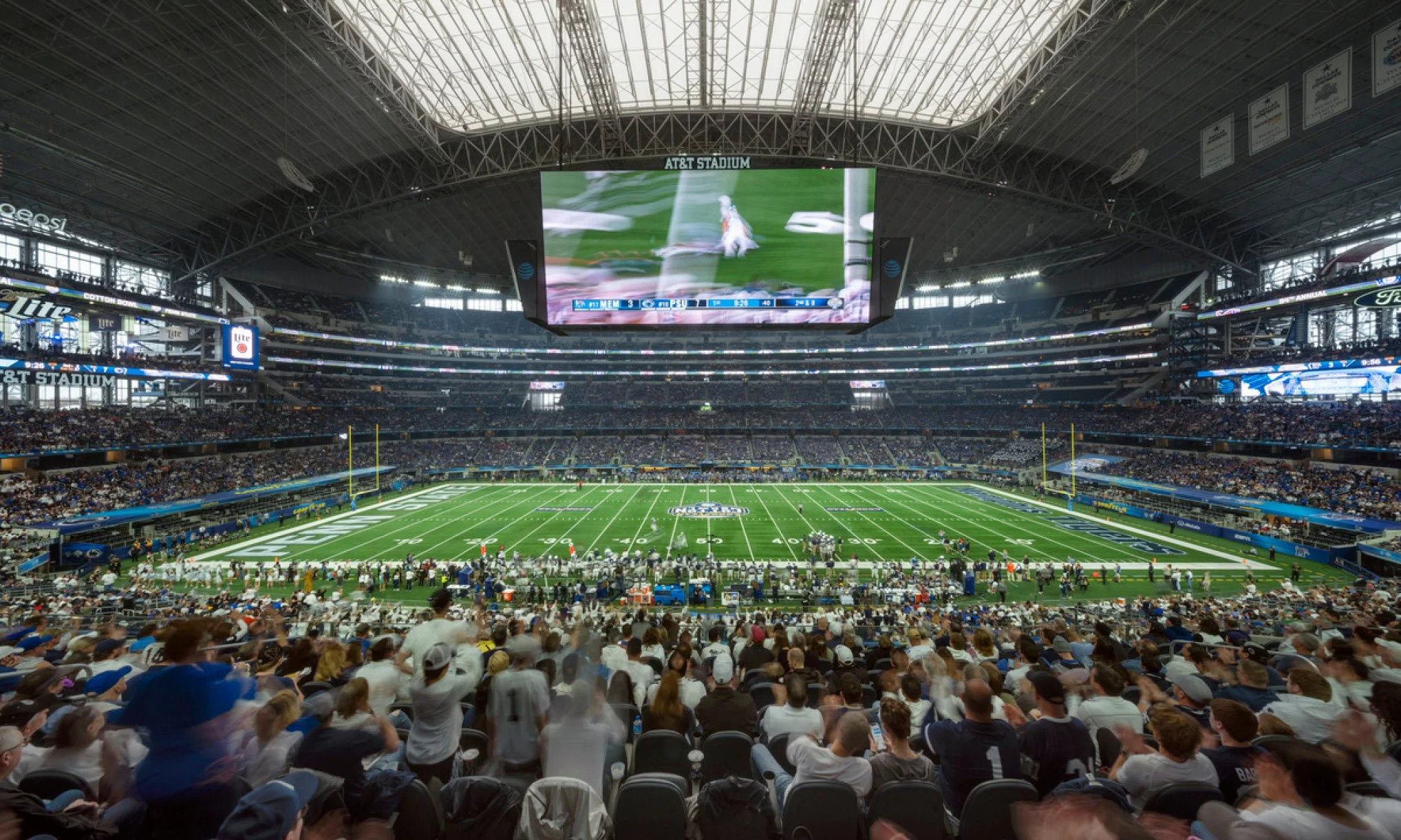
Other stadiums with noteworthy architecture include: Atlanta Stadium featuring a retractable roof modeled after “the shape of a falcon’s wing” (architectmagazine.com) and eight triangular panels that open and close like a camera aperture; Dallas Stadium with a monumental retractable roof, massive glass end-zone walls and one of the world’s largest suspended video screens; and finally, fans won’t miss a minute of the final championship game at the New Jersey Stadium thanks to its innovative seating arrangement of four tiers providing unobstructed views, as well as a huge 360-degree HD video display.
Ole, Ole, Ole!
 
Laura McMahon