Designed to Dine

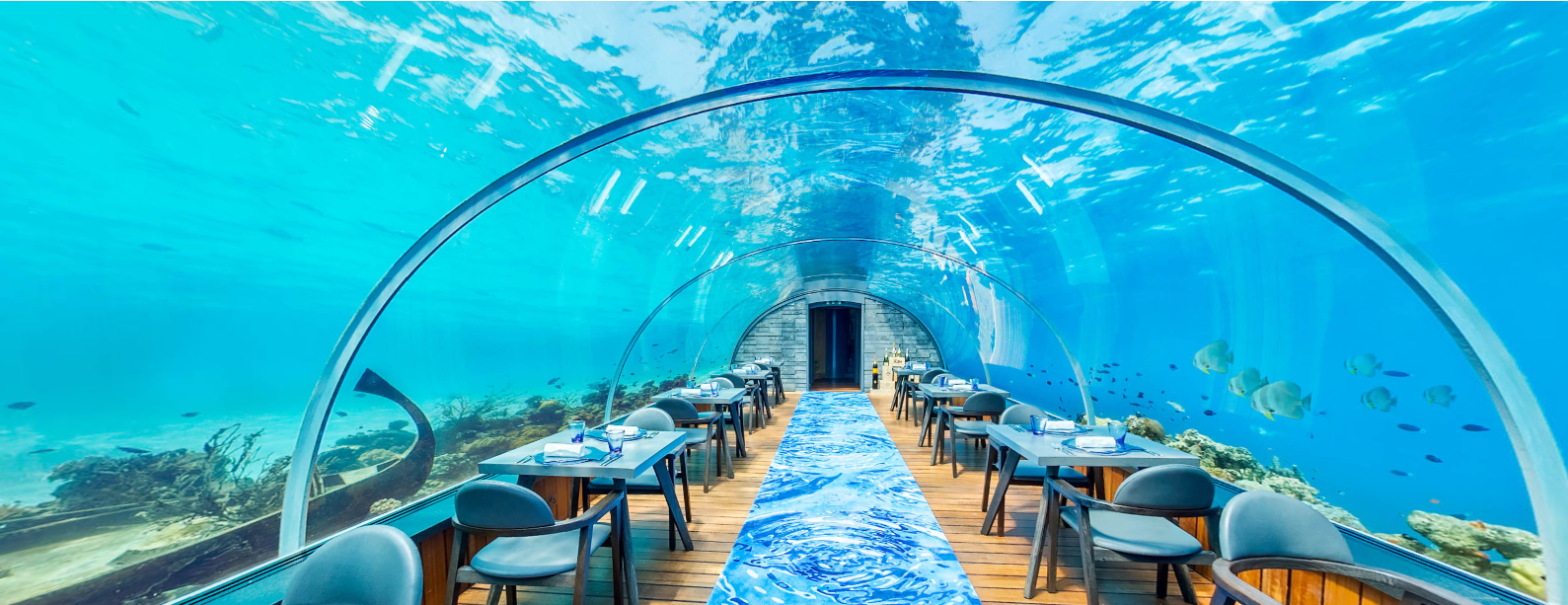
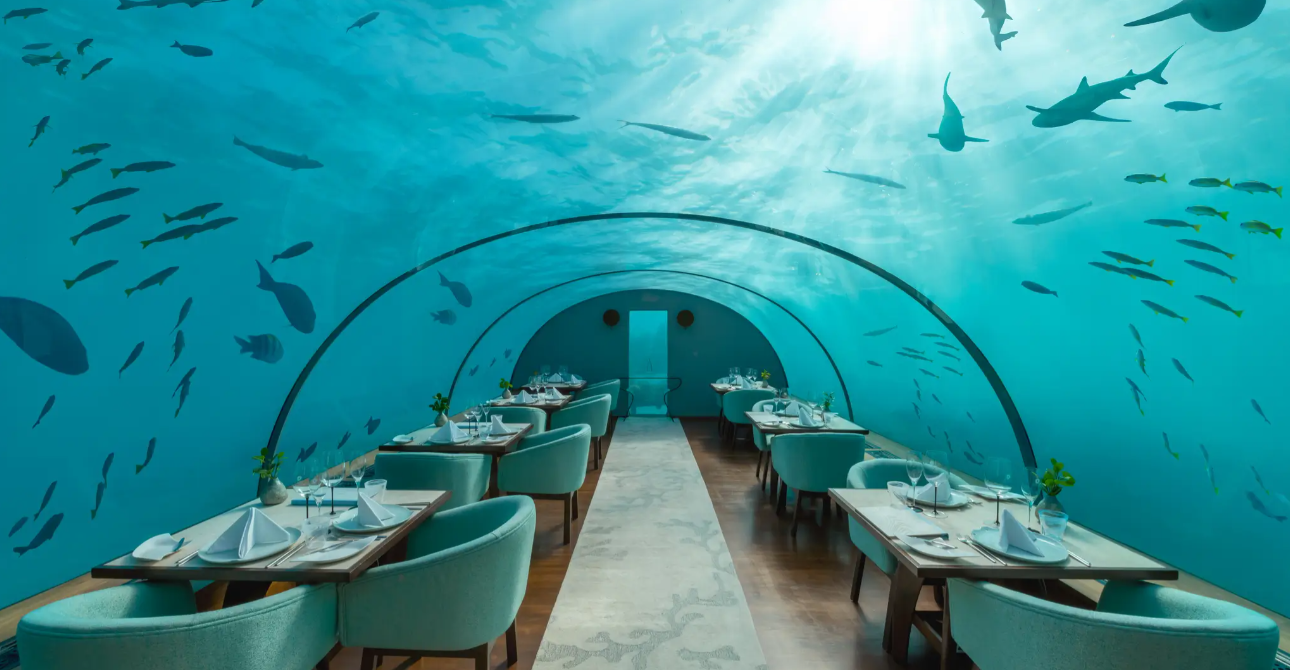
Ithaa Undersea Restaurant, courtesy of Conrad Maldives, Rangali Island

 
Designed to Dine

by Sweiskloss
Aug 13, 2026
From falafel at Atwater Village’s Dune to prime rib at Beverly Hills’ classic steakhouse Lawry’s to crafted cocktails at Arcadia’s Hipico, LA Restaurant Week offers something for every palate and wallet. Starting tomorrow and running through August 28, diners may enjoy delectable meals from some of LA’s best restaurants at budget-friendly price points and prix-fixe menus. But dining out is about more than just food - décor and design also play a pivotal role in curating a delectable experience.

Restaurant design requires careful planning and organization of spaces from back-of-the-house workflows and kitchen stations to seating layouts and lighting. A well-designed space maximizes efficiency, optimizes space and enhances the guest experience while supporting the restaurant’s brand and profitability. Behind the scenes, architects must consider everything from kitchen layout, prep stations, cooking line and dishwashing areas to ventilation, HVAC and odor control among other essential operational functions that most guests never see. Up front, dining spaces, table and seating layout, acoustics and lightning, materials and furnishings all shape the customer’s experience. “From the moment customers walk in the flow, ambiance, and functionality of the space shape their impressions” (airspaces.ai).

Around the globe, restaurants are serving up more than just culinary delights, with striking designs that blend functionality with aesthetics to create memorable spaces.

Under, Norway
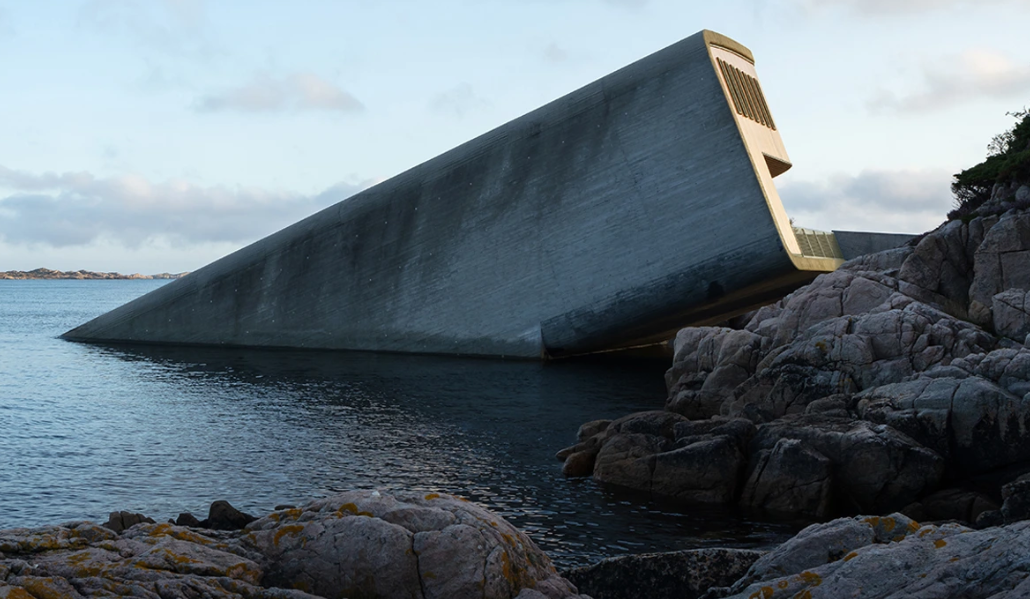
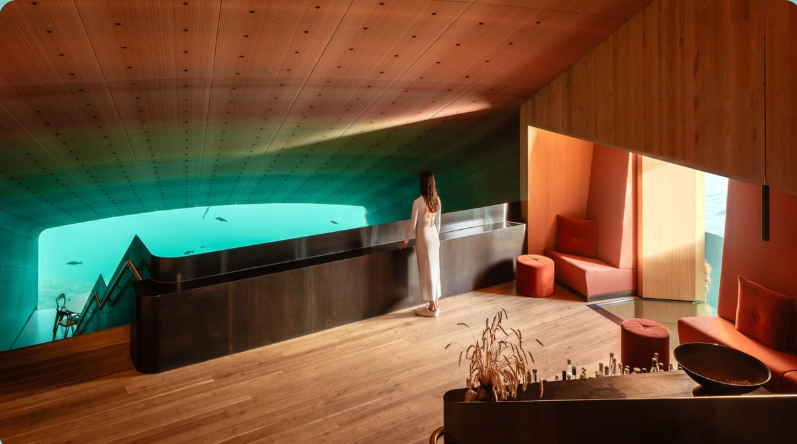
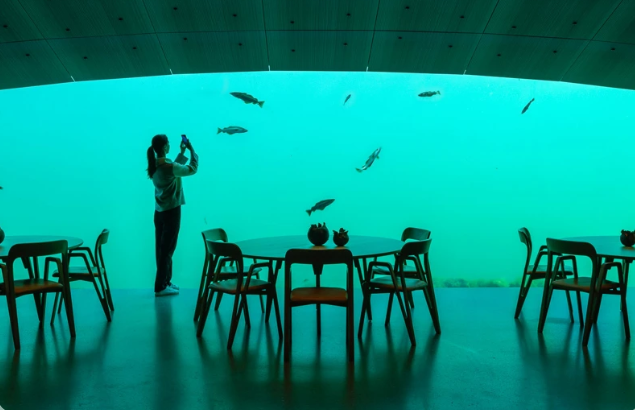
Half sunken into the icy waters of Lindesnes in Norway, Under invites guests to dine 16 feet below the surface. Designed by Snøhetta, Under was “conceived as both a dining venue and a platform for marine research,” providing rarely seen views of this icy underworld (culturetreasures.com). Tilted downwards at a 45-degree angle and slipping into the sea, the thick concrete walls are built to withstand the rugged weather while the rough concrete shell will work as an artificial reef, attracting sea life and fostering an ecosystem. As guests descend from land to sea, the architecture softens with muted textures, oak furnishings and low lightning to mimic the shift from the intense Nordic exterior to the calm meditative sea. Warm tones at the entrance shift to darker greens and blues in the dining area echoing the transition from shoreline to seabed. A panoramic window offers a view of the everchanging seabed, fish, currents, and shifting light. The immersive experience continues with the tasting menu that centers around seasonal and local ingredients. Sustainability and community are incorporated into all aspects of the restaurant including using uniforms made from recycled fishing nets and collaborating with local potters. As the world’s largest underwater restaurant, the one-Michelin Star restaurant reflects the harmony between nature, architecture and culinary innovation.

5.8 Undersea, The Maldives
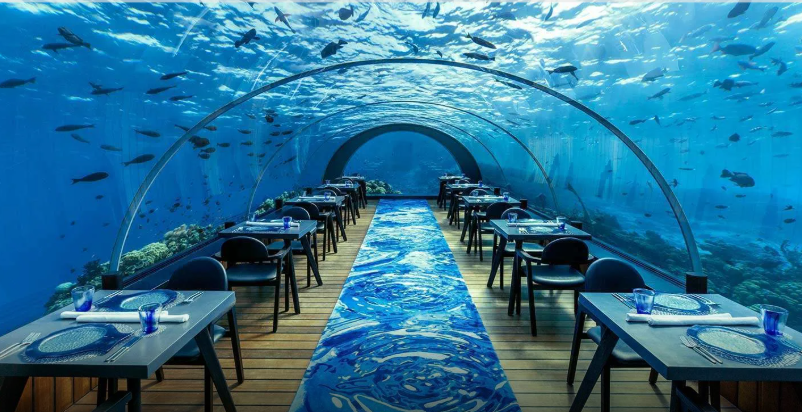
As the name suggests, this restaurant at the Hurawalhi Island Resort in The Maldives is 5.8 meters (19 feet) below the surface of the Indian Ocean. With a maximum of 20 diners, tables are set under an arched glass tunnel where they can enjoy breathtaking 270-degree views of the vibrant coral reefs and abundant marine life. Designed to withstand high water pressure, the approximately 6-inch-thick acrylic glass is divided by an unobtrusive thin metal framework. Minimalist décor, streamlined furniture and understated hardwood floors ensure that all the focus remains on the marine life. Lighting is kept low to minimize reflections. As the shifting light filters through the water, the setting transitions from bright blue daylight to a darker intimate glow in the evening. Dress code for this modern fine dining restaurant? No shoes!

Grotta Palazzese, Italy
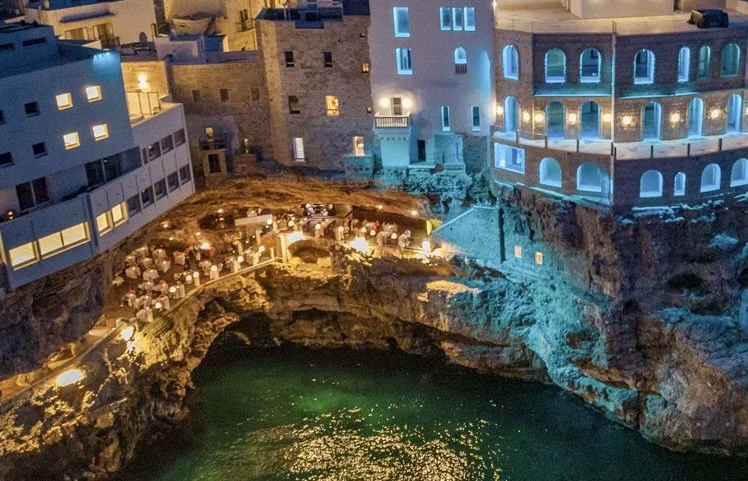
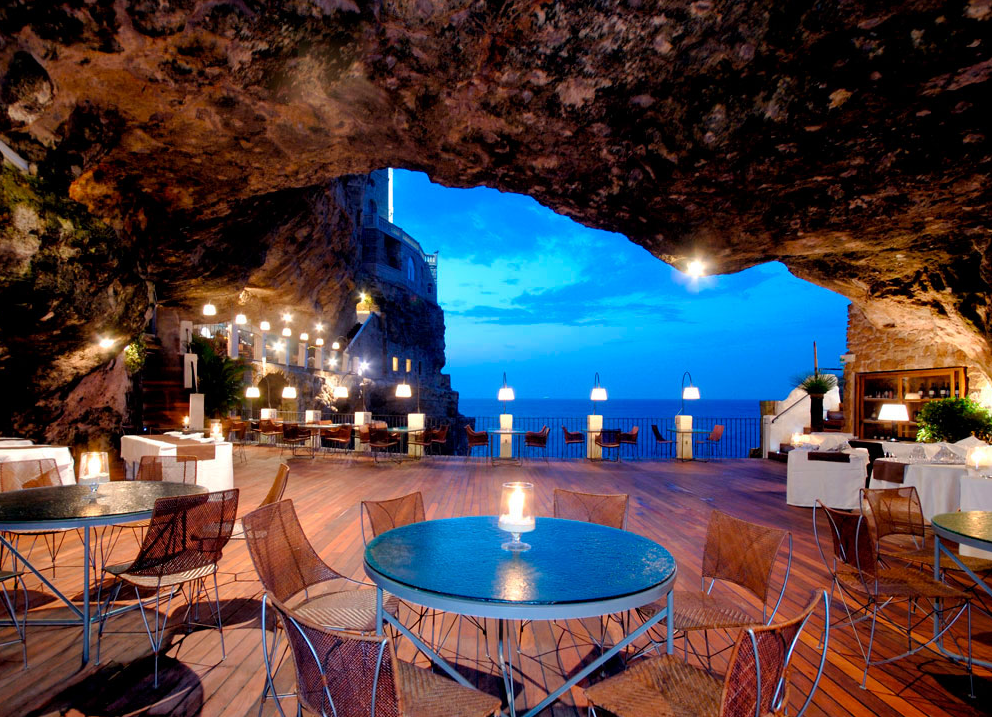
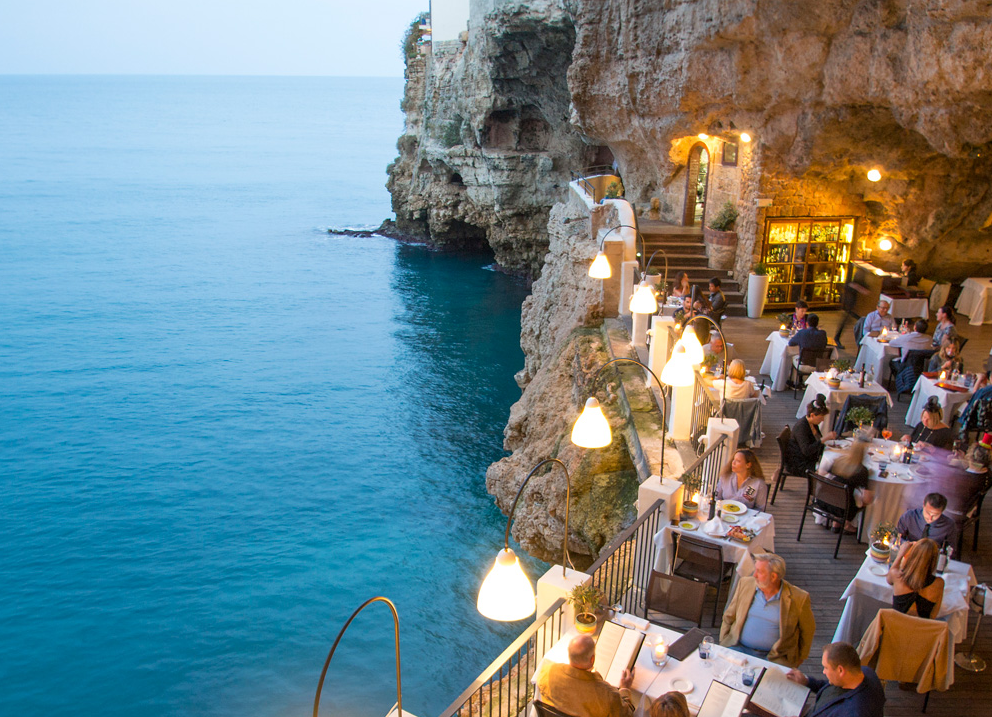
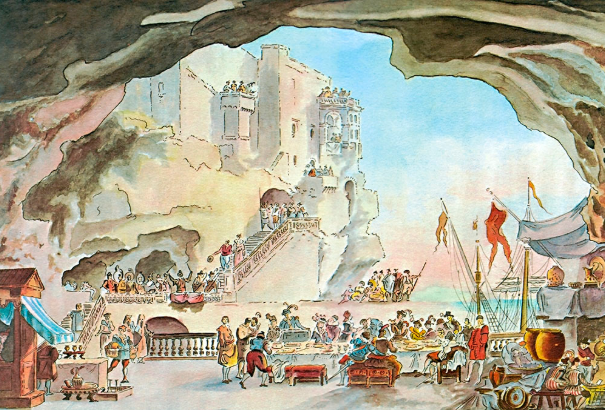
World-famous Grotta Palazzese in Puglia, Italy is set inside a vaulted limestone sea cave above the Adriatic Sea. Sitting on the rocky coast, the restaurant features an outdoor terrace that juts over the water as well as an additional dining area that extends 262 feet inside the grotto. Soft lighting enhances the magical setting. As depicted in a watercolor by Jean Louis Desprez from 1783, the Grotta has been hosting banquets and parties for centuries. Along with breathtaking views, the restaurant offers high-end (read pricey) Mediterranean and local seafood menus.
 
 
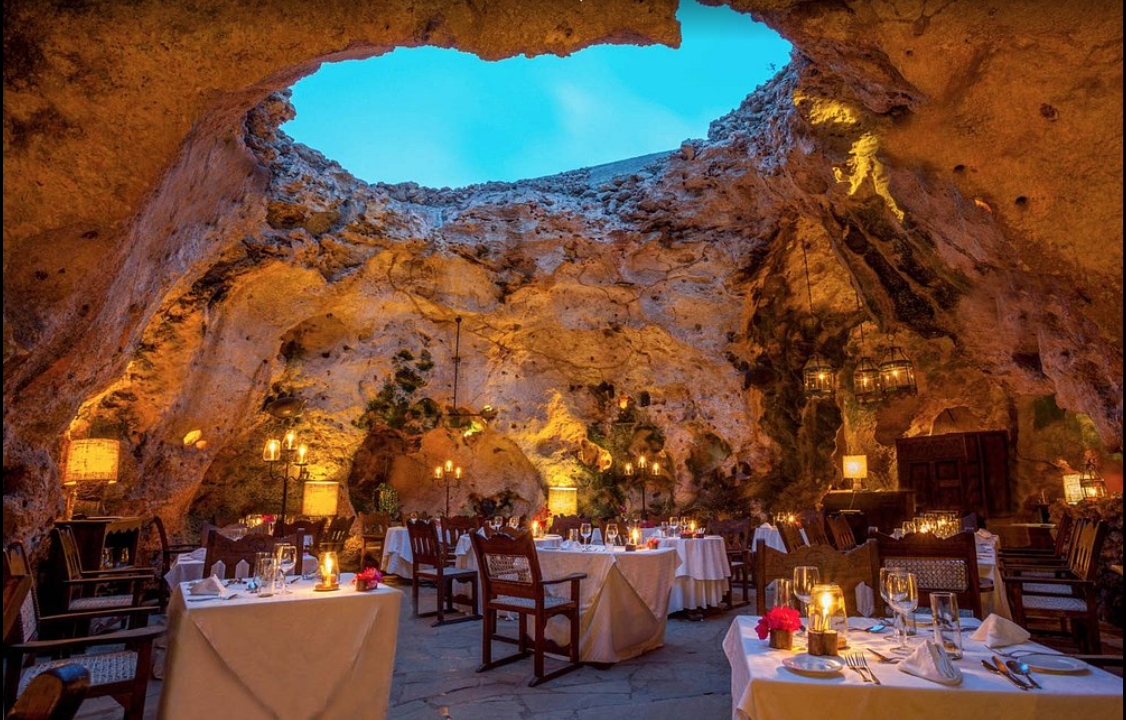
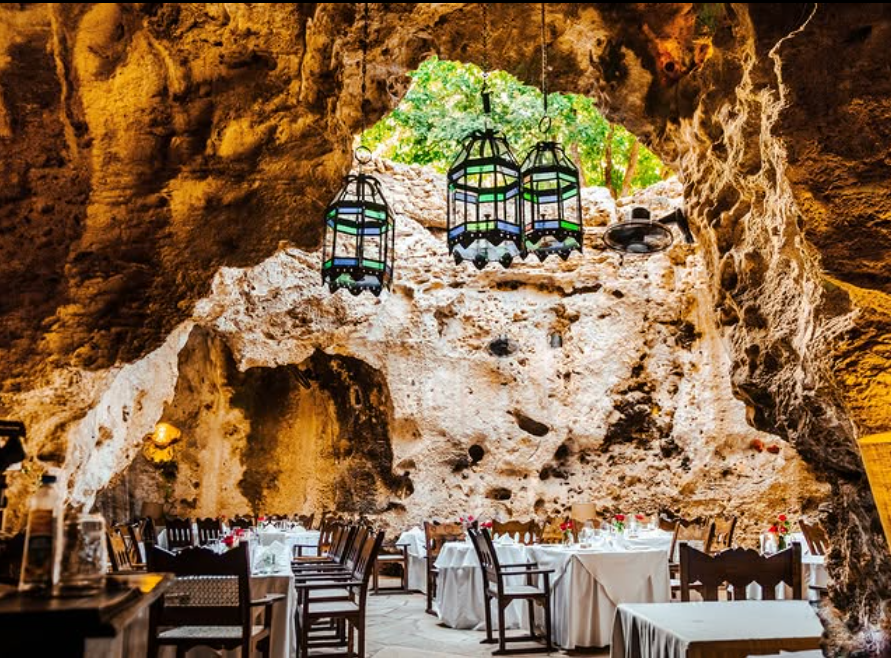
Set in a cave thought to be 120,000-180,000 years old on Kenya’s Diani Beach, Ali Barbour’s is comprised of a series of interlocking chambers 33 feet underground. The restaurant is designed to keep the natural elements of the cave intact, with only the kitchen and bathrooms modified for modern use and functionality. The natural holes in the roof crust are open to the sky, allowing natural light to filter into the caves and guests to stargaze. With an open ceiling, muted lighting and candles enhance the twinkling stars and create a surreal ambiance. Sliding covers are used to create a makeshift roof in inclement weather. While the restaurant offers an international menu, it specializes in seafood, possibly caught in the Indian Ocean a few feet from the tables.

Treetop Dining Pod, Thailand
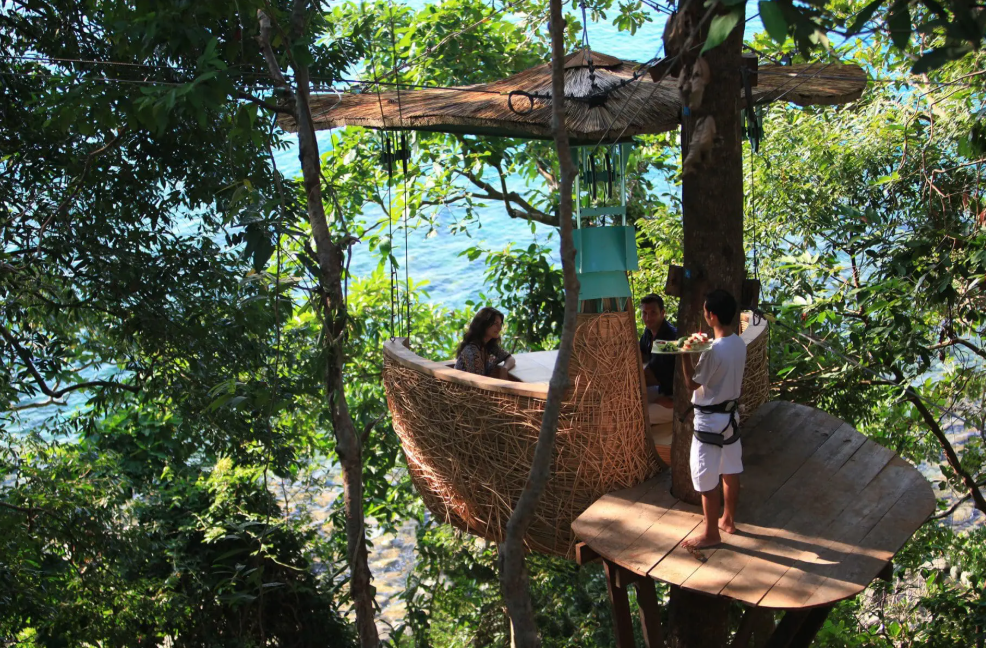
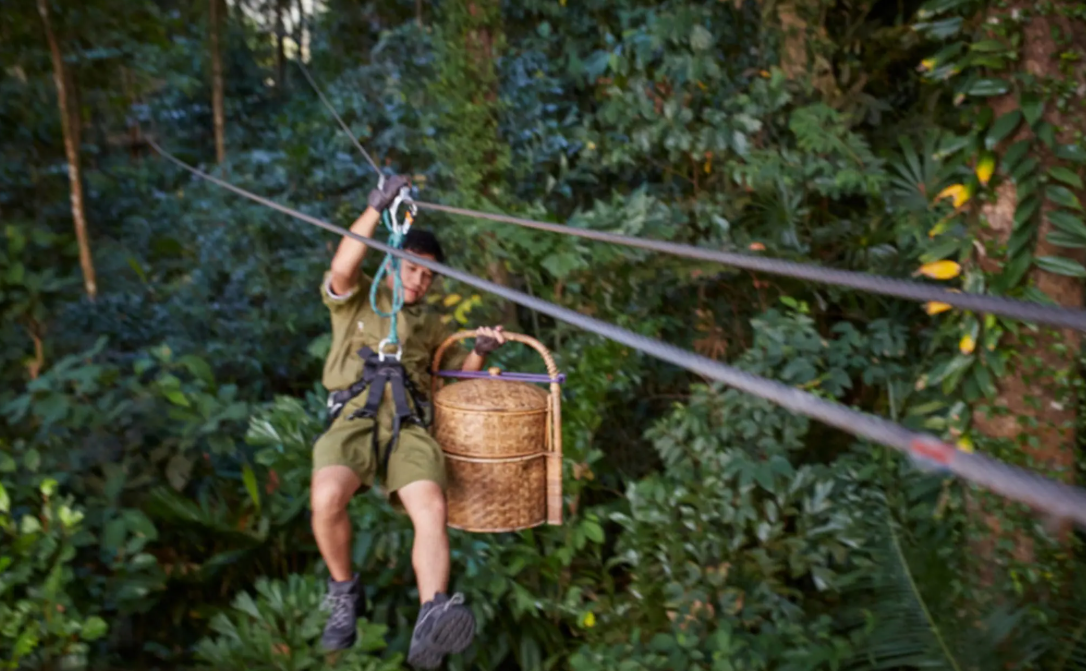
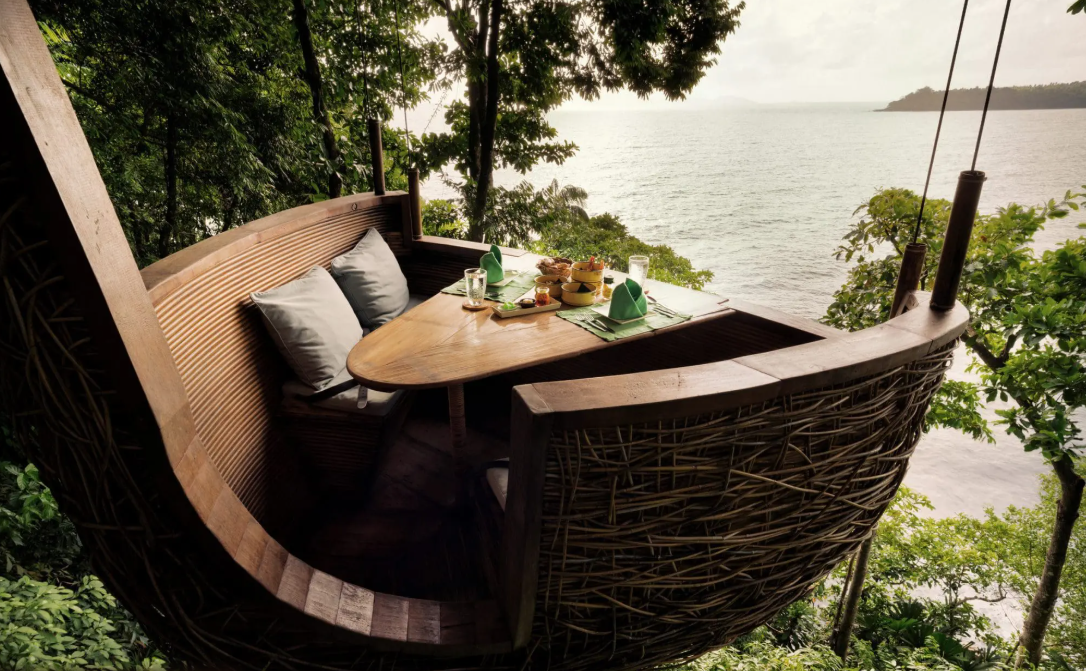
At Soneva Kiri Resort guests can dine in a bamboo-clad pod in the rainforest canopy, hoisted 23 feet up in the air, surrounded by mature trees, tree-hanging monkeys and Asian weaver birds. With no walkways or terraces, diners are served by ziplining wait staff who undergo intensive training in zipline, rescue and treepod operations, learning how to traverse different tree species, utilizing the equipment and carrying plates (foodandwine). Plates and dishes are stored in wooden canisters as servers fly through the tree branches. The spindly exterior of the pods is inspired by the nests made by the local weaver bird, while the comfortable interiors include wood-hewn tables and cushions. “Under the canopy is a place for people seeking deep contact with nature and food, … providing glimpses into nature that most humans don’t ever see this close” (foodandwine.com). From the charcuterie board to the “In the Air” luxury picnic with champagne, caviar and oysters, the dining experience promises unparalleled cuisine with spectacular views of The Gulf of Thailand and surrounding forest.

Ice Restaurant, Finland
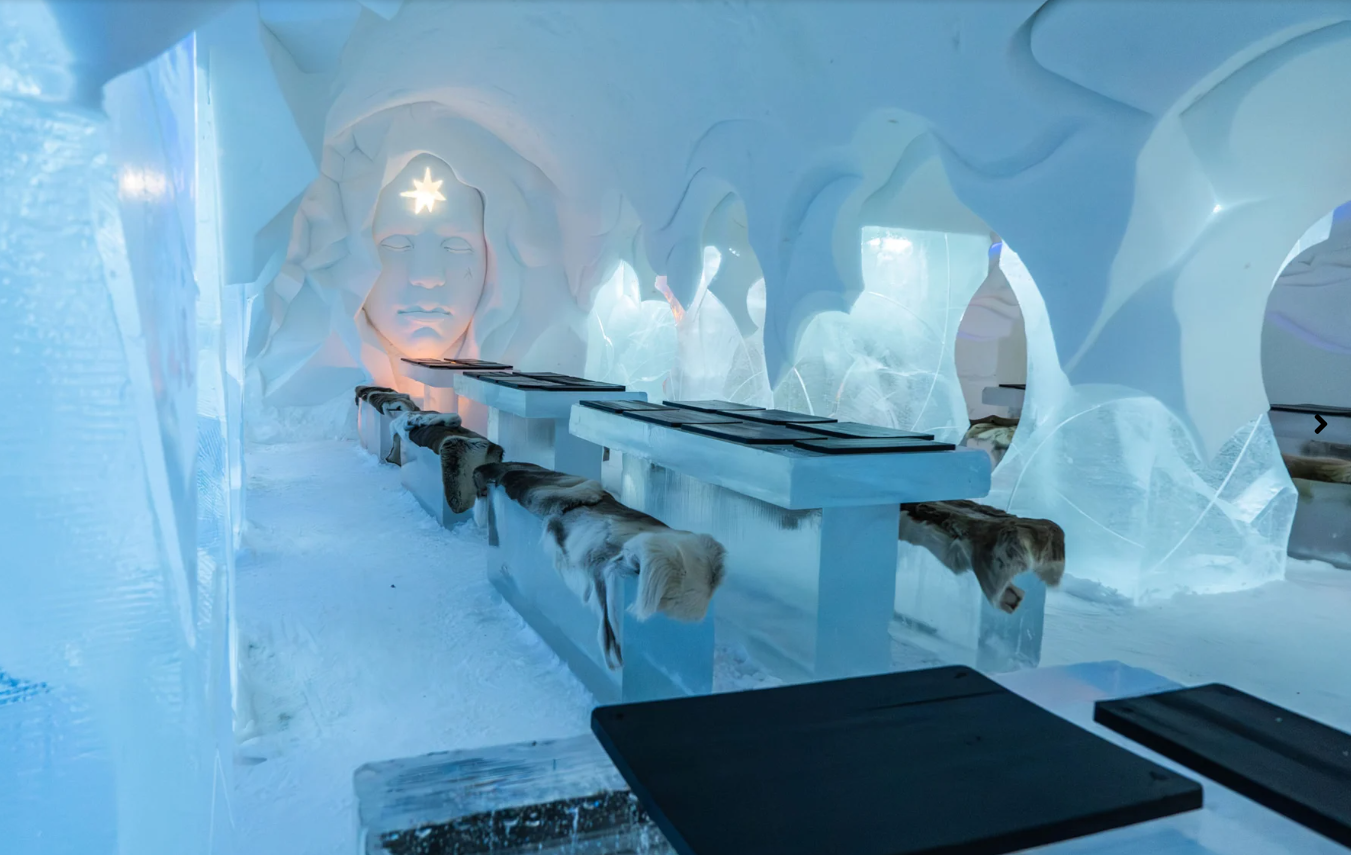
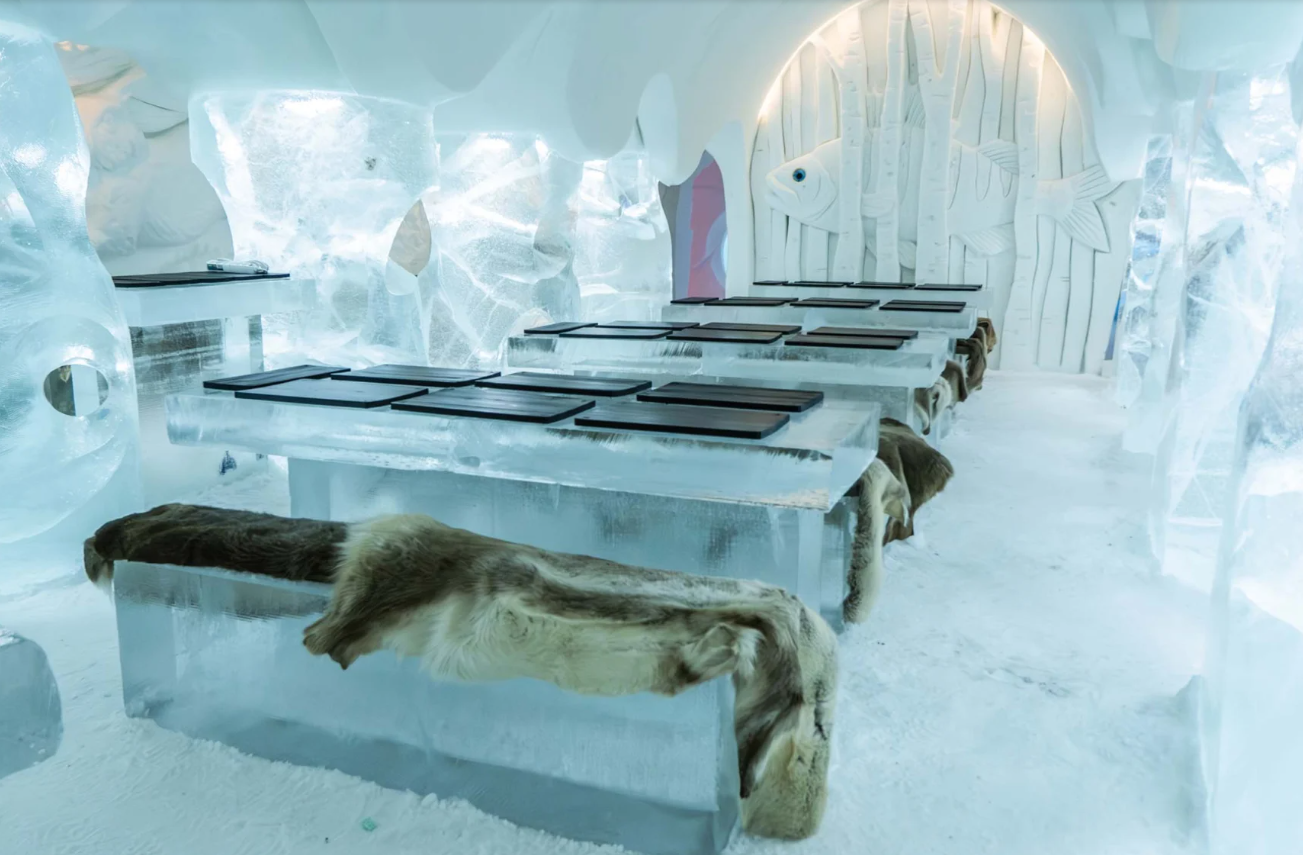
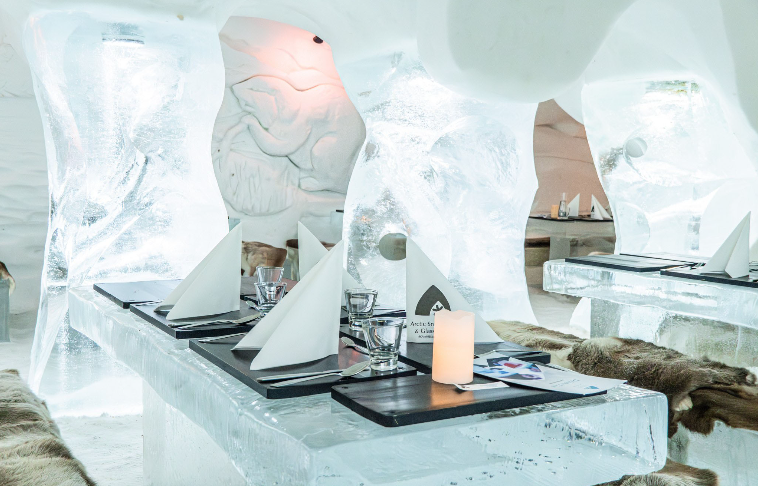
The Ice Restaurant at the Arctic SnowHotel in Finland is carved every year. Built and carved from thick blocks of crystal-clear ice and packed snow, professional sculptors use chainsaws, specialized chisels and ice picks for shaping and fine details. Inside, illuminated walls are decorated with intricate carvings and ice art, while carved ice tables are surrounded by softly glowing lights. Temperatures inside hover between 23°F to 32°F so diners must bundle up in winter gear. Guests enjoy a three-course meal, although some reviews state that the food tends to cool down quickly. Every restaurant booking also includes admission to the Arctic SnowHotel allowing guests to explore the Lapland attraction, visit the Ice Bar and Ice Chapel, and see reindeer and tons of ice sculptures. The restaurant and hotel are open between December and March every year.

El Diablo Restaurant, Spain
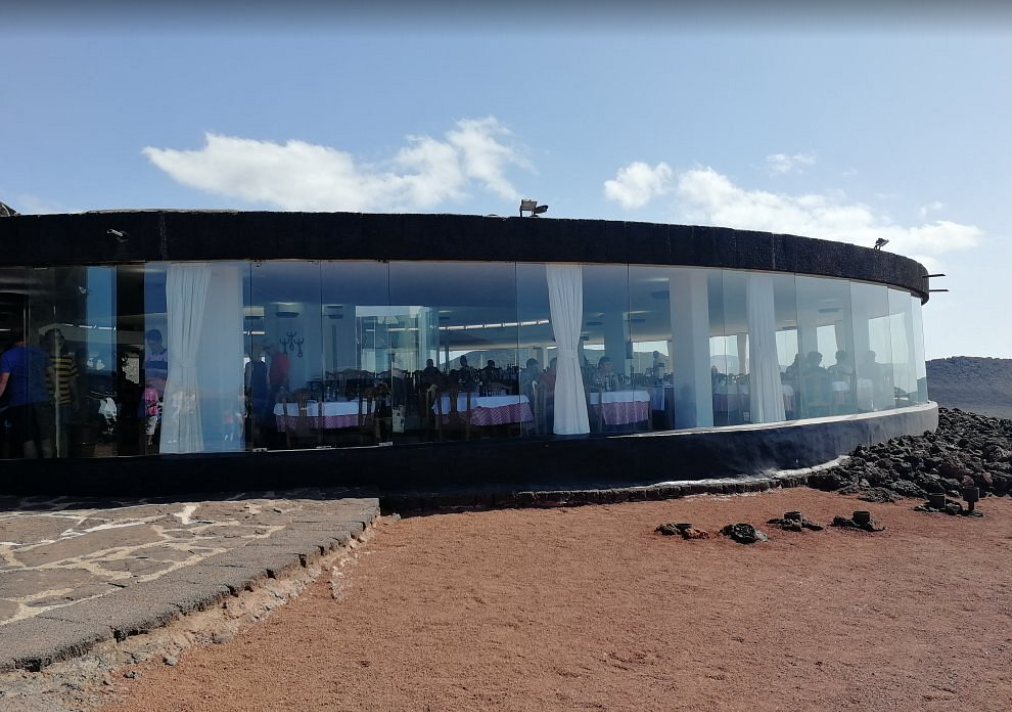
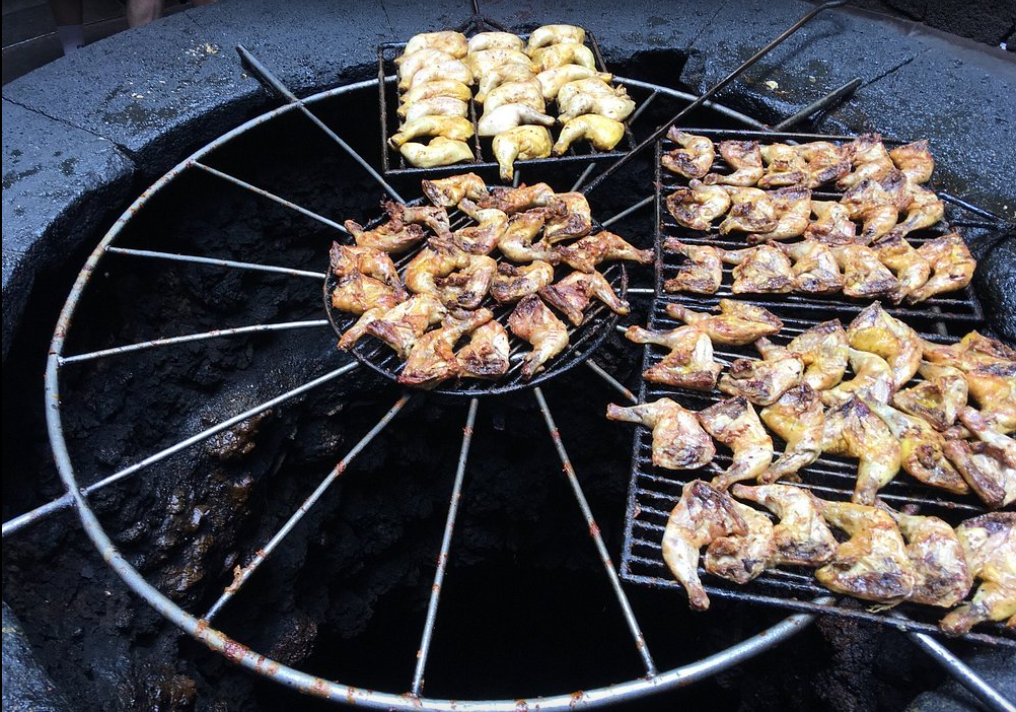
Set amid the rugged terrain of volcanic craters on the island of Lanzarote, chefs cook over a scorching pit built on a dormant volcano. “Building a restaurant on top of a massive heat source … [required] architects to lay 9 layers of basalt rock .. to build a foundation… [while] a giant grill is placed over the opening where 6 feet below the gentle giant is softly bubbling lava” (atlas obscura.com). Temperatures in the pit can reach 750°F. Aptly named “El Diablo,” meaning “The Devil,” the restaurant relies on volcanic heat instead of traditional stoves and ovens, “which imparts a unique flavor and tenderness to the meats” (travelnoire.com). Fresh fish is caught in surrounding waters while some vegetables are sourced from their garden. The rustic style of the restaurant, with black volcanic stones, wooden beams and panoramic windows, blend with the surrounding otherworldly scenery.

Dinner in the Sky
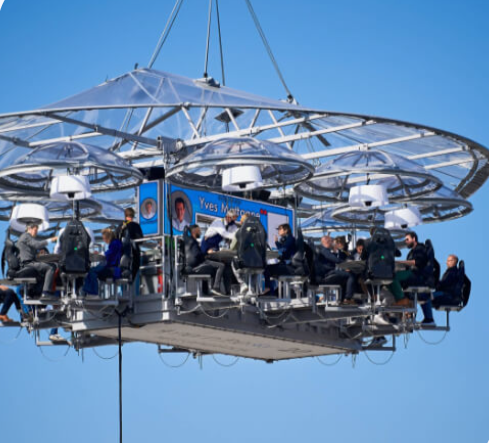
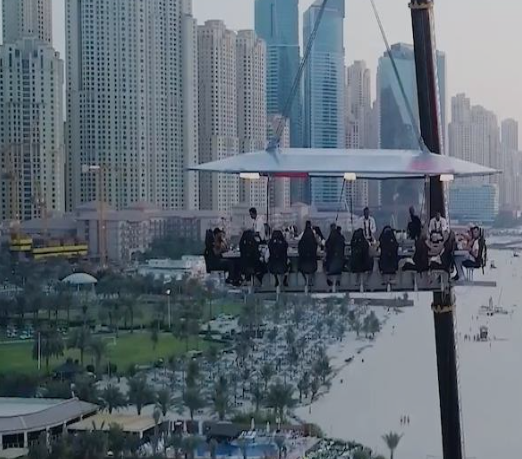
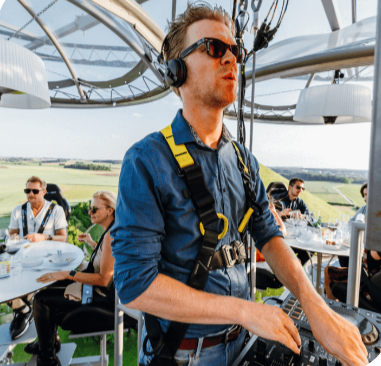
Equal parts dining experience and adrenaline rush, diners enjoy a unique gastronomical experience as they are suspended approximately 164 feet in the air. Lifted in the air by a high-capacity crane, a specialized open metal frame holds the suspended restaurant. Seats surround a central core where chefs prepare and plate the meals. All 22 guests and chefs are secured with multi-point safety harnesses before being slowly lifted into the air. The platform rotates giving diners panoramic views of the landscape. The platform is equipped with a roof covering the tables should it start to rain, and heaters are also available when the temperature drops. There are body size requirements and weather restrictions. Dinner in the Sky operates in several international cities (Lisbon, Nassau, Koln, Hamburg, Dusseldorf, Dubai, Punta Cana, Sao Paulo, Dubrovnik, Vollendam) and schedules vary.

Bon Appetit!
 
Laura McMahon