Elevating Treehouses to New Heights
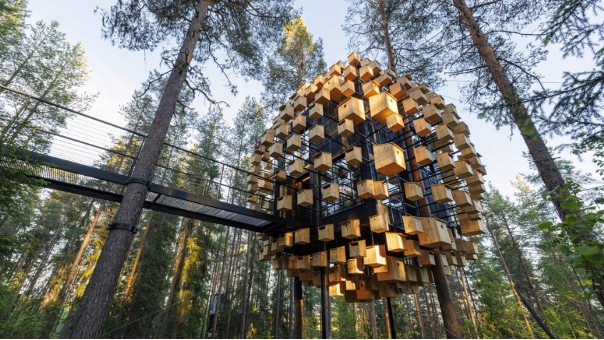
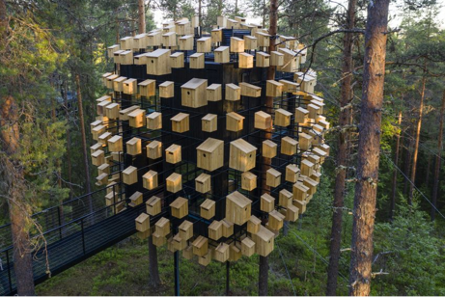
Biosphere, by Mats Engfors/Fotographic, courtesy of BIG, dezeen.com

 
Elevating Treehouses to New Heights

by Sweiskloss
June 25, 2026
Treehouses evoke images of childhood adventures and secret hideaways. From the treehouses of Swiss Family Robinson to the Ewok Village in Star Wars, elevated living has long captured the imagination. Contemporary treehouses build on this sense of wonder while embracing innovative designs and sustainable construction practices.

“Treetop living is not just for kids” (bbc.com). Today, architects and designers have elevated – pun intended - the treehouse of our youth from a few wooden slats on shaky beams to sophisticated retreats that combine creativity, environmental sensitivity and luxury.

While traditional treehouses relied on trunks of trees for structural support, modern projects have embraced alternative strategies and thoughtful designs to minimize environmental impact, protect surrounding ecosystems and leave the forest floor undisturbed. Elevated platforms supported by stilts, carefully integrated bridges and ramps, and the use of natural materials allow these structures to blend seamlessly into their surroundings while respecting the topography. The result is a new generation of treehouses that offer an immersive connection to nature without compromising on luxury, design or environmental stewardship.

From private residences to hotels and workspaces these inspiring treehouses will make your wildest childhood dreams come true.

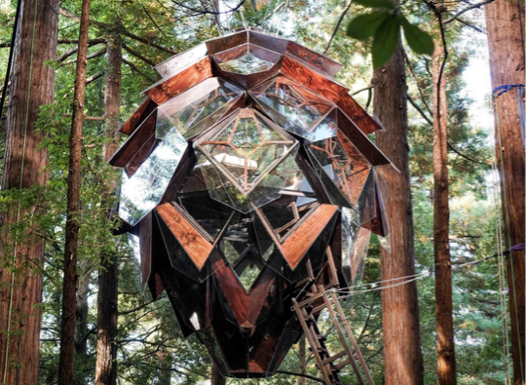
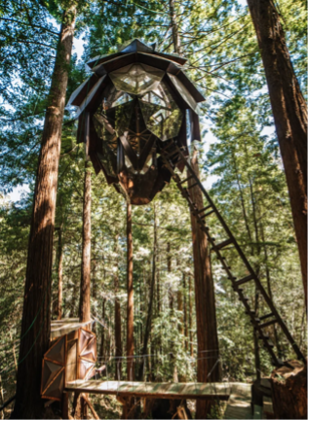
Pinecone Treehouse, Santa Cruz, California
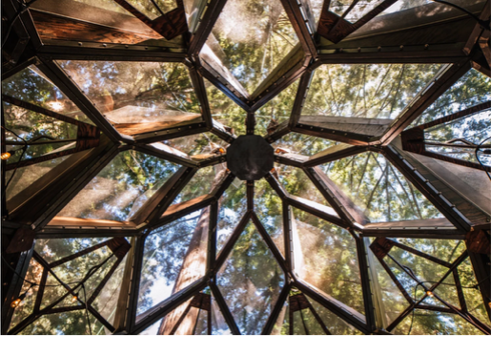
O2 Treehouse designed the Pinecone Treehouse in the Redwood forests using steel, wood and glass. Like an ornament hanging from tree branches, the treehouse is suspended 50 feet above the forest floor and features an “innovative suspension system distributing the 5.5-ton weight across five living redwoods.” The structure features 56 laser cut steel diamond frames welded together to create the distinctive pinecone silhouette. Floor-to-ceiling glass panels provide 360-degree views and a truly immersive experience. Access to the living space is via a 30-foot ladder while the “bathroom with a view” is accessed by a wooded catwalk on the lower level (o2treehouse.com).

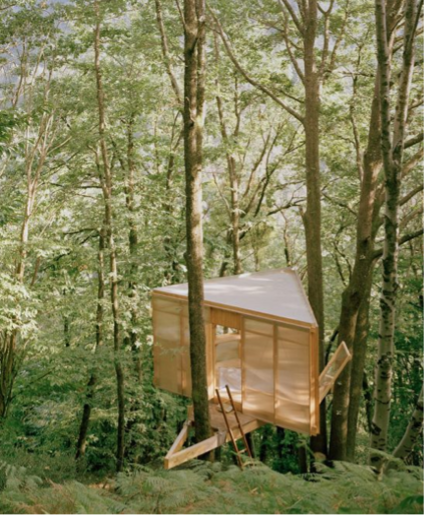
Casetta Tessino, Valle Onsernone, Switzerland
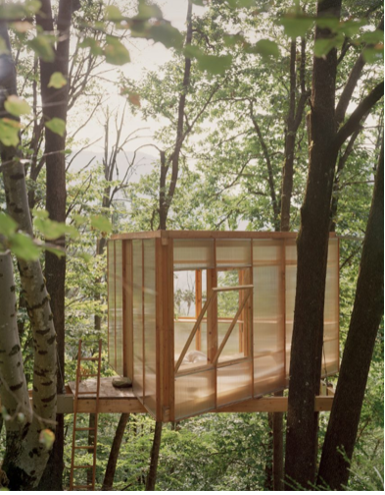
Casetta Tessino was designed by Olin Petzold in the woods of Valle Onsernone, Switzerland, for a Swiss artist and activist seeking a secluded writer’s workshop. The structure is minimalist with only the essentials – a bed, bench and desk – and fittingly, was inspired by the simple living conditions chronicled by naturalist Thoreau in his book Walden (dezeen.com). The elevated triangular structure hovers among three mature oak trees and is suspended between the tree trunks on beams. Built from lightweight spruce and larch which is durable and resistant to moisture, “timber became the primary material through necessity as much as intention, meeting structural, logistical and economic constraints” (designboom.com). All components were assembled on site by hand. Visually understated translucent panels allow light to permeate the interior, let winter sun warm the space and provide views of the valley. The surrounding foliage keeps the space shaded and cool in summer, and the bottom-hinged windows also help ventilate the space.

Biosphere, Harads, Sweden
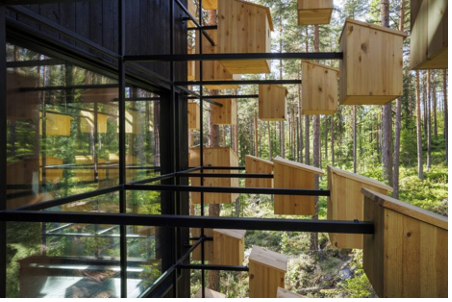
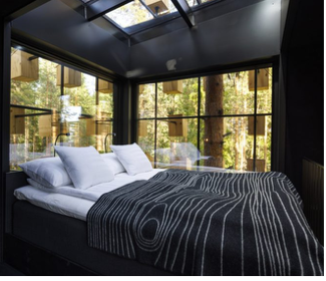
Part of Treehotel, an eco-hotel in Swedish Lapland that offers a variety of high-end treehouses focused on sustainability and resilient design, Biosphere is studded with 350 birdhouses. Designed by BIG and in collaboration with an ornithologist, the birdhouses attract not only birds but bats and bees. Suspended between two trees, the cube-shaped room is surrounded by a metal grid that supports the birdhouses of varying sizes to create a spherical form. The treehouse, which is accessed by a suspended bridge, features a double-height living space and large windows for observing the birds. While creating a unique experience for guests, Biosphere also helps increase the local bird population by providing protected nesting, breeding and feeding holes.

Mirrorcube, Harads, Sweden
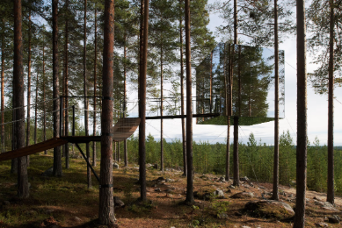
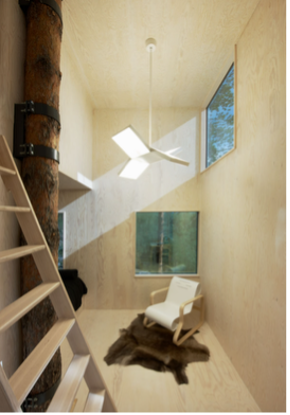
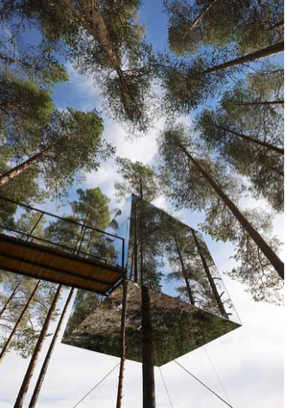
Also part of the Treehotel collection, Mirrorcube is a mirrored cube mounted onto the trunk of a pine tree and is accessed by a rope bridge. Designed by Tham & Videgård Arkitekter, it highlights the sometimes-paradoxical relationship between modern construction materials and the natural world. Composed of lightweight aluminum and clad in highly reflective glass, it reflects the surrounding forest and sky, creating a camouflaged space. Most striking is the single tree that cuts through the central living space, disappears and then reappears out the top. The interior includes a double bed, small bathroom, living room, roof terrace and strategically placed windows that offer a 360-degree view of the surroundings. To prevent birds from colliding with the reflective glass, a transparent color visible only to birds is laminated into the panes (dezeen.com).

Woodnest, Odda, Norway
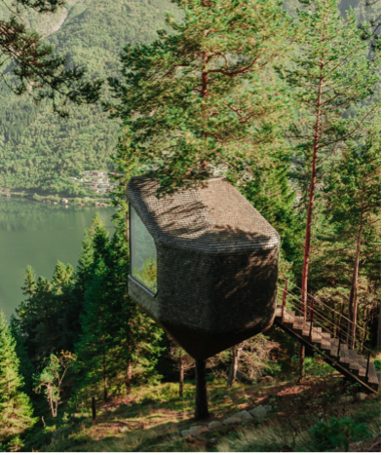
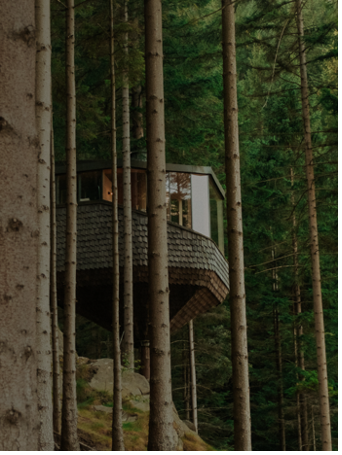
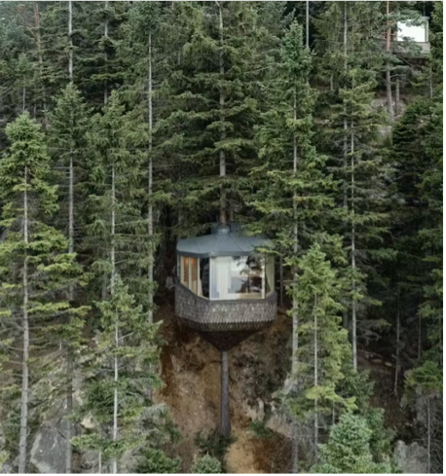
What began as the owners’ romantic gesture to build and propose in a treehouse, has grown into four tiny treehouses anchored to living pine trees on the steep hillsides of Odda, Norway. Suspended above the forest floor, the treehouses can be reached following a hike through the forest and crossing a timber footbridge, with the effort well worth the spectacular views of the fjord below and the mountains in the distance. The use of locally sourced and sustainable materials ensures that Woodnest feels like an extension of the woods itself. The intention was “to create a space that not only respects the natural surroundings but becomes part of them,” explained architect Dag Strass. Paying homage to traditional Norwegian timber architecture, the exterior is clad in untreated shingles that age over time to blend with the natural surroundings. The structures are designed around a central tree trunk and include sleeping areas, bathroom and compact kitchen.

Yoki House, Austin, Texas
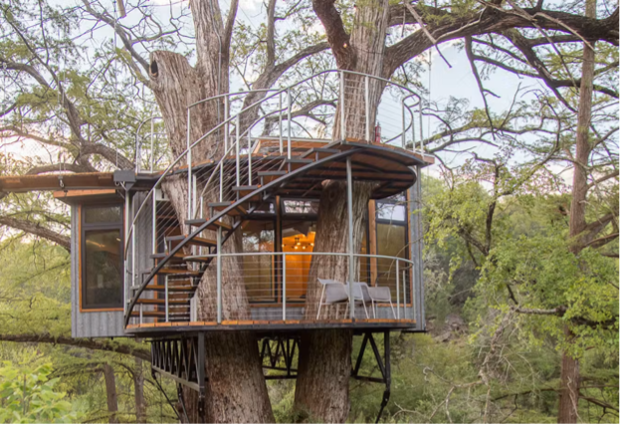
Named after the Hopi word for rain, Yoki Treehouse was designed by ArtisTree and inspired by the region’s springs and nearby creek. Using local and sustainable materials such as elm, cypress and spruce, the treehouse is elevated 25-feet above the creek and is nestled between two bald cypress trees. A separate bathhouse, which is accessed across a 60-foot suspension bridge, features a luxurious Onsen-style soaking tub and floor to ceiling windows. The tree top sanctuary also features a spiral staircase and rooftop observation deck.

Kusu Kusu, Atami, Shizuoka Prefecture, Japan
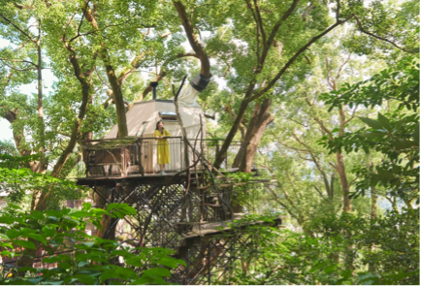
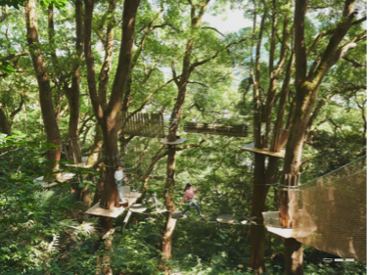
Borrowing its name from the Japanese word for camphor tree, Kusu Kusu treehouse, built by Takashi Kobayashi, is the largest treehouse in Japan and a feat of architecture, engineering and technology. As Kobayasho explains, “Encountering a good tree is everything” and the towering 300-year-old camphor tree provided the perfect location for his massive multi-story treehouse for Risonare Atami Resort. To protect the tree, the structure is completely freestanding and never actually touches it. An interlocking trellis was threaded through the tree and acts as the support system for the treehouse. It resembles a large bird’s nest. Walkways and bridges zigzag through the surrounding trees and there’s even an elevated athletic course with ziplines.

Lion Sands Treehouse, Sabi Sabi Game Reserve, South Africa
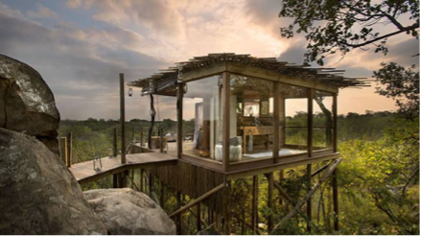
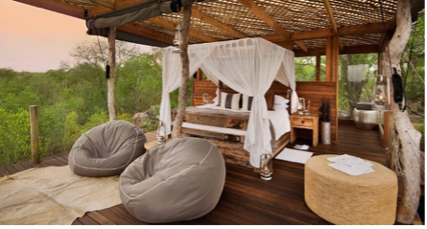
Watch the sunset over the South African bush in one of Lion Sands three luxurious treehouses. Set in the ancient leadwood tree, Chalkley Treehouse has all the five star comforts but an experience as wild as the animals around it, while the Kingston Treehouse is positioned among the imposing white boulders. All treehouses are safely elevated above the ground to allow animals to roam freely beneath them, and each come equipped with radios in case guests need assistance. Guests enjoy gourmet picnics and featherbeds as they watch antelope graze, hear lions roar, and stargaze.
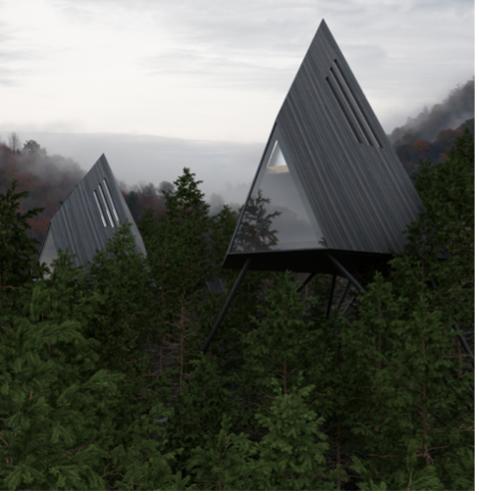
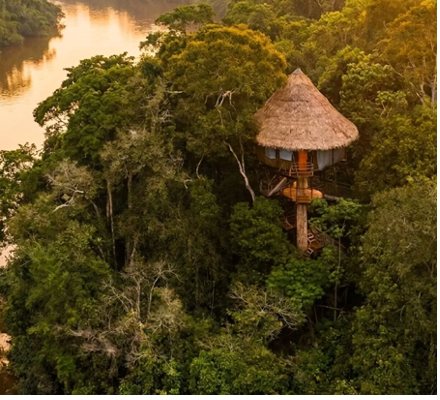
Other unique treehouse design include: Loma Mar Treehouse, Santa Cruz Mountains, California: Made mostly of reclaimed wood, this treehouse designed by Jay Nelson looks more like a ship with portholes, rope bridges and decks; A-F3 treehouses, ultra-modern geometric treehouses featuring distinctive dark sharply cut timber with large triangular window panes designed to maximize the surrounding views; Treehouse Lodge Peru: eight circular treetop bungalows located in the rainforests of the Amazon, each with unique design features ranging from stairs circling the tree trunk to a trap door.

Creatively engineered and thoughtfully designed, today’s treehouses are enchanting and luxurious sky-high retreats.
 
Laura McMahon