Sustainable Airports are Flying High

Image of Breeze Airways, Photograph provided courtesy of Denver International Airport

 
Sustainable Airports are Flying High

by Sweiskloss
July 23, 2026

Airports are busier than ever as summer travel is reaching its peak. More than just transportation hubs, modern airports function as mini cities, complete with their own ground transportation, utilities, retail and dining services. With this scale comes a significant environmental footprint, ranging from greenhouse gas emissions and energy consumption to waste generation and noise pollution.
To combat their environmental impact, airports around the world are incorporating sustainability into the construction and operation of their facilities. Comprehensive initiatives improve energy efficiency, mitigate waste and reduce emissions, enhancing the passenger experiences and improving the overall wellbeing of nearby communities.
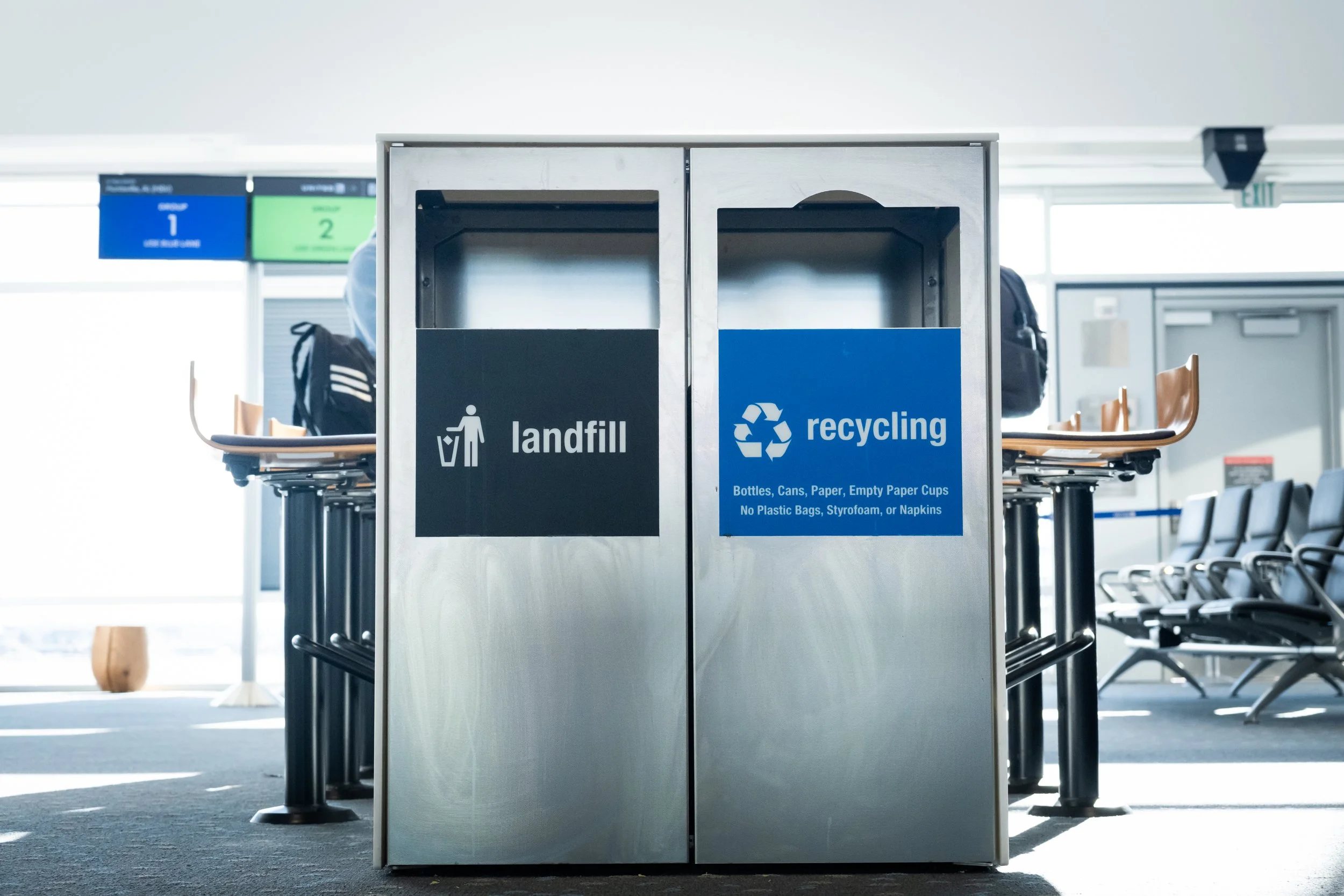
Many airports are transitioning to renewable energy sources, while utilizing LED lighting and upgrading HVAC systems to reduce energy consumption. Waste reduction strategies, including recycling and composting programs, the elimination of single-use plastics, and more efficient waste management systems, are helping to divert significant amounts of waste from landfills. Ground transportation is also becoming greener. By converting ground transportation fleets to all-electric vehicles, expanding EV charging infrastructure, and encouraging public transport, airports are making progress towards their ambitious carbon reduction goals. “Major airports such as Heathrow, Frankfurt, [Amsterdam] and Singapore… have pledged to reach net-zero emissions by 2050” (valcon.com).

Sustainability also extends to the buildings themselves. Architects and designers are constructing airports “using environmentally friendly materials and techniques…and incorporate[ing] green roofs, rainwater harvesting and other eco-friendly features in their construction” (aviationfile.com).
Several airports have become global leaders in sustainability design and operations in terms of green architecture, renewable energy, waste reduction and conservation. From some of the busiest airports to the smaller hubs, these airports are flying high in terms of eco-friendly designs and passenger satisfaction.

San Francisco Airport (SFO), USA
SFO aims “to be the first airport in the world to achieve ‘triple zero’” according to their website, meaning zero-net energy, zero-net carbon and zero-waste. A leader in sustainable aviation, SFO supplies Sustainable Aviation Fuel produced from renewable materials, which can reduce emissions by up to 80% compared to regular jet fuel. It has also pioneered waste reduction initiatives. It was the first airport to ban the sale of single use plastic water bottles, requiring their vendors to use reusable, recyclable or compostable containers. To prevent food waste, SFO launched a food donation program. It has an extensive rooftop solar system that generates clean energy, and an all-EV fleet and rapid charging hubs. In its commitment to the health and wellness of its occupants, in addition to its Platinum LEED certification, the new Harvey Milk Terminal 1 is also the first to receive the FitWel and WELL certification for the health of the passengers and employees (flysfo.com).

Denver International Airport (DEN), USA
Surrounded by the Rocky Mountains in Colorado, DEN is the “second largest airport in the world by land area” (internationalairportreview.com). Its considerable size allows it to create large buffer zones around runways to reduce noise in the metro areas and provides the space for significant large-scale renewable energy projects. The airport is a model for energy efficiency, boasting the largest solar power field at a commercial airport, and it is also exploring nuclear power options to meet future energy demands (artius.com). DEN has an industry-leading stormwater management system that collects 70% of the deicing fluid applied to aircraft and an on-site closed-loop recycling plant. Its waste management programs include recycling and composting from concessions, luggage donations, and wooden pallet and plastic film recycling. Innovative concepts that have achieved LEED-certification for recent airport expansion projects include LED lighting throughout, diverting 92% of generated construction waste from landfills, and using a minimum of 50% Forest Stewardship Council (FSA) certified wood in building their on-site fire department station (flydenver.com).

Amsterdam Schiphol Airport (AMS), The Netherlands
Schiphol has long been a leader in airport sustainability and aims to become the world’s most sustainable airport by 2030. Working towards a circular and energy-positive future, the airport powers its operations with renewable wind energy, utilizes LED lighting and an EV fleet, and is expanding the use of Sustainable Aviation Fuel. Airlines operating cleaner, quieter aircraft receive reduced airport fees, encouraging investment in newer more efficient fleets. Schiphol’s circular approach to waste prioritizes reducing, reusing, and recycling materials while minimizing single-use plastics, packaging and food waste through sustainable procurement policies and partnerships with concessionaires. It’s innovative energy-efficient baggage handling systems reduces electricity consumption by up to 50% compared to traditional methods (dinobus.eu). As part of the EU-funded TULIPS program, Schiphol is reducing emissions from ground operations with electric power units that “provide power and air conditioning for aircraft … so parked planes can switch off their engines… while TaxiBots will drive aircraft to and from the runway, allowing their engines to remain switched off” (news.schiphol.com).

Oslo Gardermoen Airport (OSL), Norway
OSL is widely recognized for its sustainable Scandinavian design. The airport’s ecofriendly construction utilizes reusable steel, environmentally friendly low carbon concrete mixed with volcanic ash, and timber sourced from sustainably managed Scandinavian forests. With plenty of it in supply, snow is collected from the runways, stored, and turned into coolant and circulated as chilled water for air conditioning in the terminals, while grey water is used for heating. The curved design and orientation, along with panoramic glazed windows and skylights promote passive solar heat gains and temperature control. These enhanced levels of insulation have reduced energy consumption achieving Passive House level performance. OSL was also the world’s first airport to offer sustainable jet biofuel to all airlines serving the airport.

London Heathrow Airport (LHR), United Kingdom
As Europe’s busiest airport, Heathrow is proving that sustainability at scale is achievable. It launched the world’s first Sustainable Aviation Fuel incentive program, helping airlines offset up to 50% of the additional fuel cost to encourage the adoption of low-carbon aviation (sustainabilitymagazine.com). Heathrow also powers its operations with 100% renewable energy. “In fact, Terminal 2 is powered by entirely renewable means with roof-top solar, an onsite biomass center using locally sourced forestry waste, and renewable gas alongside green electricity” (heathrow.com). Heathrow is also supplying power and air conditioning from terminals to planes to reduce use of Auxiliary Power Units and Ground Power Units. Beyond energy, the airport is electrifying its ground fleet, supporting a net-zero supply chain and expanding sustainable public transportation options. Environmental stewardship extends beyond carbon reduction. Heathrow’s Nature Positive Plan restores habitats and strengthens biodiversity around the airport (wsp.com). Its circular waste management practices, sustainable construction materials and its Giving Back Programme promote reuse and reduce waste through partnerships with local organizations.

Seymour Galapagos Ecological Airport (GPS), aka Baltra Airport, Ecuador
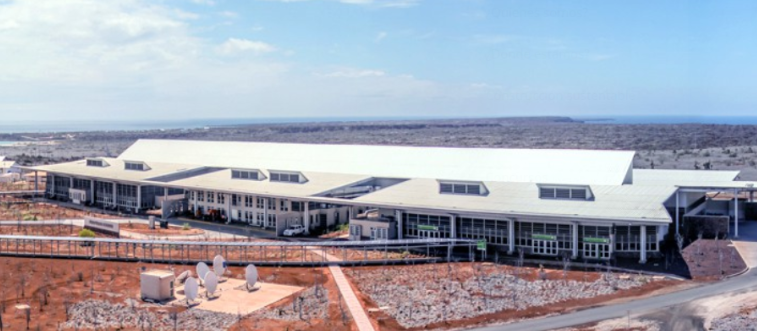
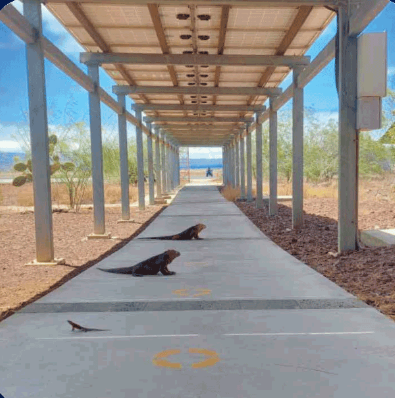
While the smallest airport on this list, Baltra Airport in Ecuador’s Galapagos Islands is widely recognized as one of the world’s greenest. The first green airport in South America and the Caribbean, it was designed to minimize impacts on the fragile Galapagos ecosystem through “bioclimatic architecture” that adapts to the local climate and maximizes energy efficiency. Constructed with 100% environmentally friendly materials- including 80% reclaimed wood, volcanic stone and recycled steel – the terminal relies on passive ventilation and natural daylight to reduce energy demand (atrius.com). Solar panels and wind turbines generate renewable power, while cooling winds from the Pacific Ocean eliminate the need for air conditioning. In fact, the engine room is the only room with mechanical air conditioning. Beyond sustainable design, Baltra Airport is committed to preserving and protecting the surrounding environment and wildlife through habitat restoration, species reintroduction and dedicated wildlife protection teams (aeroffaires.com).

As global passenger numbers are expected to reach 17.7 billion by 2043 and 22.3 billion by 2053 (blog.aci.aero), the impact these sustainable airports will have on reducing the environmental consequence of air travel is significant.
 
Laura McMahon