Vertical Gardens are Creeping Up Around the World

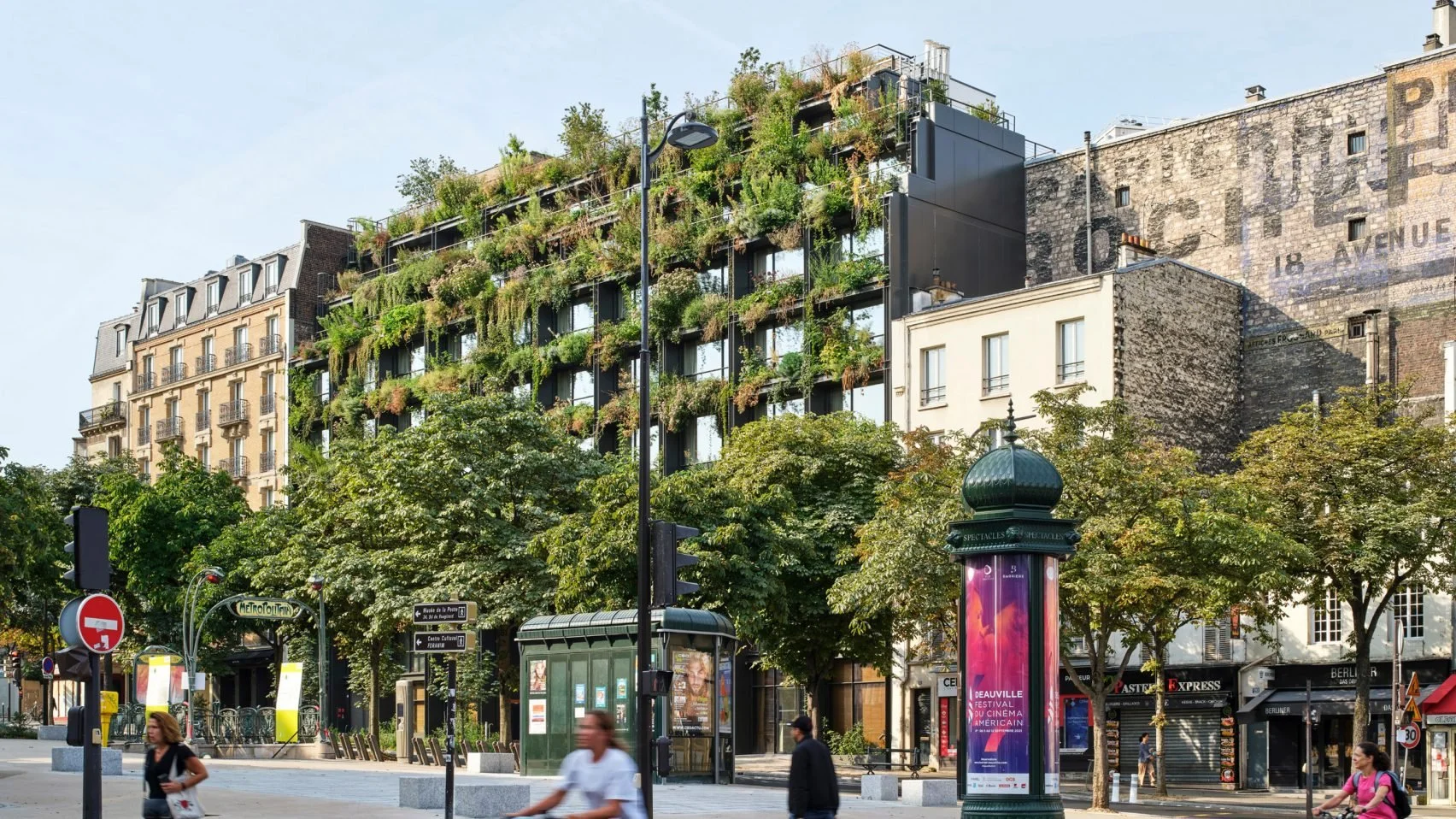
Image of Philippe Starck’s hotel, Villa M, Paris, courtesy of dezeen.com

 
Vertical Gardens are Creeping Up Around the World
by Sweiskloss
April 9, 2026
From density issues to climate concerns, vertical gardens are sprouting up around the globe as a solution to modern day challenges. With urbanization and increasing limited space in cities, designers, architects and landscapers have turned their green thumbs to unused vertical spaces. In addition to the visual appeal, vertical gardens support eco-friendly living and help create a more sustainable community.

As with most green spaces, the environmental benefits of vertical gardens range from improved air quality, to cooling buildings by decreasing the urban heat island effect, and lowering carbon footprints. Economically, by insulating buildings, they also reduce heating and cooling costs. Practically, vertical gardens are ideal for apartments and dense cities by maximizing small spaces and transforming unused walls into fruitful (pun intended) and aesthetically pleasing areas. Greenery, whether on the wall, ground or rooftop, also has psychological benefits of reducing stress and improving mental health. Who doesn’t feel good when surrounded by lush greenery?

From residential towers and hotels to museums and civic buildings, several iconic structures have showcased vertical gardens on a large scale. These cutting-edge designs have inspired similar developments worldwide and have propelled the concept of vertical gardens into a defining feature of environmentally responsible design and urban planning.

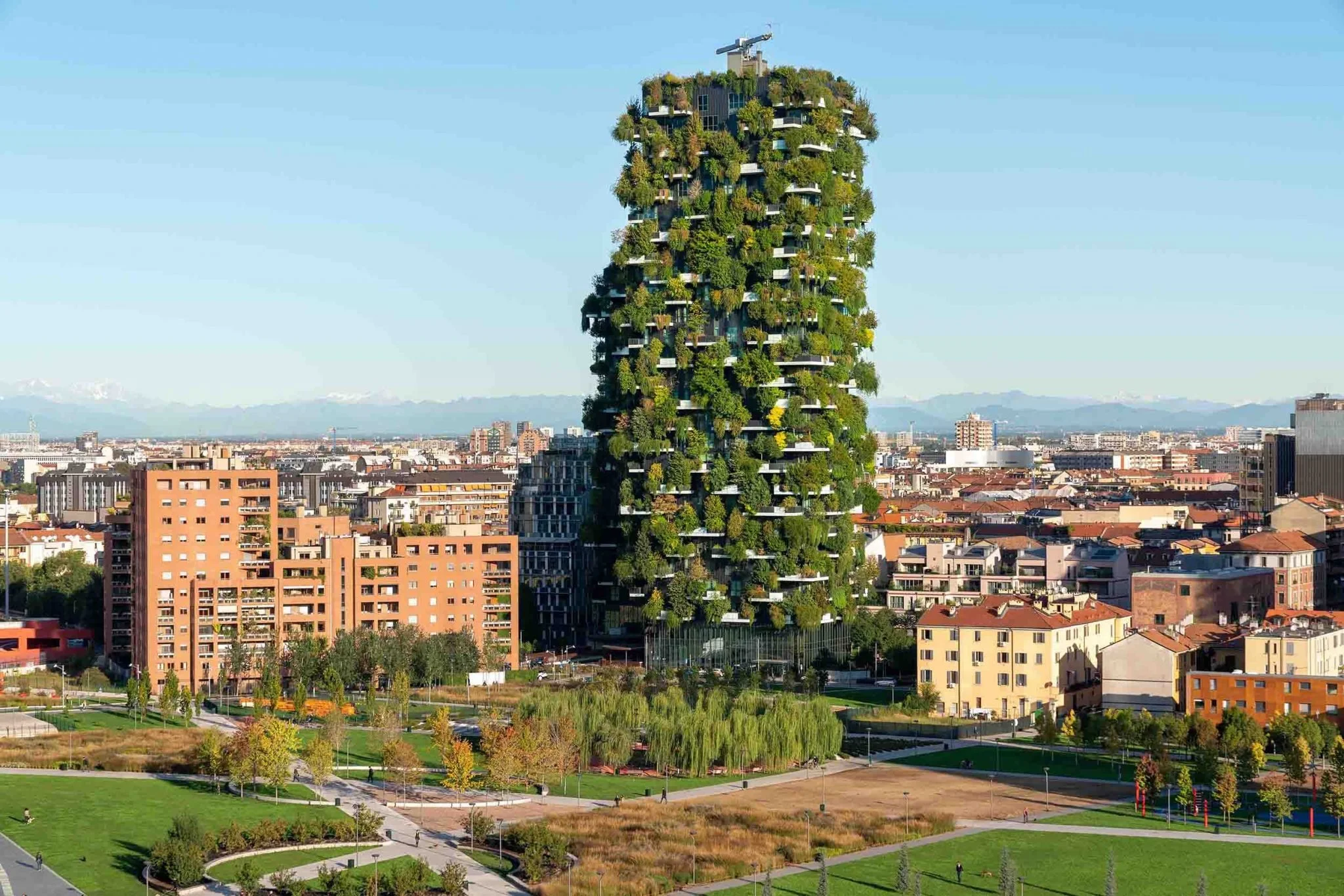
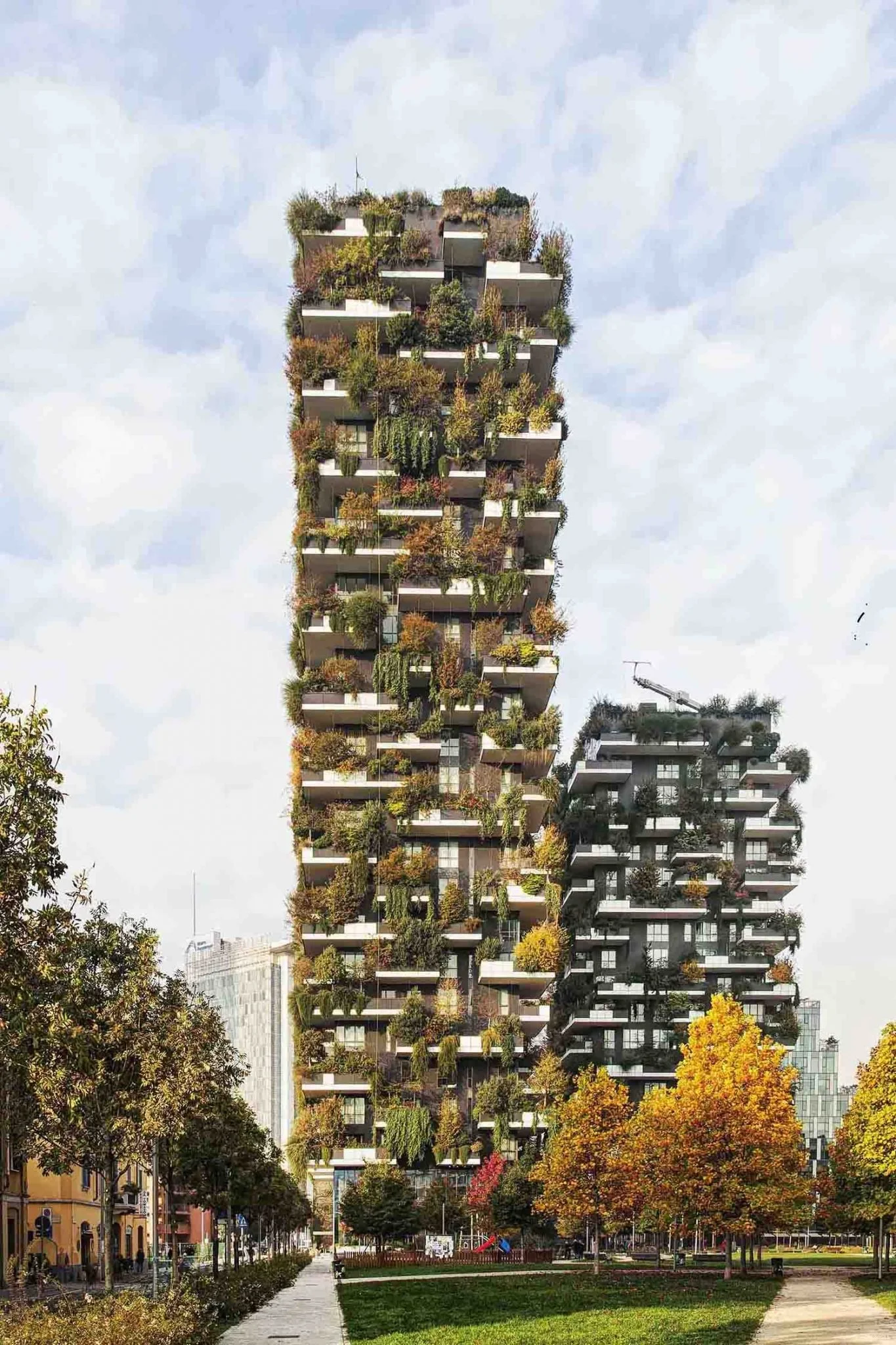
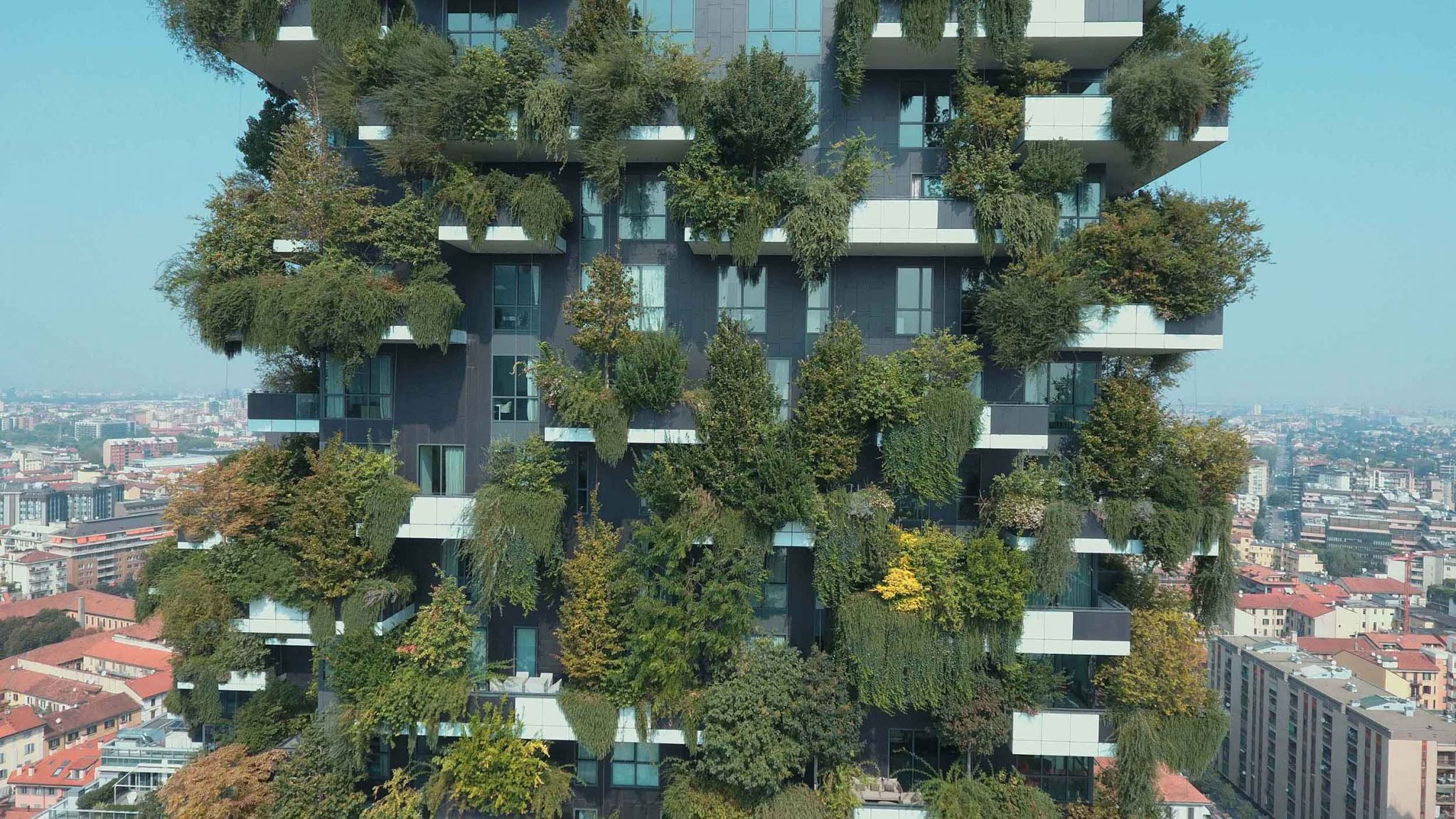
Bosco Verticale, Italy
The two residential towers designed by architect Stefano Boeri in Milan in 2014 pioneered the idea of “vertical forests.” Featuring 800 trees, 4,500 shrubs, and 20,000 plants from 100 different species (as well as hosting a variety of birds and insects), the greenery covering these buildings is equivalent to over 12 acres of parkland concentrated on less than 3 acres of wall. In selecting the plants and their placement, Boeri considered sun exposure, inevitable beneficial and unwanted insects, and size and placement of staggered planters for anticipated growth of vegetation and tree canopies. Boeri also took into account the stone finishes on the façades so that they “mirror the dark color of tree bark … evoking the idea of a treehouse” (stefanoboeriarchitetti.net). Maintenance and irrigation are centralized, and the water management system utilizes groundwater and recycles the building’s greywater. Deepening the relationship between the built matter and plant life, Bosco Verticale is “…redefining the architectural envelope as a living infrastructure capable of filtering pollutants, absorbing heat, and fostering biodiversity” (archdaily.com).

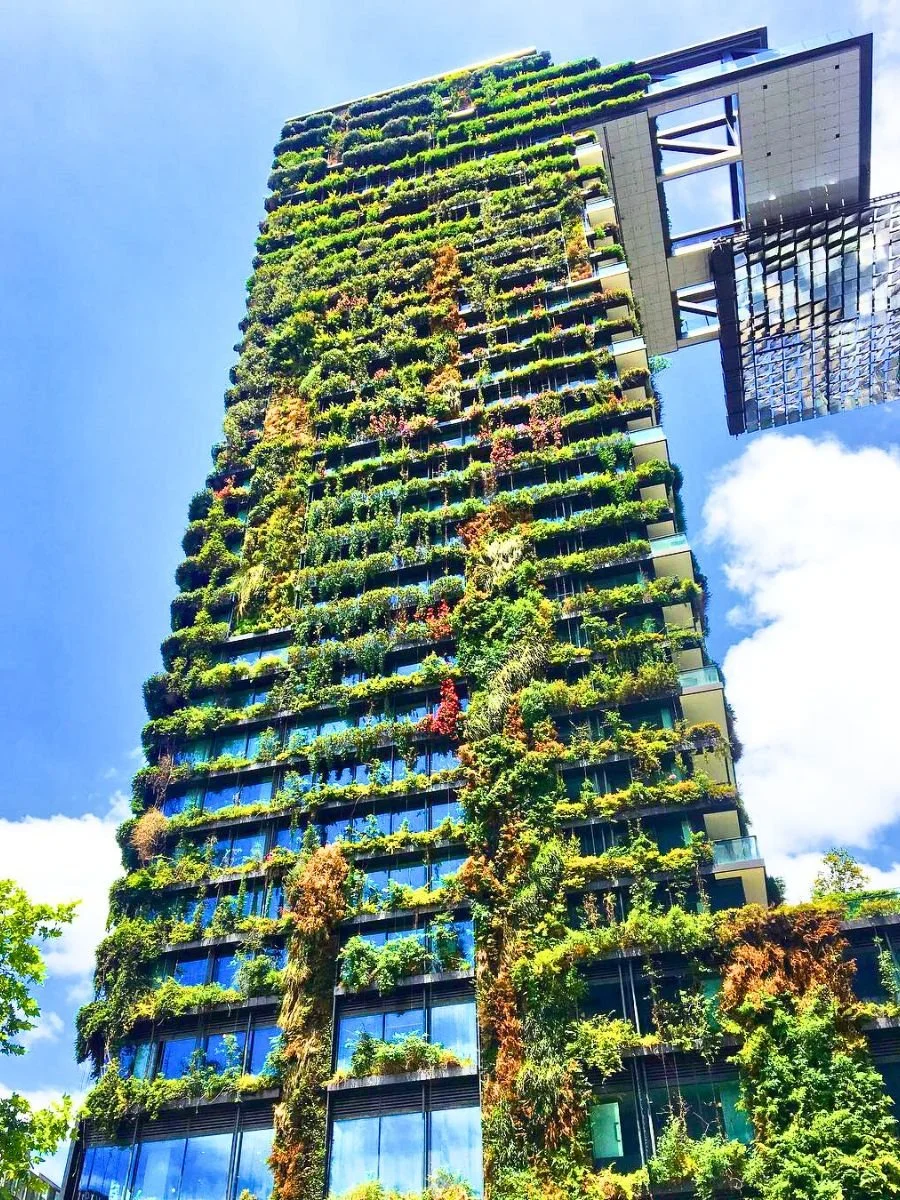
One Central Park, Australia
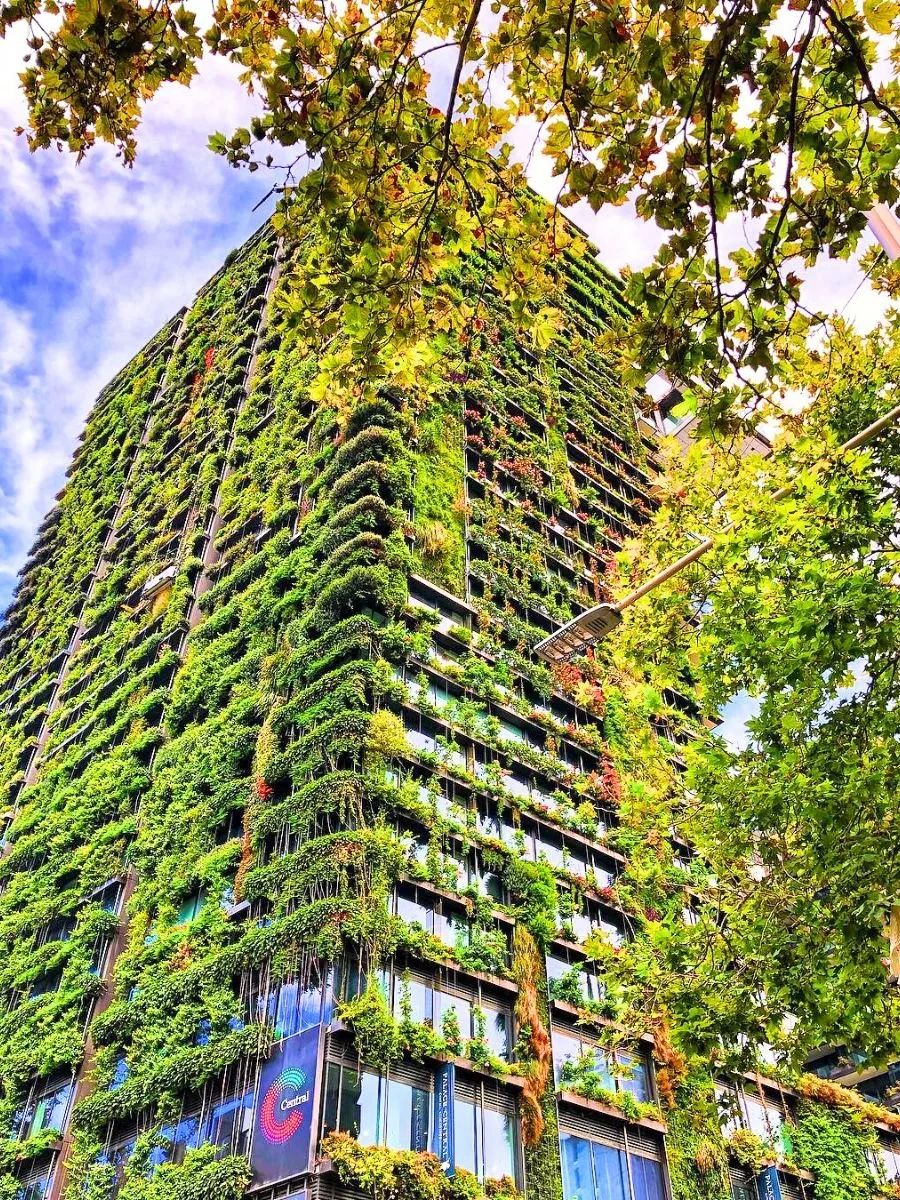
One Central Park in Sydney, a mixed-use development with two residential towers and retail space, is the world’s tallest vertical garden, with 180,000 plants scaling the 380-foot-high façade (Lathan-australia.com). Designed by botanist Patrick Blanc, a diverse mix of over 350 native and exotic plant species thrive on the building’s floor-to-ceiling glass facades, spilling over plant boxes, sprouting from staggered balconies and climbing up cables (oculus.info). The plants have been carefully chosen based on their specific microclimates and properties, and hydroponics allow them to cover approximately 50% of the building’s façade area, according to the architect Ateliers Jean Nouvel. Environmentally responsible, reclaimed water irrigates the “green screen”, while the “planted veil” cleans the air, provides shade and reduces thermal impact.

Oasia Hotel Downtown, Singapore
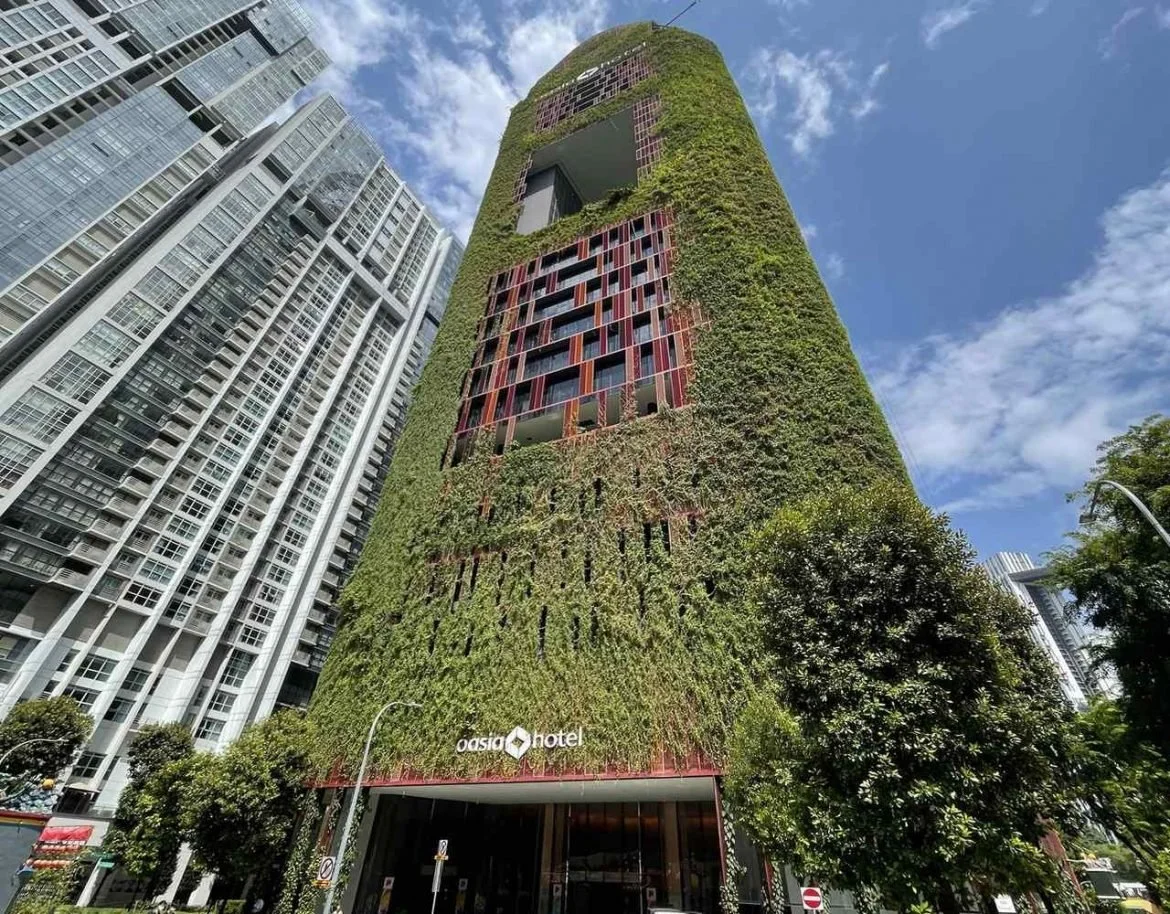
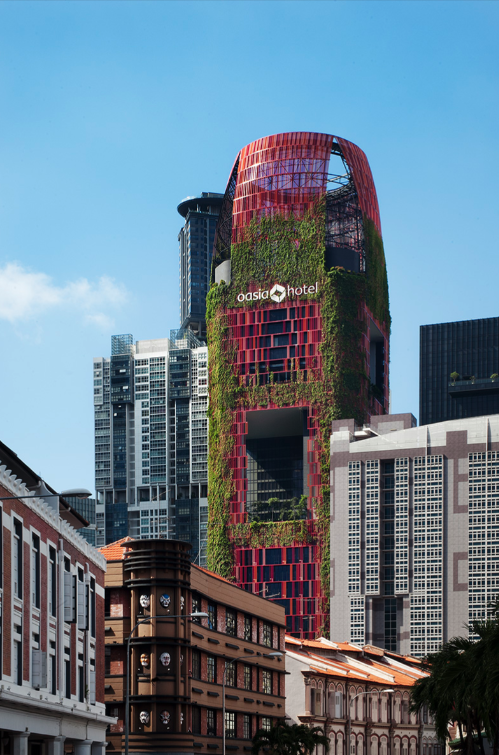
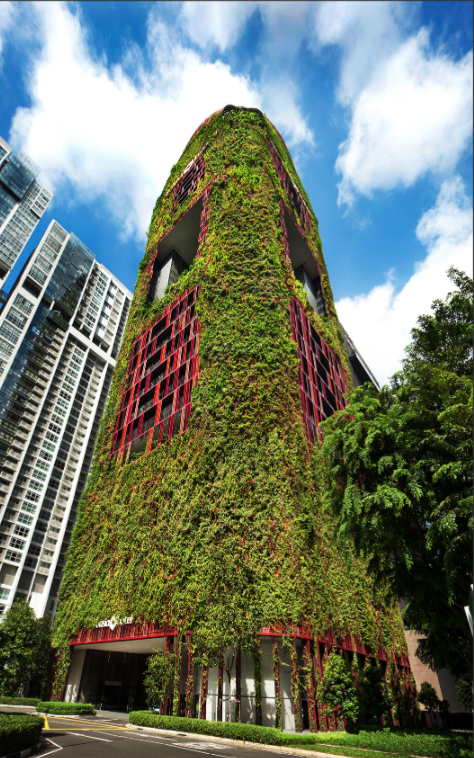
Oasia Hotel Downtown in Singapore, designed by WOHA architects, “was designed to be a ‘verdant tower of green’” (archdaily.com). The tall slender oval shaped 27-story tower is clad in red aluminum latticework, over which climb 21 different species of creepers. The contrast between red and green is visually stunning against the business district’s urban backdrop of concrete, steel and glass. Rate of climbing growth determined species selection and placement, targeting quick general coverage of the building, so that the tower appears “to be wrapped in a ‘living cloak’ of plants.” “The façade became a giant organic mosaic of different species, textures, colors and patterns ‘painted’ on the canvas in the sky” (world-architects.com).

And right here in Santa Monica, the Oceana hotel features a striking vertical façade of green contributing to the overall oasis vibe on Ocean Avenue.

Caixa Forum Museum, Spain
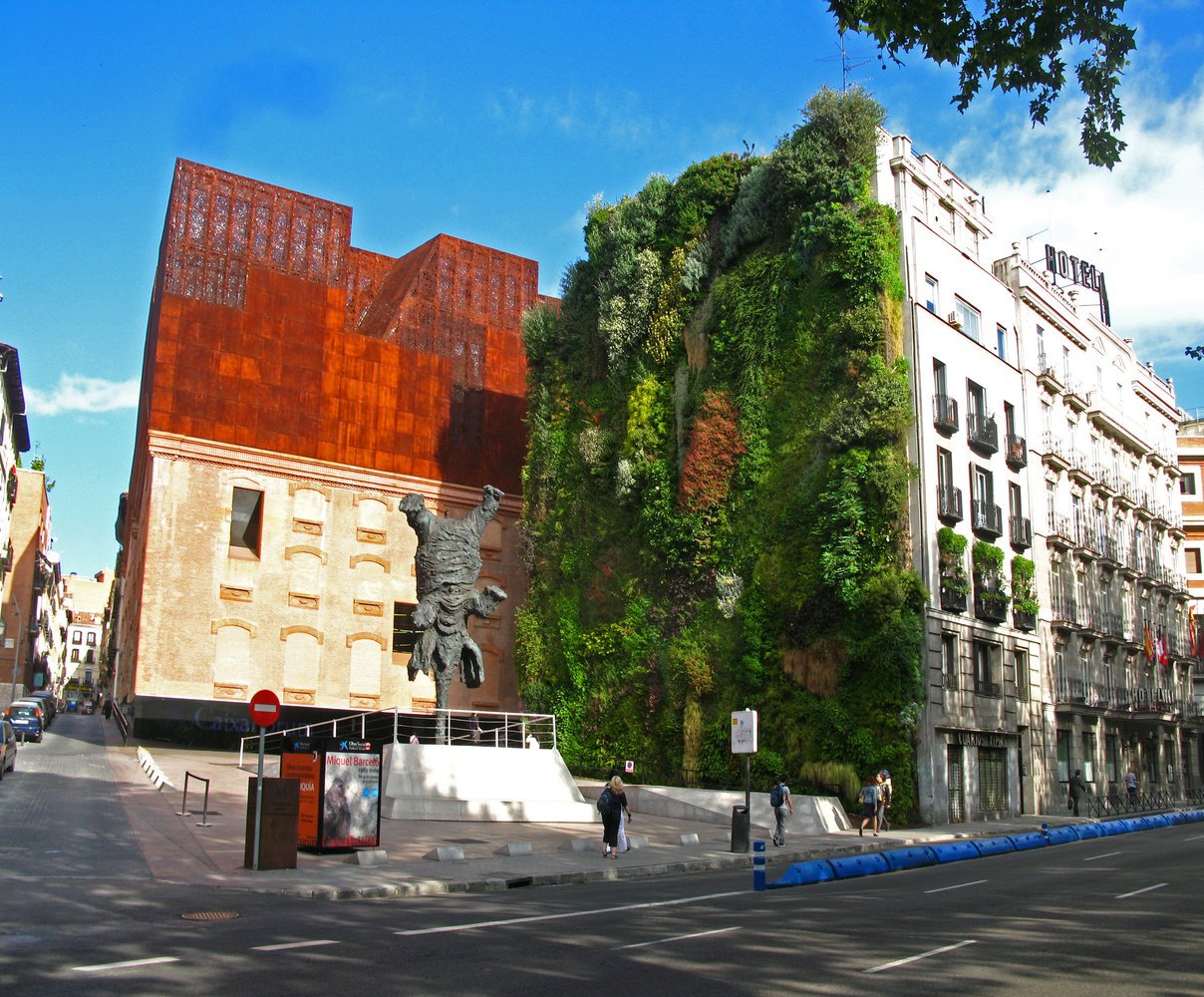
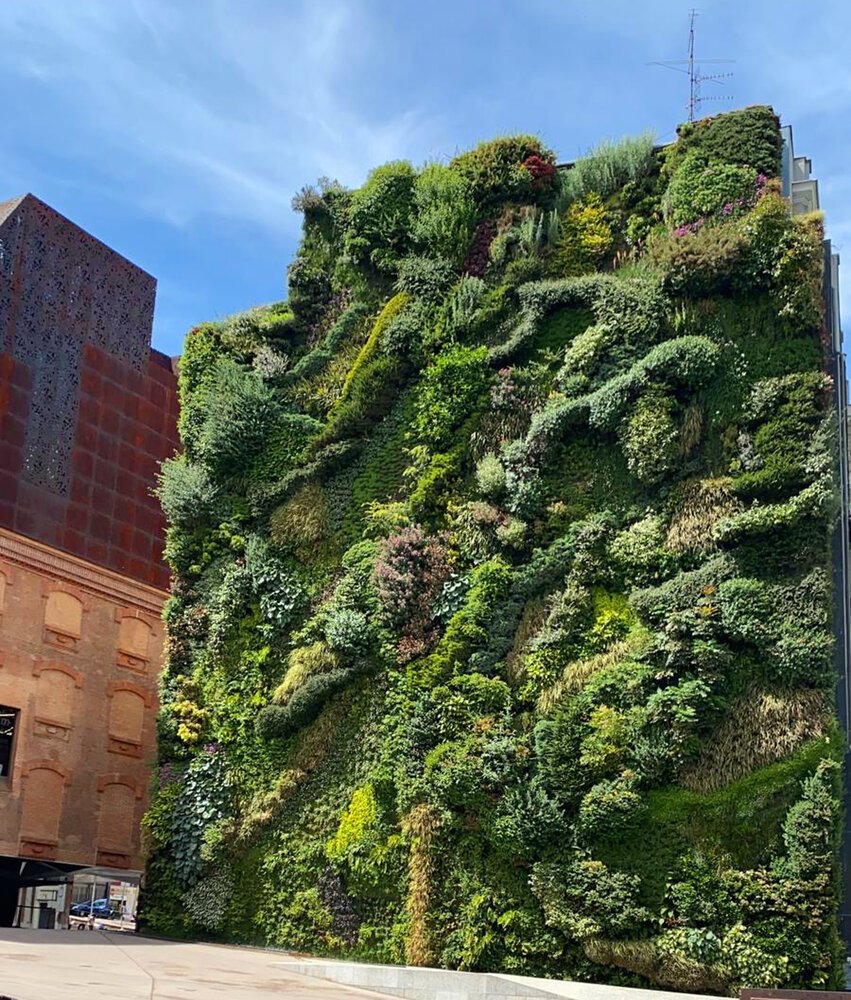
This modern art museum in Madrid boasts a massive 78-foot living wall designed by Patrick Blanc. Featuring 250 different species of plants, he has created a living piece of art. The plants do not need soil and are supported by pipe structures and mesh pockets that substitute for soil and anchor the roots of the plants. Water falls from three levels on the wall, with run-off recycled (esmadrid.com). The public can explore and touch over 15,000 plantings on the hydroponic wall. The green wall makes a striking statement juxtaposed against the industrial backdrop of the former electrical building that houses the museum. Blanc also created an impressive green façade on the Museum of Contemporary Art in Busan, South Korea.

Seoul City Hall, South Korea
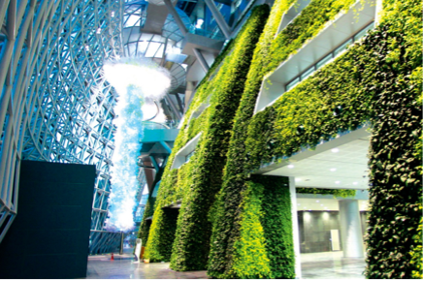
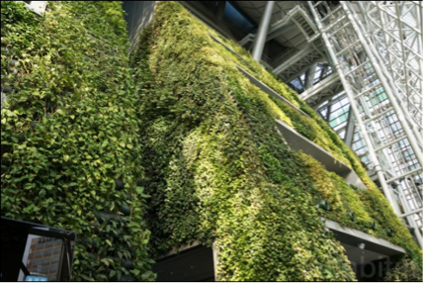
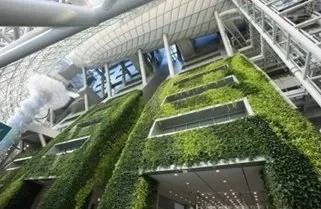
When it opened in 2013, Seoul City Hall held the Guiness World Record for being the largest indoor vertical garden in the world. Over 80,000 plants of 14 different species span 28 meters, climb up seven stories and cover a total area of 1,516 square meters (english.seoul.go.kr). The green wall helps eliminate contaminants and fine dust and regulates temperature and humidity. Incorporating a vertical garden into a civic structure has shown how sustainability is a government priority and has turned Seoul’s City Hall into a landmark and tourist attraction as well. This trend can be seen in other public structures such as transit stations (London’s Edgeware Road) and airports (Singapore’s Changi Airport).

Vertical gardens have seen a major rise in popularity in recent years as they solve multiple modern-day problems – limited space, environmental concerns and the desire for healthier, greener living. Blending the built environment and the natural world, they are becoming a more common and desired feature in urban and residential design.
More than just a garden, vertical farming may be the next best thing in agriculture. Using no soil, no fertilizers, and no hazardous heavy farming equipment, vertical farms produce year-round and in the center of town. Companies such as Vertical Harvest (https://verticalharvestfarms.com/) are also making a career in farming possible for physically and mentally challenged community members.

Stay tuned for Part II on how to create your own vertical garden.
 
Laura McMahon